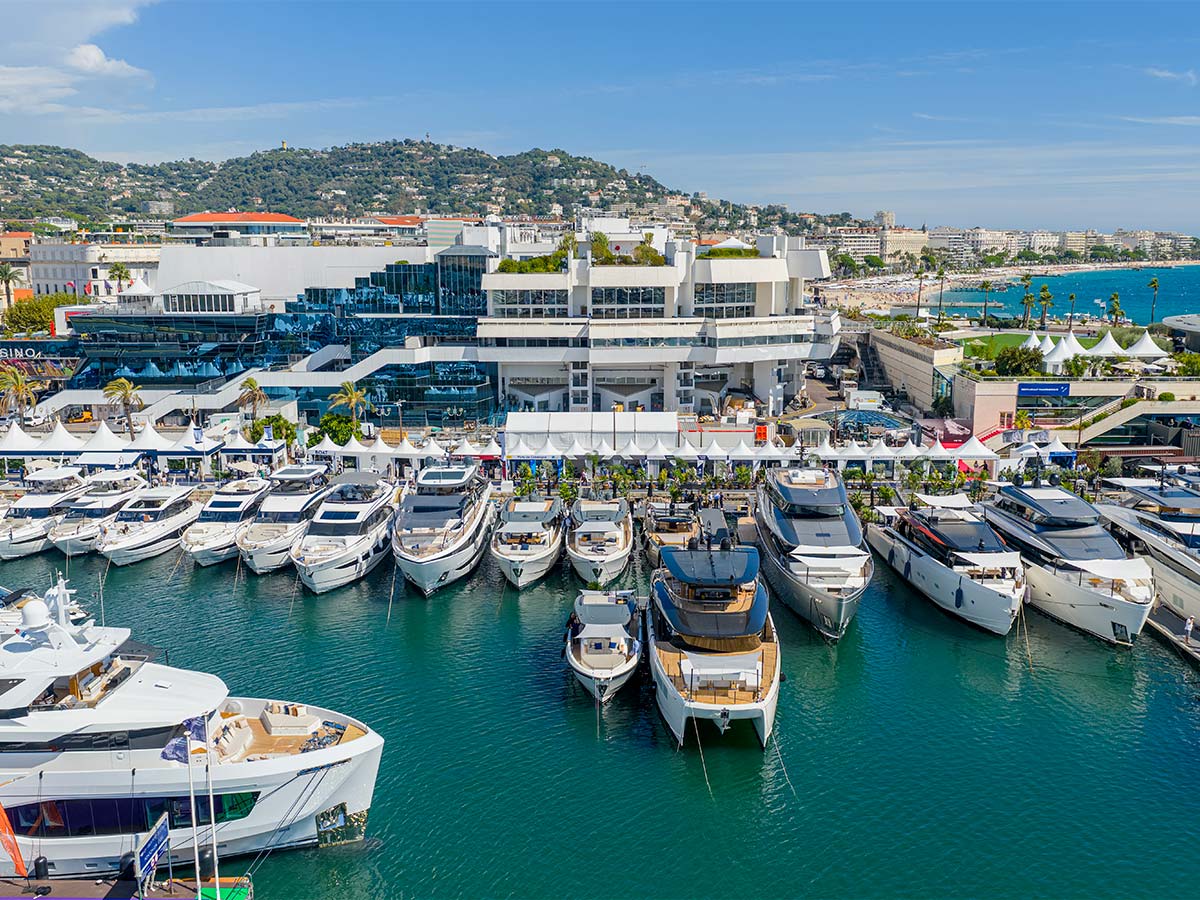
No, we won’t be talking about Gangnam Style this time. Not even under duress, not even if, while visiting the COEX complex where the two major Korean contemporary art fairs, Kiaf and Frieze Seoul, recently took place, a huge golden statue of the incriminated rapper greeted us. Instead, we’ll turn our gaze elsewhere, for example, to the recent Nobel Prize in Literature awarded to Han Kang, to painting that at times is minimalist, at others ultra-pop, to cinema that thrives on silence and unspoken words, and, why not, tune into the omnipresent K-pop.
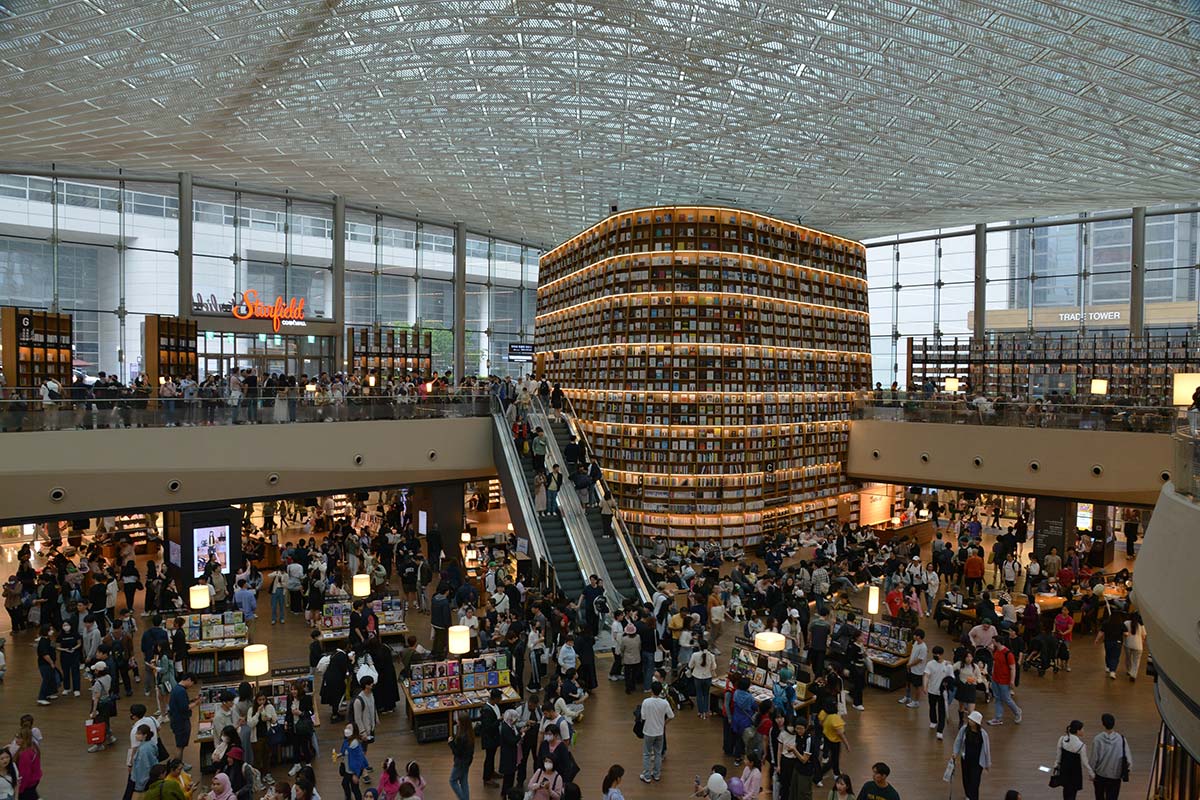
COEX complex
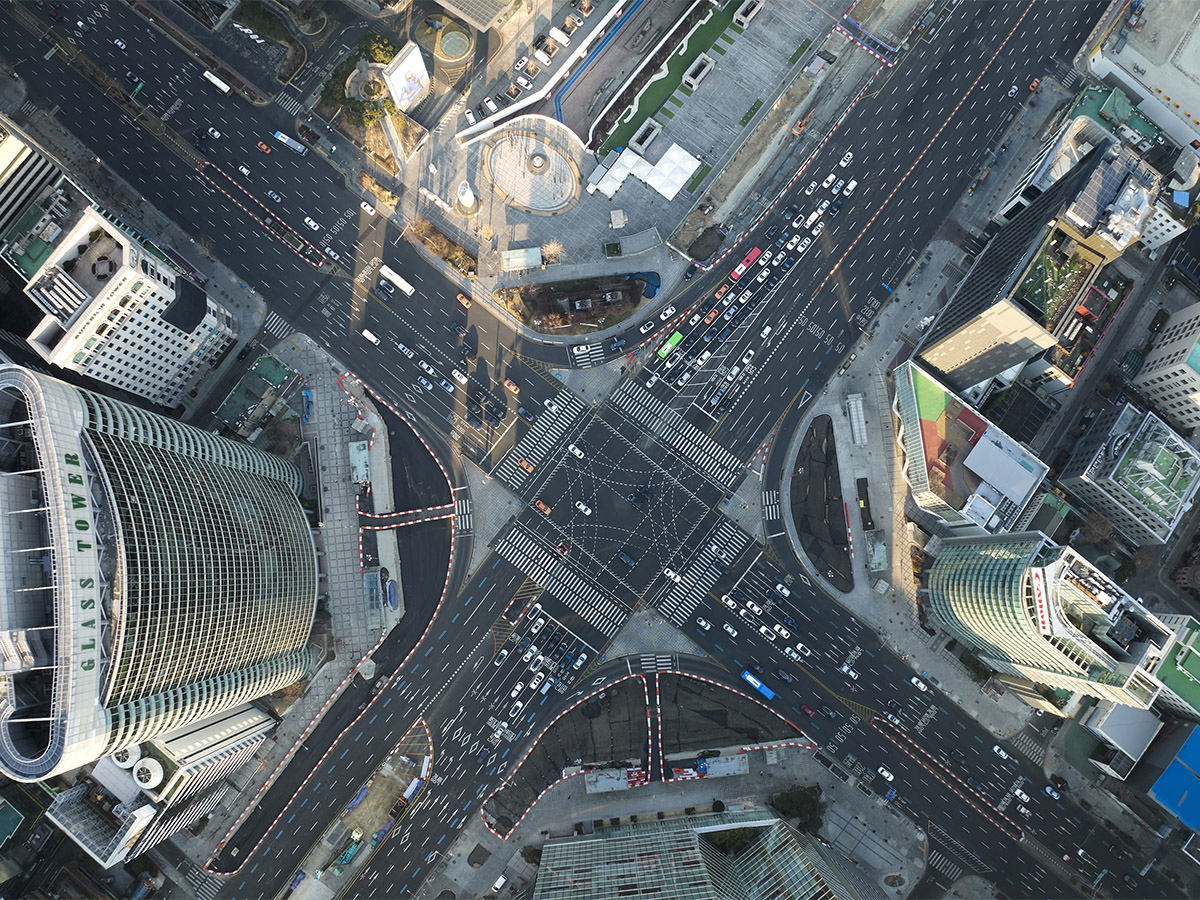
Architecturally, Korea conjures images of sweltering megacities with a tropical climate, dominated by unbridled and chaotic urban sprawl. And it is true that while Busan offers beaches for those who have made sun the enemy of their fair skin, and Gwangju hosts the famous “Asian Venice Biennale,” the heartbeat of Korean contemporary culture is not there. If you have only 24 hours to explore a Korean city, there is no doubt: it must be Seoul.
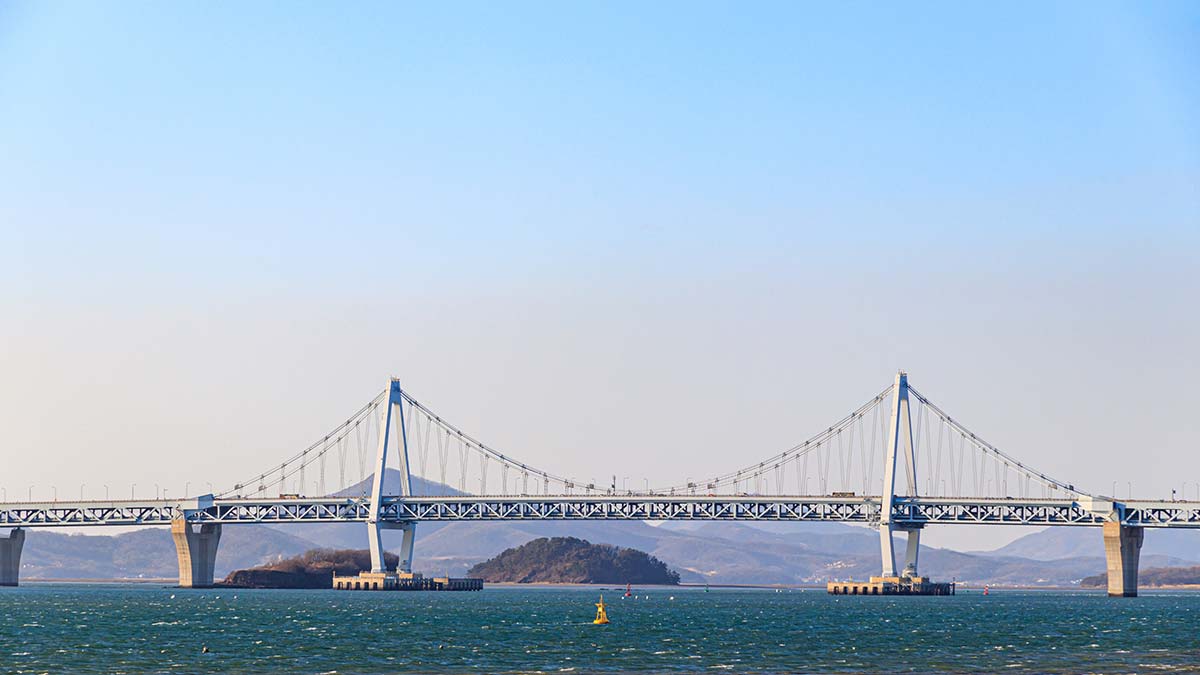
Incheon
The City Center, Between Sea and Mountains
The first impression of the city, arriving from Incheon Airport, located on an archipelago of small islands, is that of a water city. The glistening sea scales welcome the visitor as the international taxi, with terrible English and K-pop blaring on the radio, speeds over orange bridges. This first impression holds true: Seoul is a place where natural and artificial landscapes coexist, as do tradition and modernity. Its rapid urban growth has led to architectural layering that is pleasant in its rhythm of historic and contemporary buildings perched on hills.
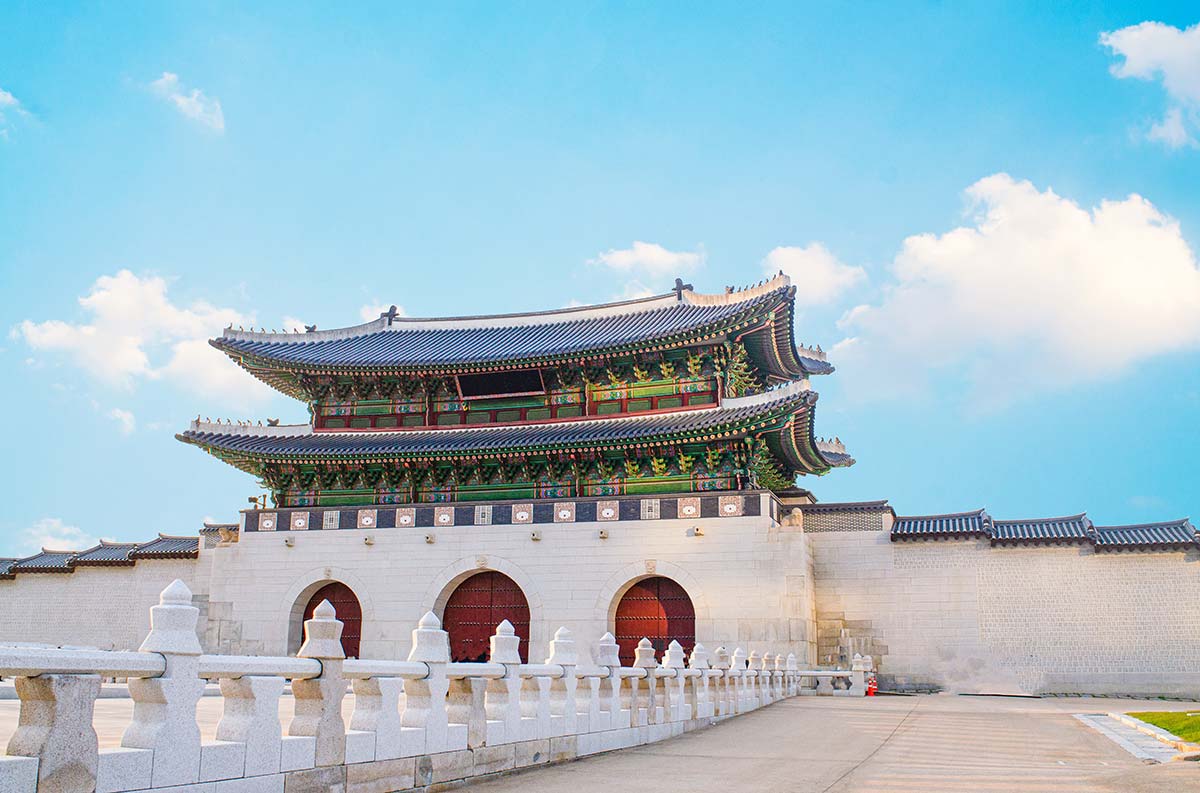
Gyeongbokgung
The biggest surprise is walking from the city center (because downtown Seoul, in line with smart city principles, is green and walkable) to the Royal Palace, called Gyeongbokgung, and immediately facing mountains on the horizon. It is rare to find in other megacities a city center in such close, uninterrupted dialogue with nature. Certainly, expansion could have reached the mountain slopes, but in Korea, it’s all about Feng Shui. Not only Gyeongbokgung and the ancient city followed these ancient principles, but contemporary urban planners, in developing the city center, did not want to abandon them.
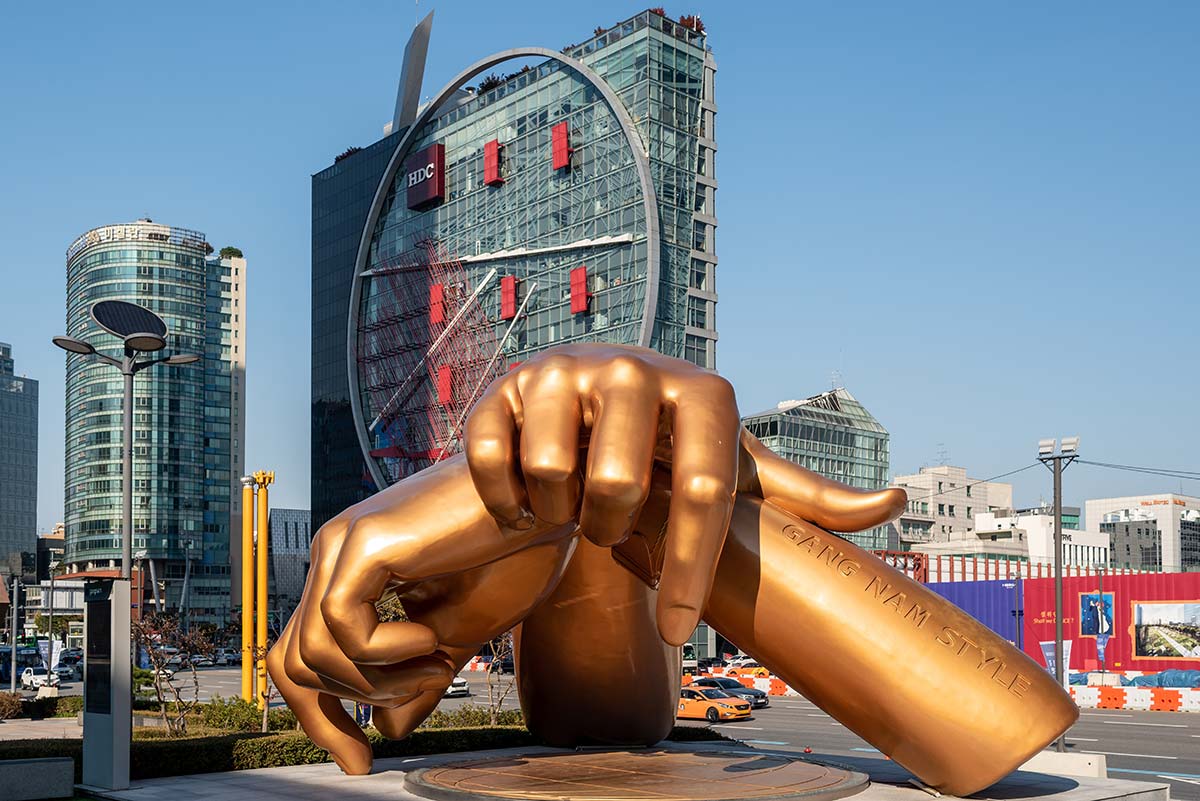
Gangnam
Built in 1395, Gyeongbokgung, this historical palace with an unpronounceable name, is a compendium of traditional Korean architecture, with magnificent pavilions decorated in a manner reminiscent more of Tibet than Japan (with which there is a long enmity) and imposing gates. Tourists rent traditional costumes for pre-wedding photos in abundance.
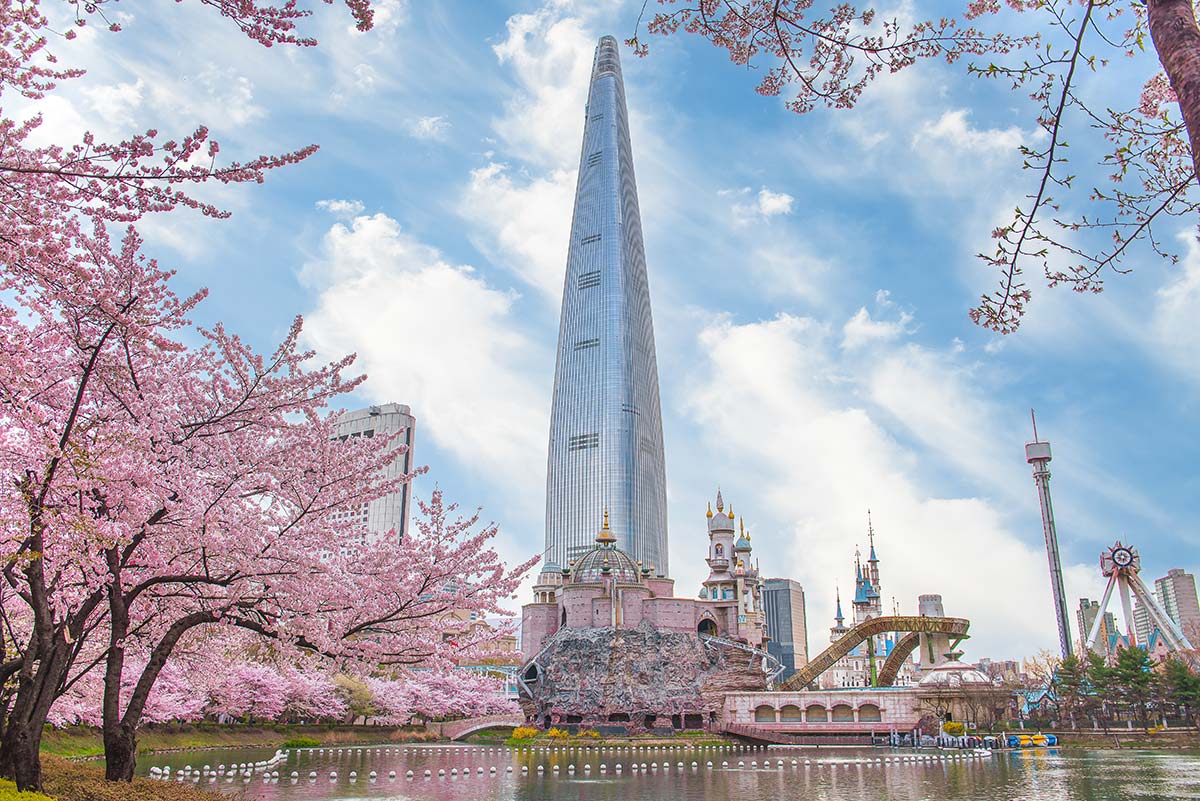
Lotte World Tower
Symbols of Success
Then we have a series of iconic buildings meant to convey the image of a country that, in just a few decades, leaped from a third-world status to incredible economic development. The modern and luxurious district of Gangnam (shhh, nobody start rapping!) is an example, having transformed from an agricultural suburb to a financial center. Today, the district is expanding, with skyscrapers growing denser by the month. The most significant architectural symbol of Korean success is undoubtedly the Lotte World Tower. With its 123 floors and 555 meters in height, it is the tallest skyscraper in Korea and among the tallest in the world.
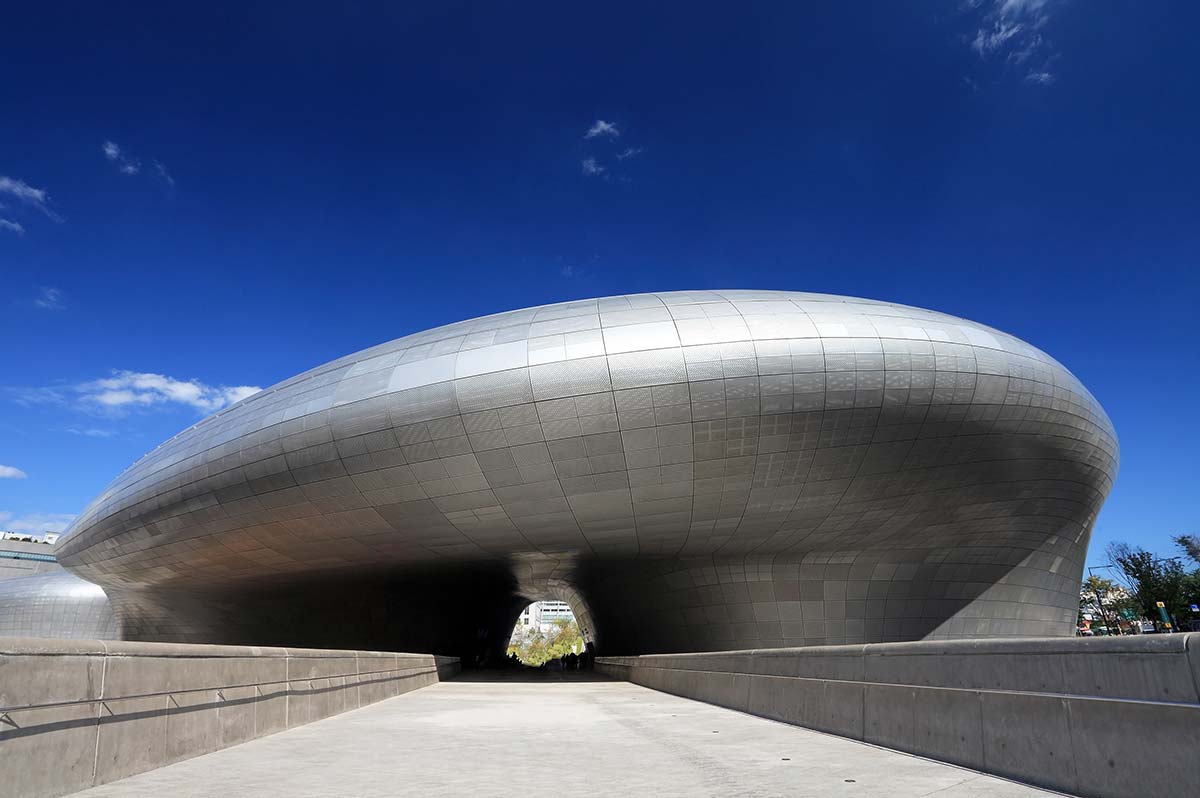
Dongdaemun Design Plaza
However, for eye-catching architecture, visiting the Dongdaemun Design Plaza in the heart of Seoul is more significant. This cultural hub was designed by Zaha Hadid and retains the architect’s signature fluid and futuristic design, which indeed corresponds to the sci-fi Korea one expects.
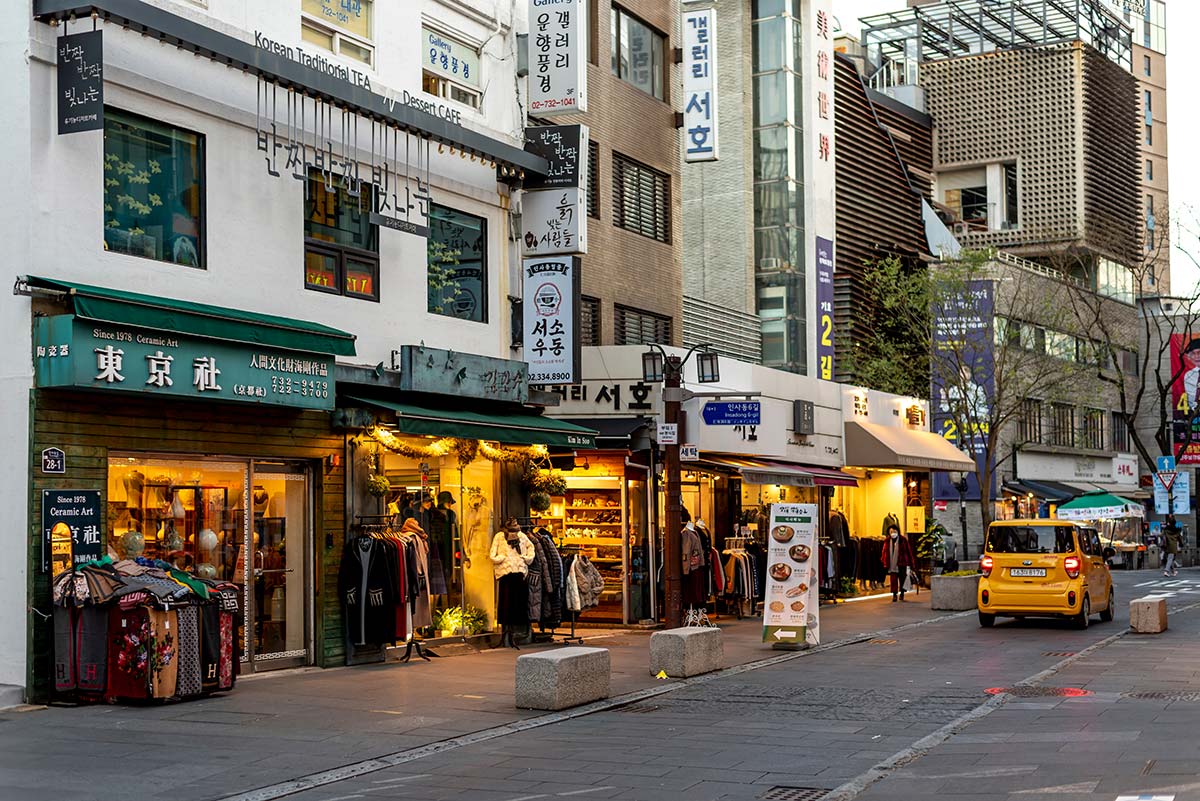
Insadong
Trendy Neighborhoods
But the most intriguing Seoul is undoubtedly that of the alternative neighborhoods embracing the Royal Palace from left and right. In particular, the Insadong neighborhood combines a more traditional atmosphere with art galleries, cafes, tea houses, and antique shops. Modern architectures tie together concrete, glass, and wood, expanding horizontally and across multiple levels, blending harmoniously with the surrounding small historic houses. While sipping tea at the Cordonnerie, a delightful cafe combining a Parisian facade with elements of a traditional Korean tea house, one notices a certain cosmopolitanism, but also the intent of a new generation of super-cool Koreans to bring home all the cultural influences absorbed abroad and “Koreanize” them, so to speak.
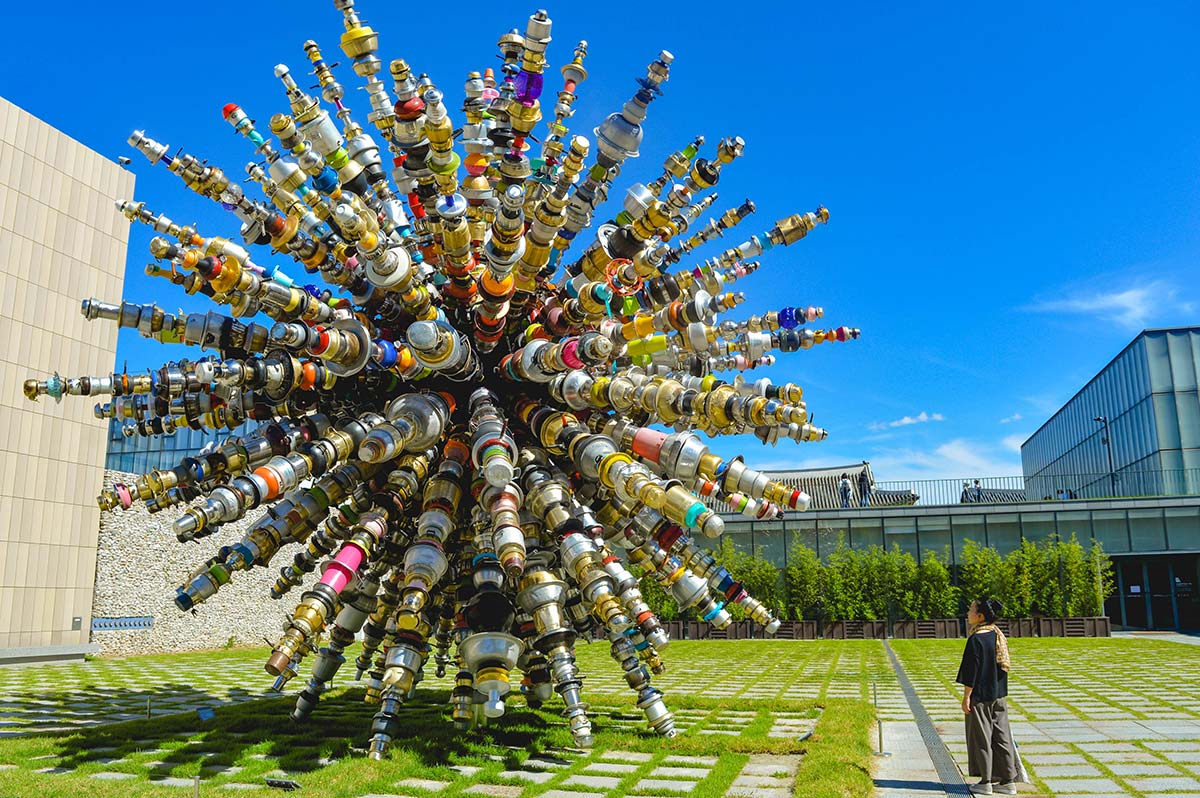
National Museum of Modern and Contemporary Art in Seoul
Many galleries wind around the National Museum of Modern and Contemporary Art in Seoul. Opened in 2013, the space was designed according to the concept of Madang (“courtyard”), in a distinctly Korean attempt to make the building dialogue with its surroundings, and create a space for refreshment and relaxation for weary visitors.
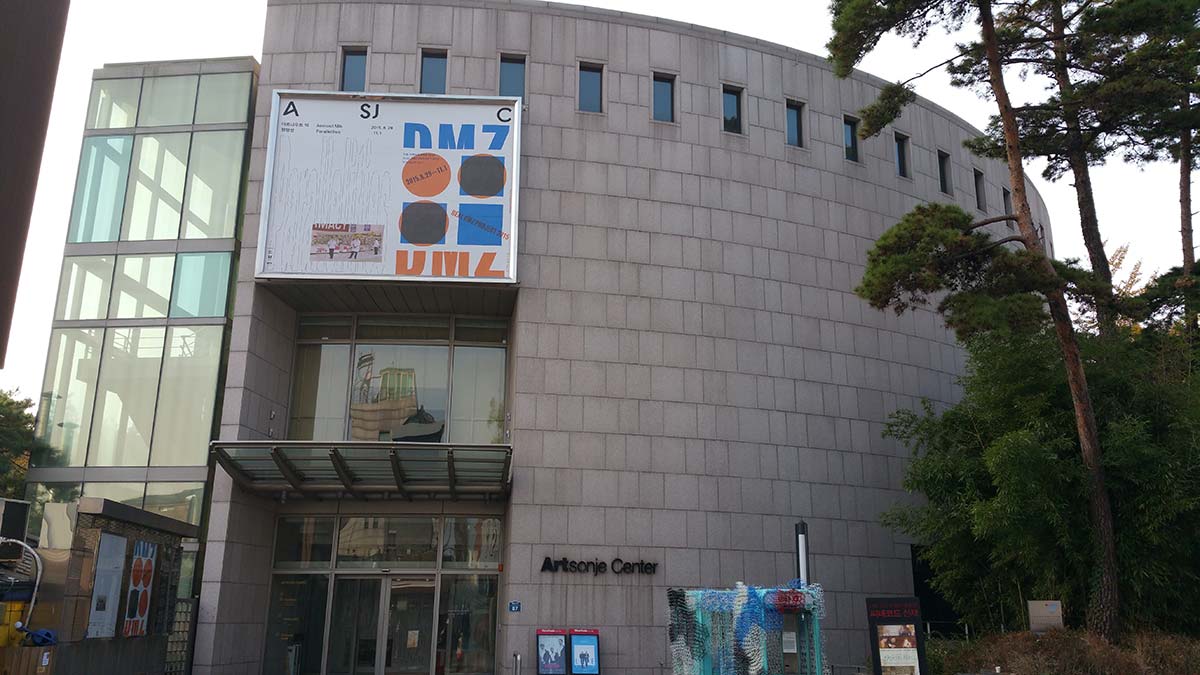
Art Sonje Center
Notable as well is the Art Sonje Center, designed by Korean architect Kim Jong-sung, who also created the Hilton Hotel in Seoul and the City History Museum—a literal “slice” of concrete. Behind, the building hosts a garden where there is a traditional Korean house called hanok. Curiously, this type of dwelling is also featured in the Speculations exhibition at the Sonje by artist and architect Do Ho Suh. In his installations, the artist wedges the hanok between city buildings in American and European cities to speak of his difficult cultural adaptation. This nomadism, which has led the artist to develop creativity and a thoroughly contemporary beauty, comes from the very city he hails from.