What does innovation mean when it comes to natural stone?
For me, innovation means reinventing and questioning what you do and how you do it.
We are dealing with a material that has been around for a few million years: a piece of rock that has to be respected. What can be done is to try to reinvent it by changing points of view.
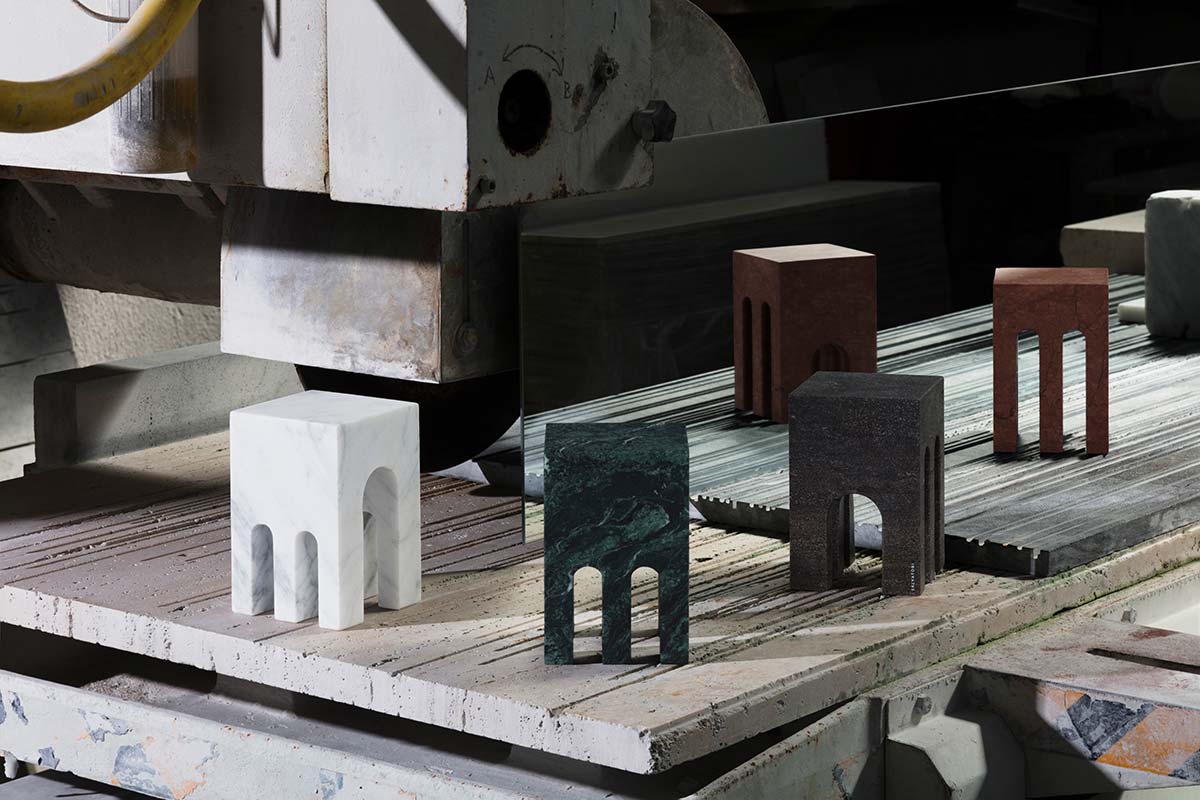
Novecento, designed by Rodolfo Dordoni, from The Village range of decorative objects
On the one hand, the reversal of points of view, on the other, the continuity of know-how.
In order to learn, people used to “andare a bottega” (go to the workshop) without any compensation. This is no longer the case. If we were to set up a training school where retired craftsmen in our area were given the opportunity to teach (and stay involved), all this know-how would not be lost. On the other hand, we are very lucky because when people come into the business, especially workers, they leave when they are very old. Today we have young people who are passionate, have a very strong sense of belonging to the company and are eager to learn. I have to say that those with more seniority transfer so much.
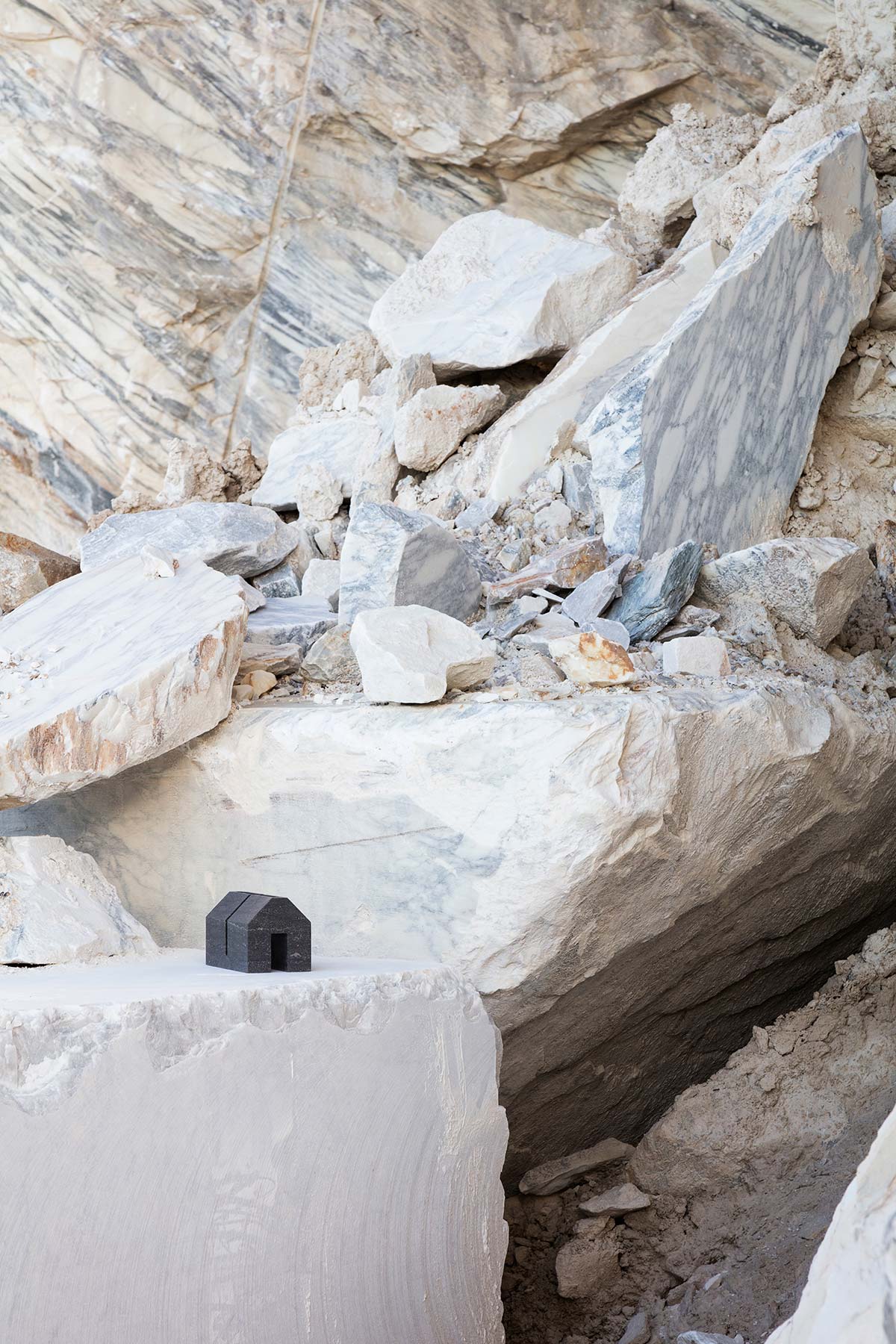
House of Stone, designed by John Pawson, from The Village range of decorative objects
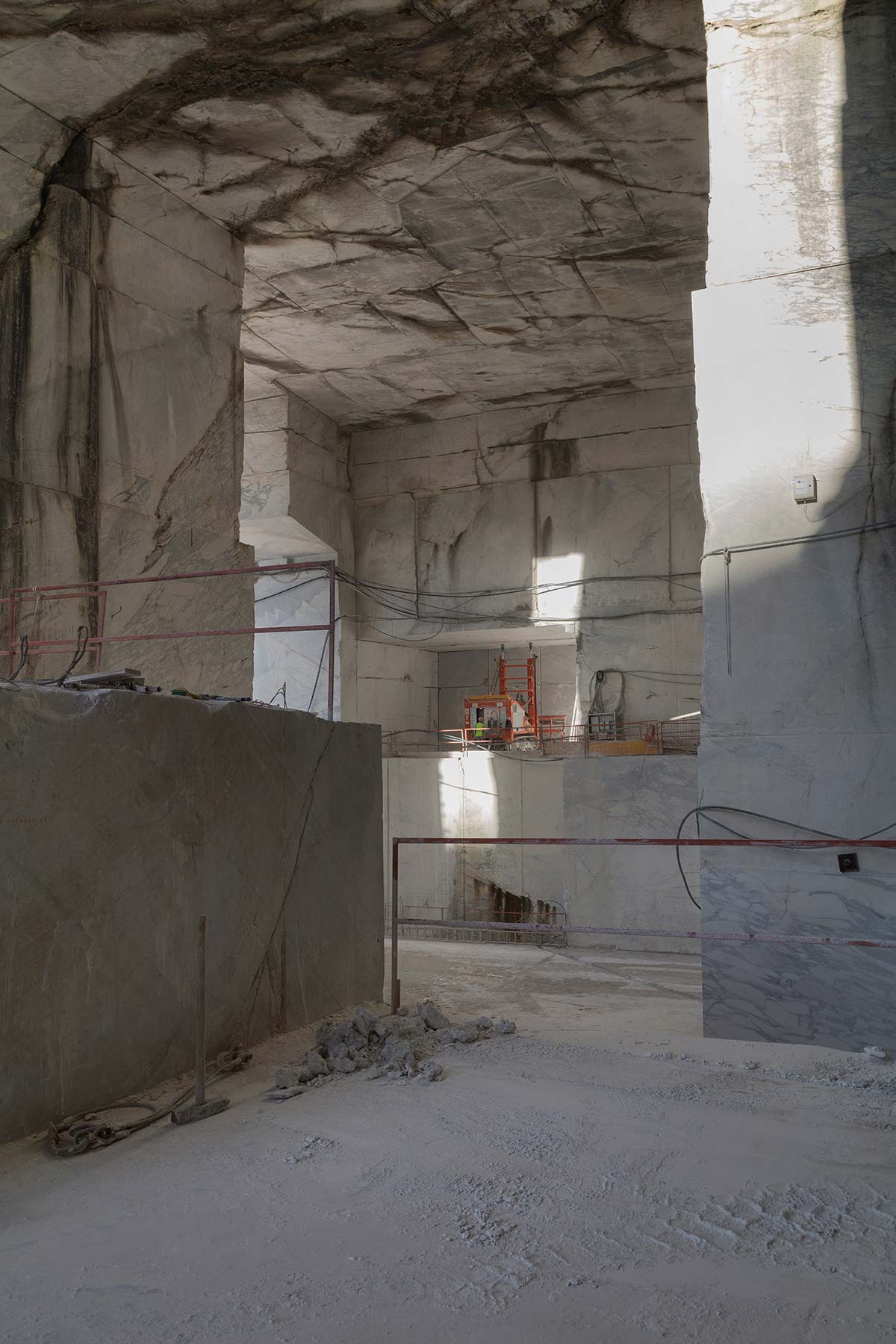
Inside a quarry in Carrara where one of the marbles used by Salvatori is extracted
So you still have good workers for the next generation?
The old craftsmen of the past are gone. A lot of our work cannot be done with CNC machines. Finishing has to be done by hand with the sensitivity of experience.
At Salvatori, you have developed machines from other industrial processes – how did that work out?
We have always been driven by passion and personal curiosity. My father started by thinking backwards. Experimentation – crazy for him, much more so than for me! – has been passed down. Between “what happens if I grind marble with tools designed for glass” and “if I scratch it with tools designed for wood”, do you know how many machines we threw away?

Lithoverde®, recycled natural stone slab
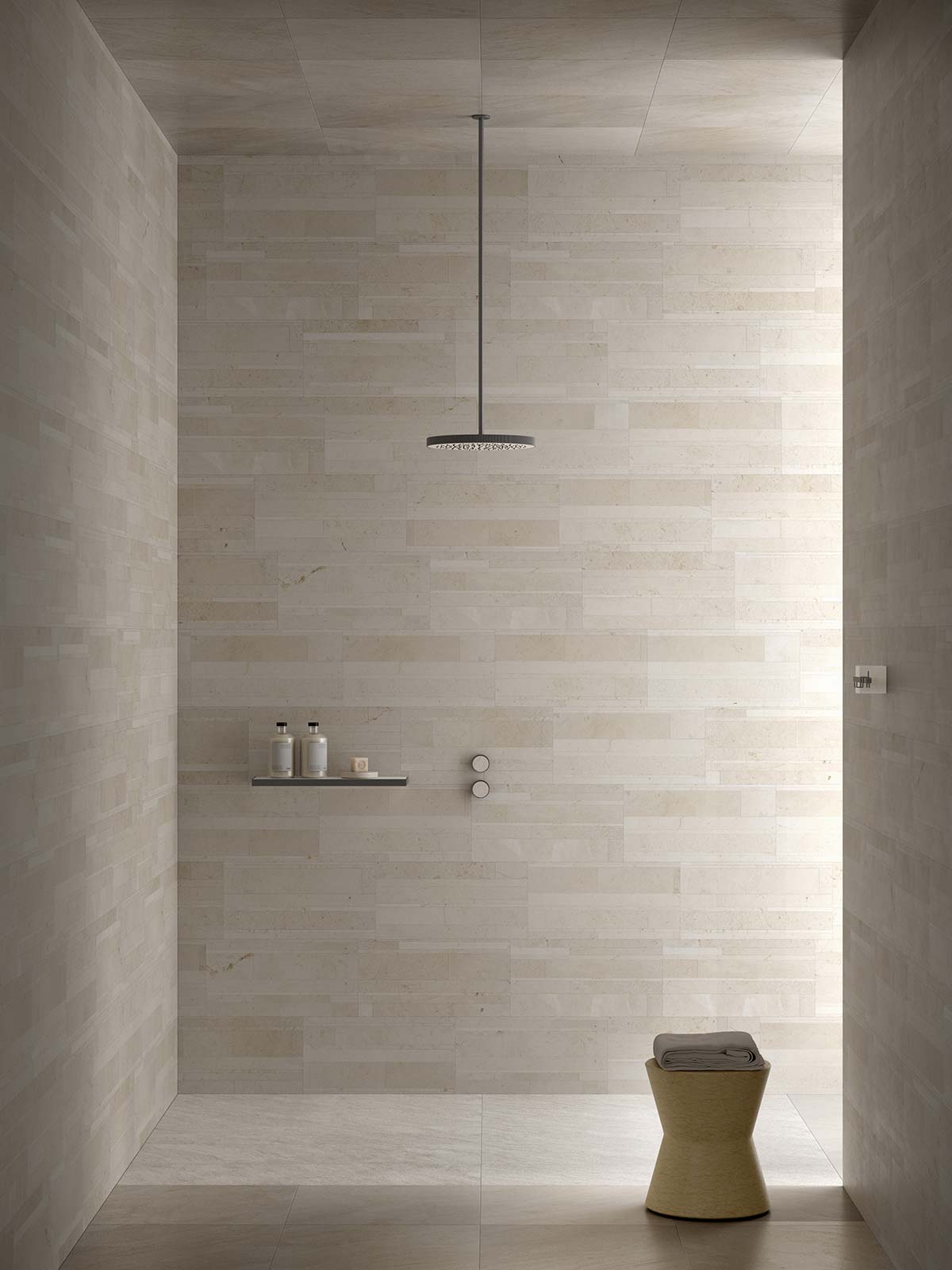
Lithoverde®, recycled natural stone slab
What kind of pieces are made with these reconditioned machines?
In the Fifties the spaccatello was born, an invention of my father Guido Salvatori. In Milan, Turin, Rome, many buildings are covered with millions of square meters of these tiles.
What was this invention made of?
Imagine a guillotine with a heavy blade under which you place the marble slabs and then give them a sharp blow. Where there is a natural internal fracture in the stone, it splits, leaving a split surface. Salvatori was born with this cutting machine: it was so unconventional that we didn’t sell a single piece for three years. Then there was a boom: we were working three shifts a day.
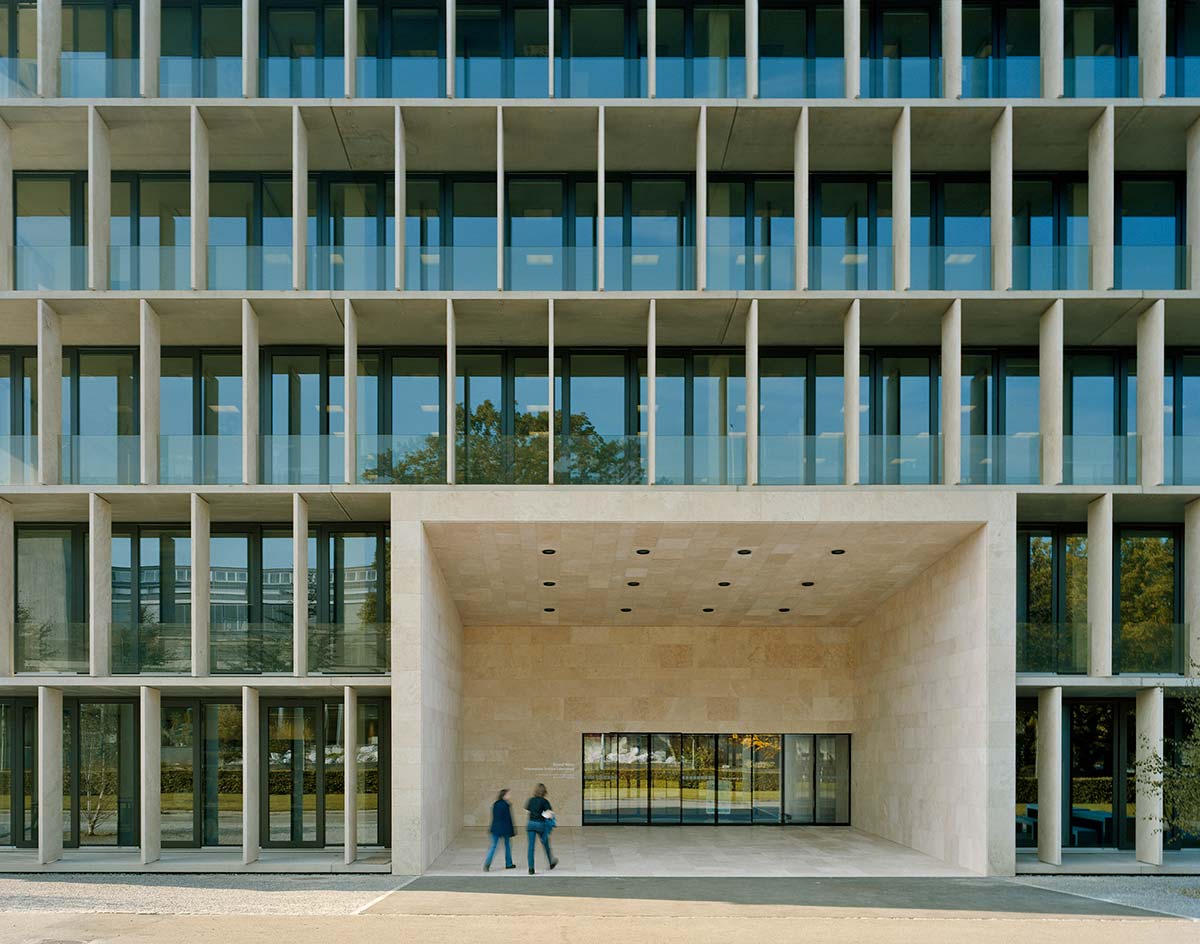
ETH e-Science Lab, Zürich, Switzerland, project studio Baumschlager Eberle
Speaking of all these experiments, were there any requests that were so special that they seemed technically impossible?
In 2006, the Baumschlager Eberle studio contacted us for the façade of the e-science laboratory at the Swiss Federal Institute of Technology Zurich (ETHZ) and asked for 6-meter travertine slabs in one piece. Everyone told them it was impossible to cut blocks larger than 3.80 meters in the quarry, as it would be very complicated and uneconomical. Instead, we did it by dismantling traditional frames, welding extensions to them and making slabs over 6 meters long.
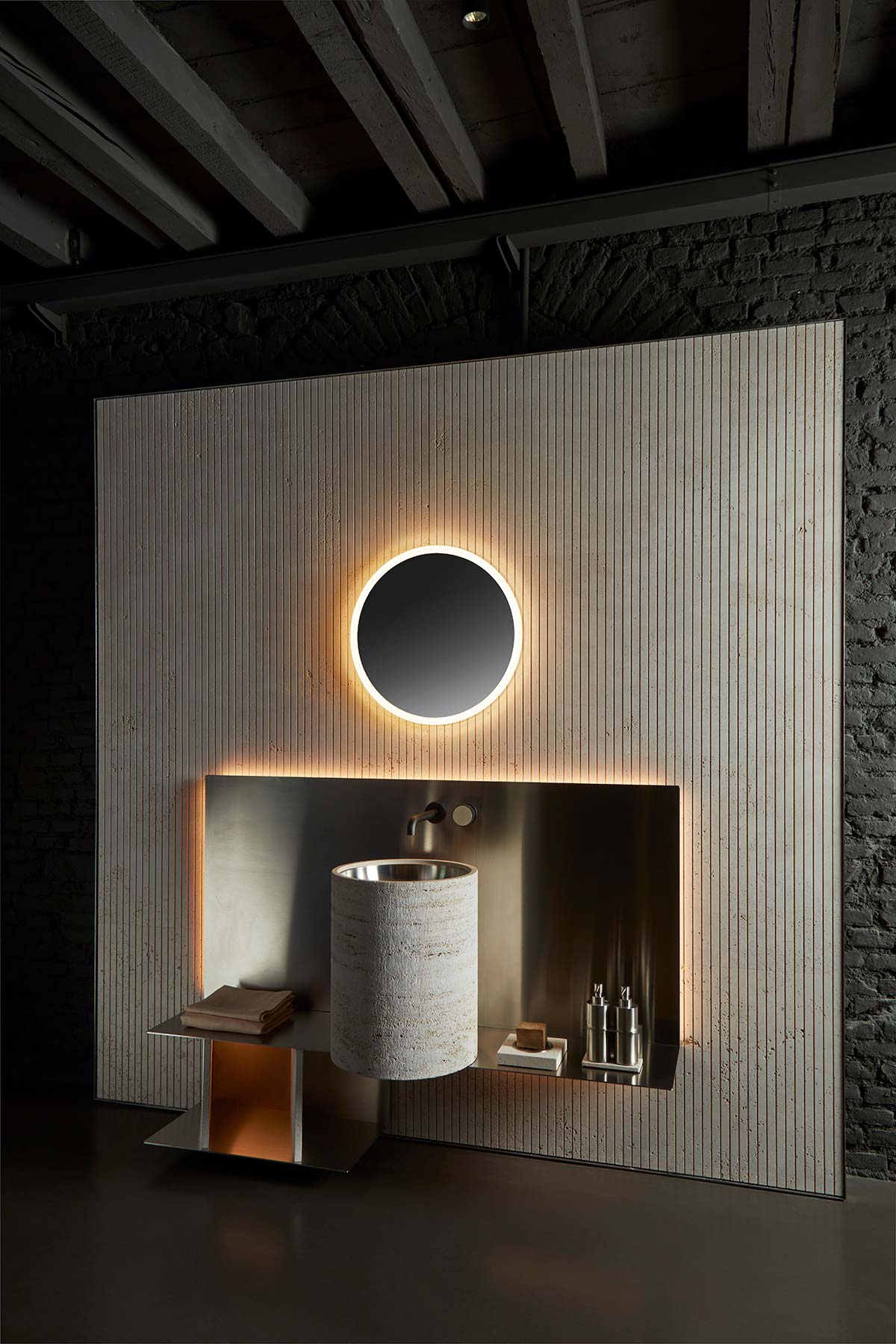
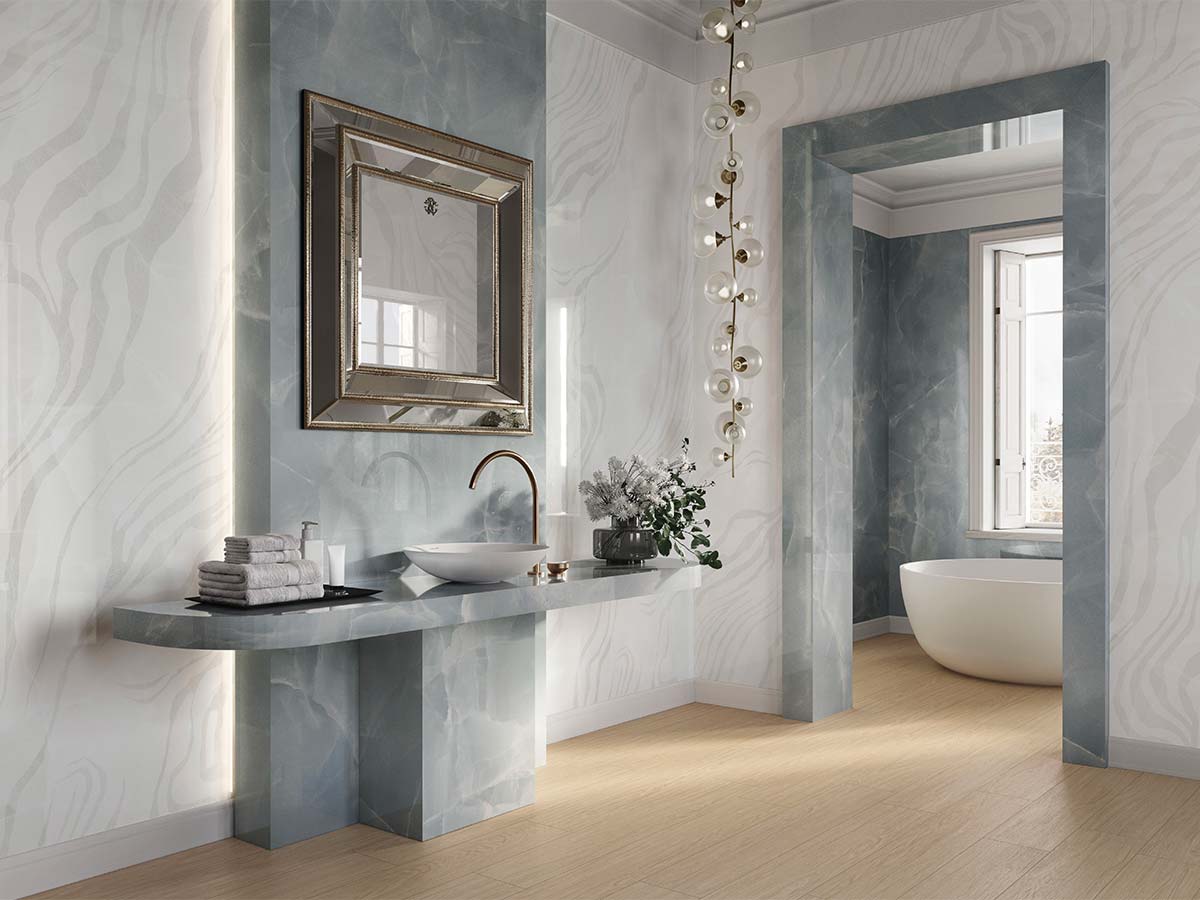
Salvatori showroom, Milan – The Small Hours collection, design Patricia Urquiola
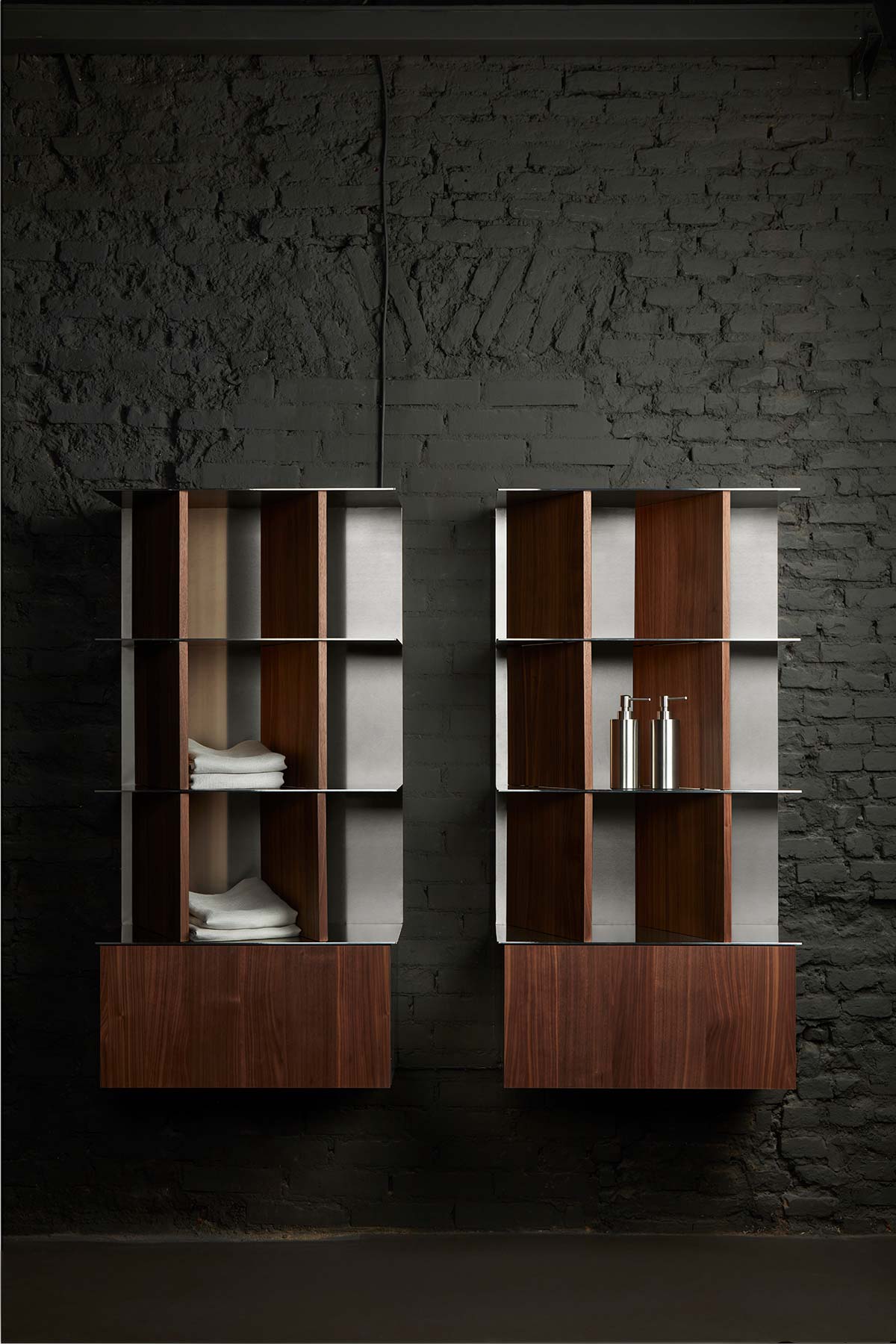
Salvatori showroom, Milan – The Small Hours collection, design Patricia Urquiola
It says a lot about the relationships you build with designers that you don’t care if they know anything about stone…
It’s true, even the people who come to work in the company don’t come from our sector, Salvatori is made up of people who bring different cultures; in designers I look for the ability to look backwards. Vico Magistretti used to say that good products always come from a good craftsman and a good designer. One pulls in one direction and the other in the other… like in music those intervals of fourths that give you emotion.
You recently started a collaboration with Urquiola.
Patricia is an example of this attention. The Small Hours, this year’s collection, was inspired by a visit I made to the Judd Foundation in New York, where I saw a stainless steel sink that Donald Judd had made for his house. I was sure that Patricia was the right person to interpret this half-craze!
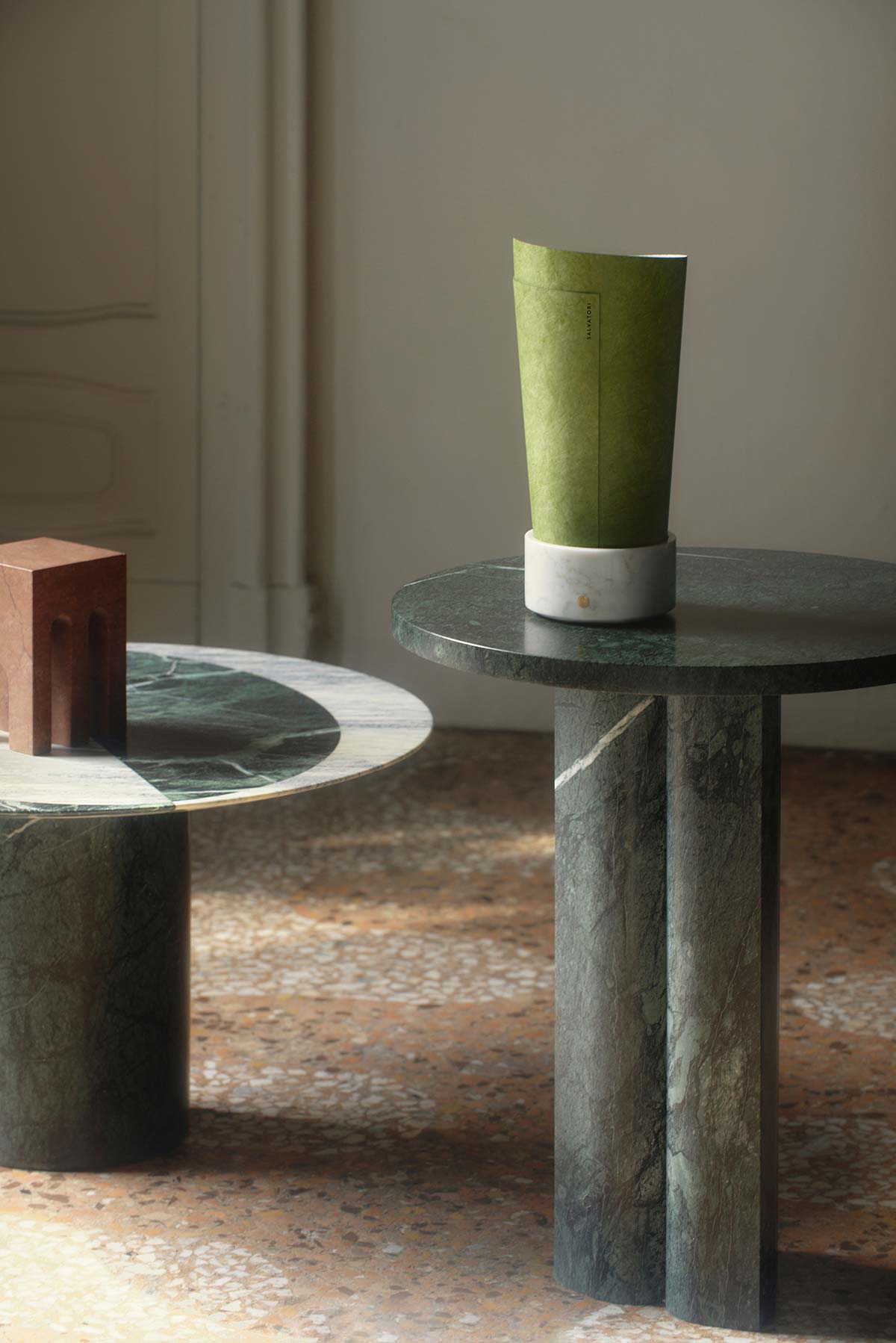
Teo, wireless table lamp, design Luca Nichetto
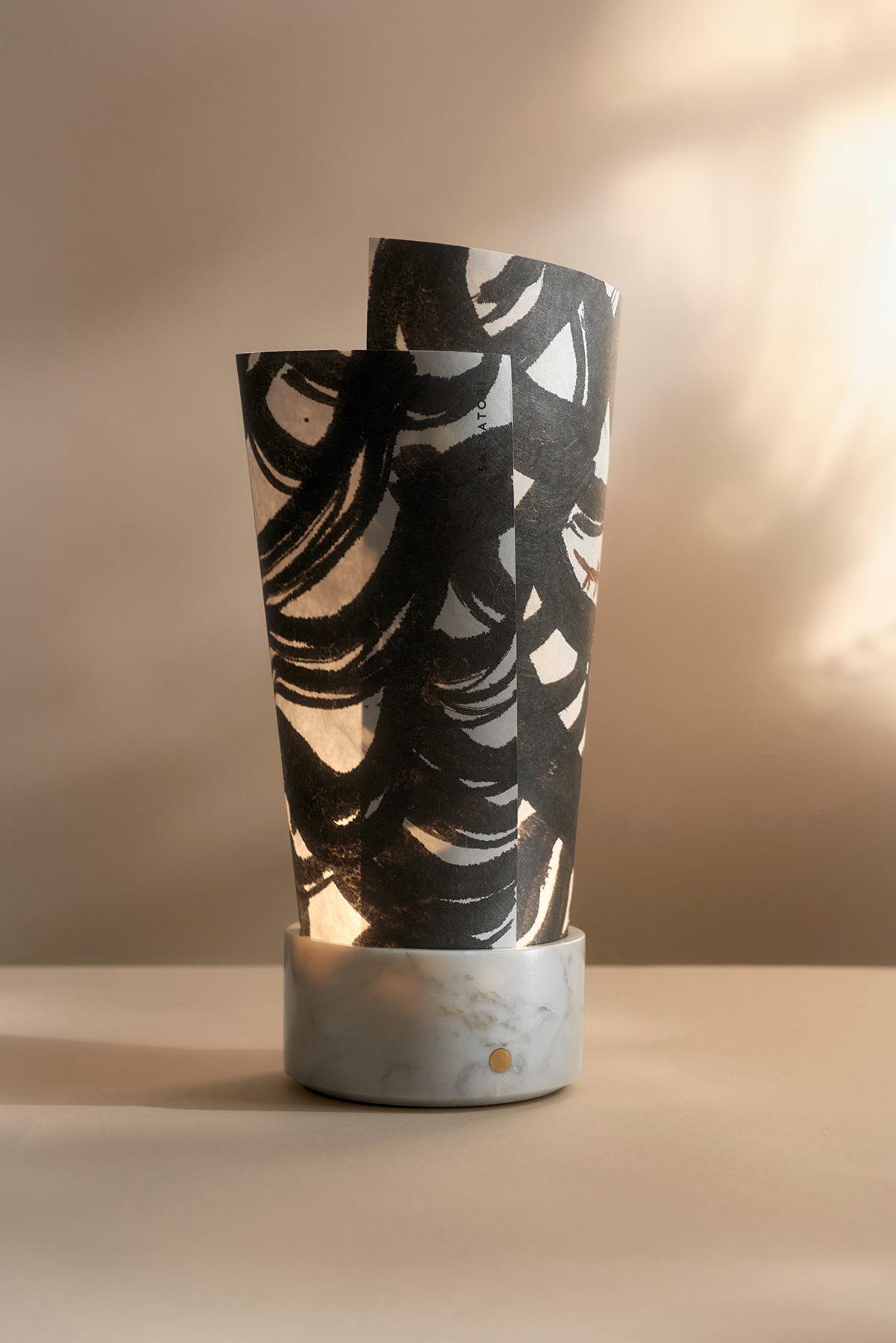
Teo, wireless table lamp, design Luca Nichetto
What are your main markets?
The company has always been very open to foreign markets, and since the 1950s our first market has been the USA, with Italy being the last. Today we have a distribution network of Salvatori single brand shops in America, China, Israel, Kuwait, Australia and all over the world.