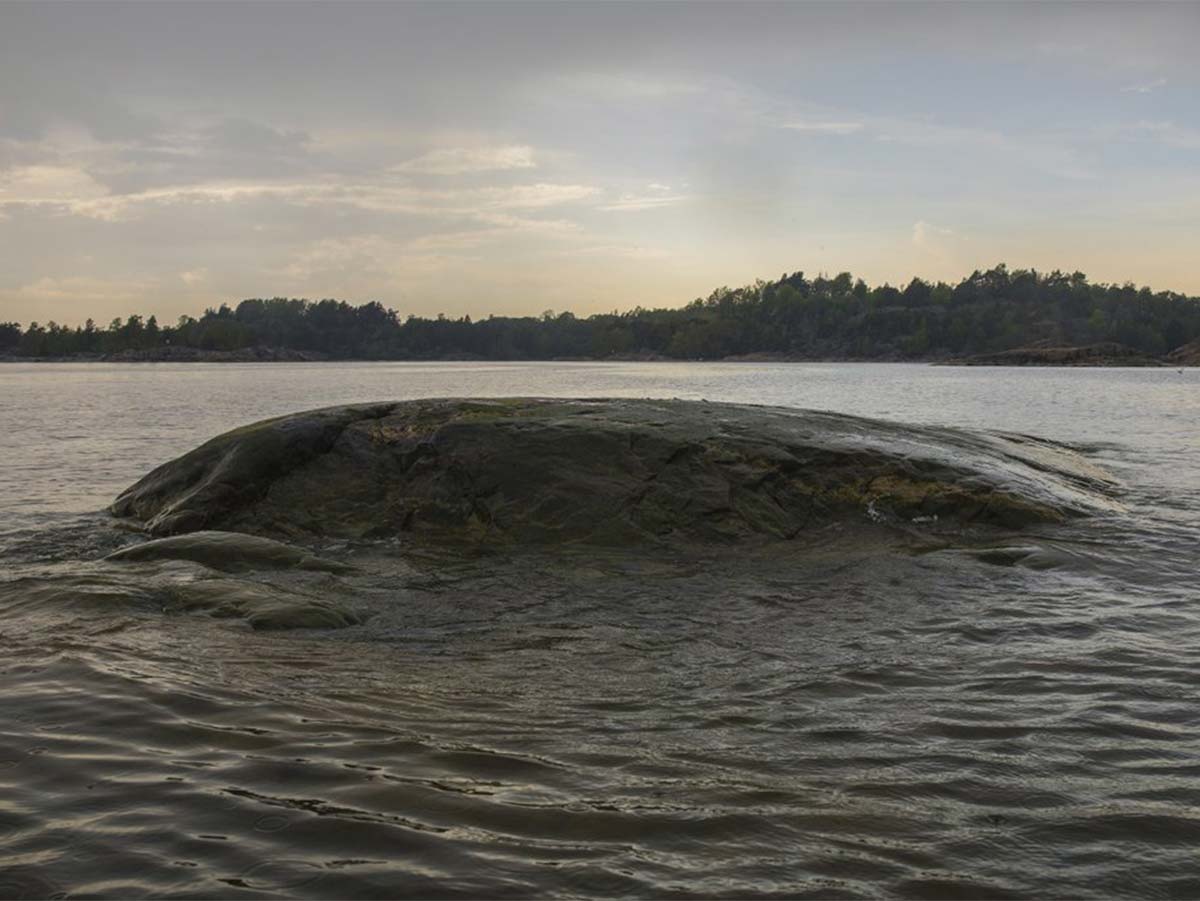
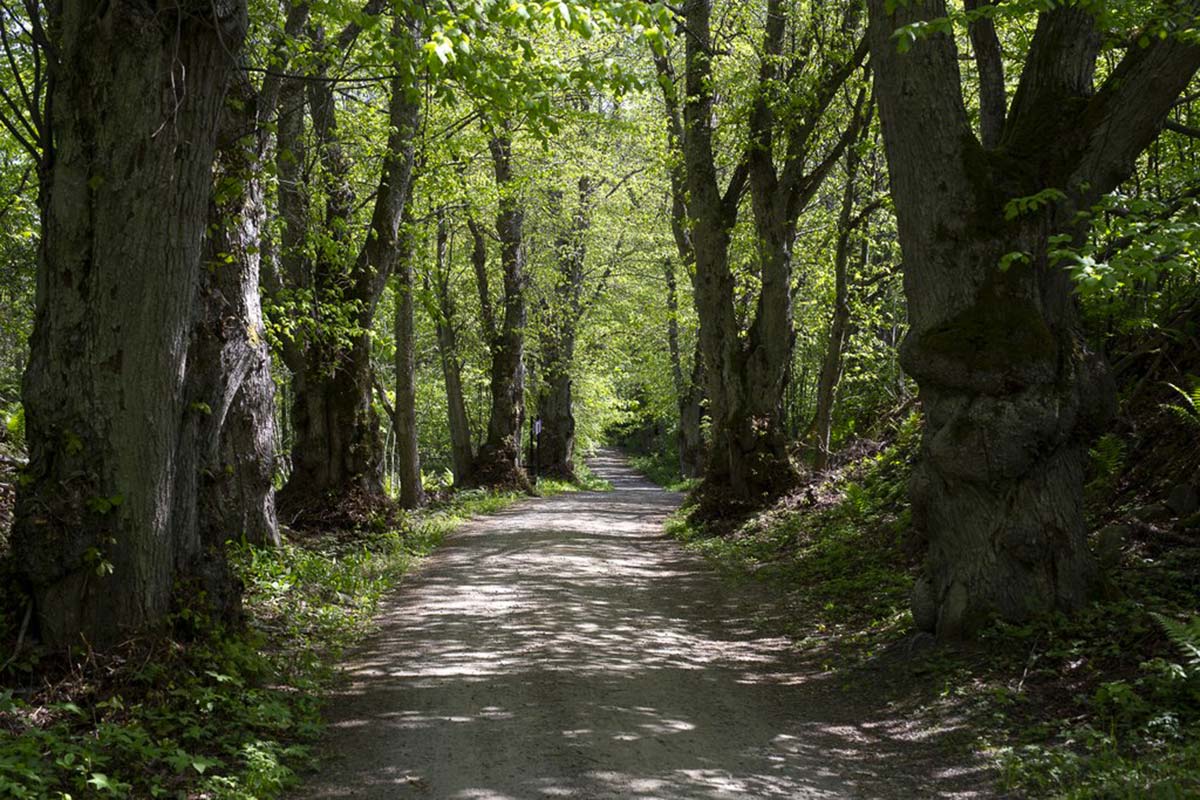
«Sustainability is not just a simple theme», Arja Miller, Director of the Helsinki Biennale. «It’s an attitude, a way of living in the world». The echo of this vision resonates in the gunpowder magazines of Vallisaari island, among the lime tree avenues of Esplanade Park, and in the immaculate rooms of HAM, the Helsinki Art Museum – very different places, yet united by the project of a “slow biennale,” contrasting with an increasingly frenetic art world.
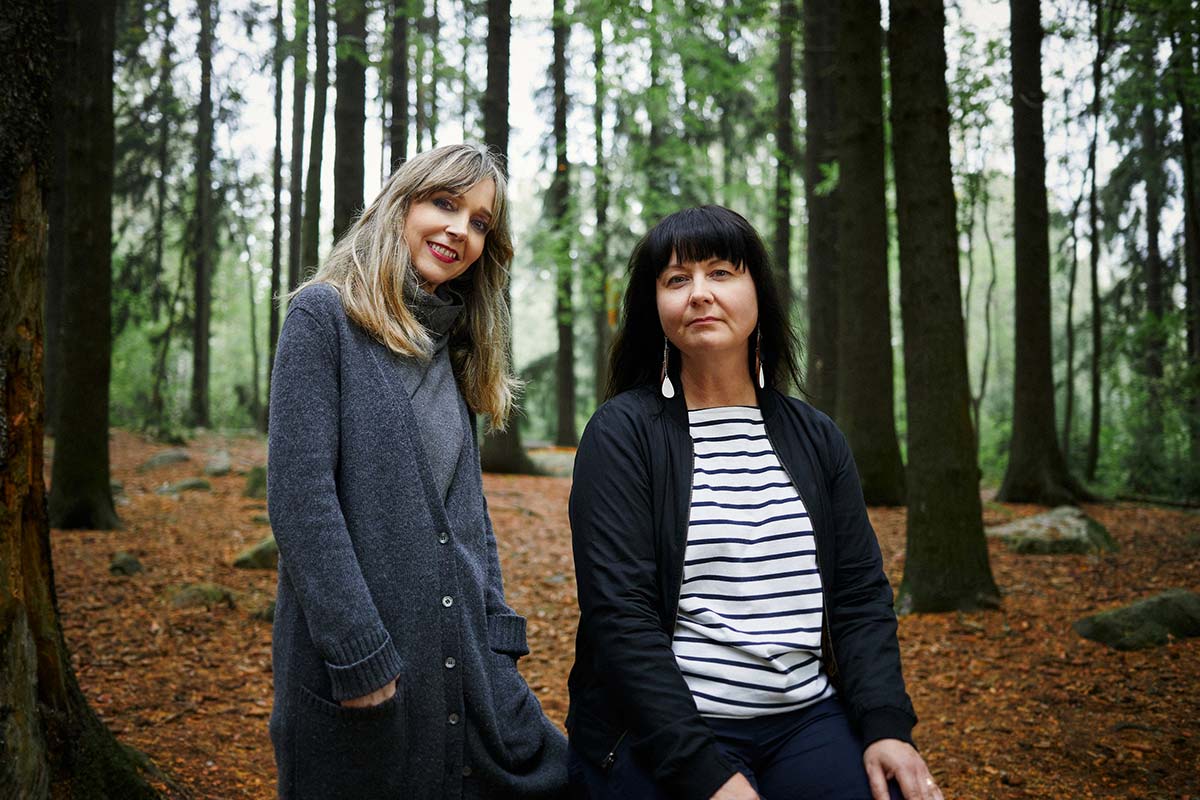
Blanca de la Torre & Kati Kivinen – Photo © Ilkka Saastamoinen
Associating Nordic countries with environmental awareness might seem stereotypical. Yet, Finland’s vision is deeply rooted, acting, both in its proposals and its methods, against trends and greenwashing proposed by certain artistic events whose offerings contradict their intentions. Titled “Shelter: Below and Beyond, Becoming and Belonging“, this Biennale seeks, with varying degrees of success, to explore the relationship between art and the environment in various ways: in its themes, in how works are presented, and in the event’s implementation itself. Although it’s impossible to conceive of a large contemporary art event with zero emissions, it’s precisely in the attempt to approach this zero that Helsinki’s peculiarity lies. The two curators, Kati Kivinen and Blanca de la Torre, created a sustainability decalogue for the Biennale that articulates their ecological ethics, guided by the principle of “good living.” In practice, the measures adopted include calculating the carbon footprint, prioritizing local and non-toxic materials, and promoting traditional craftsmanship.
Vallisaari, Helsinki – Photo © Viljami Annanolli
Between nature and culture
This third edition of the Biennale seeks to blur the line between what is nature and what is culture, positioning itself as a new manifesto for the creation of “ecological” exhibitions, while also presenting other major themes that intersect with the fight for the environment, namely postcolonialism, feminism, and indigenous narratives. The artist selection process began by compiling names from both the Global South and the Northern European art scene, while the landscape was conceived as a collaborator, rather than just a backdrop or a theme. The idea of redefining the relationship between humans and nature has long been central to many Biennales in recent years, from Venice to last year’s Gwangju Biennale, curated by Nicolas Bourriaud.
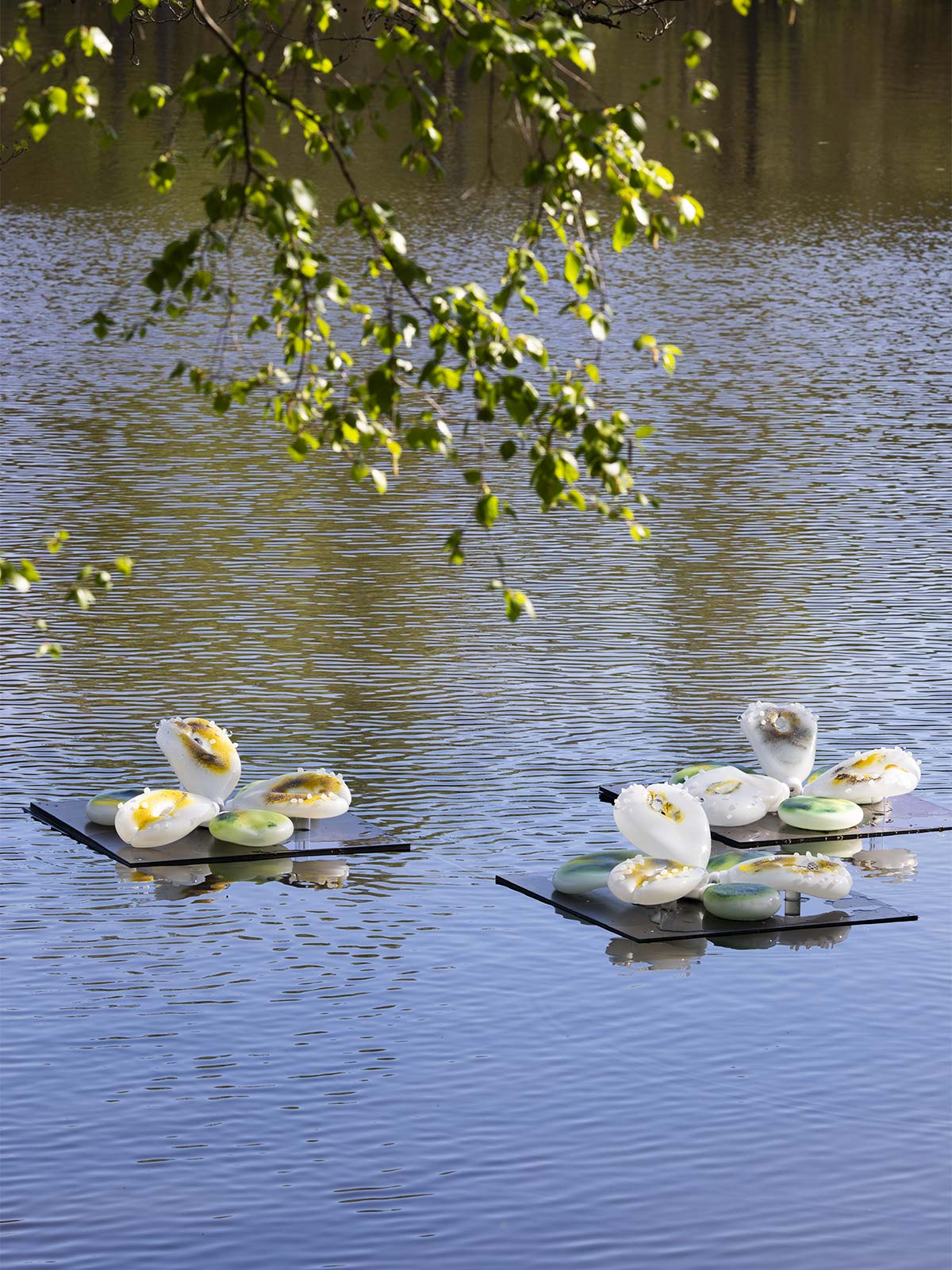
Zostera Marina’s Song of Increase, design LOCUS / Tanja Thorjussen & Thale Blix Fastfold, 2025
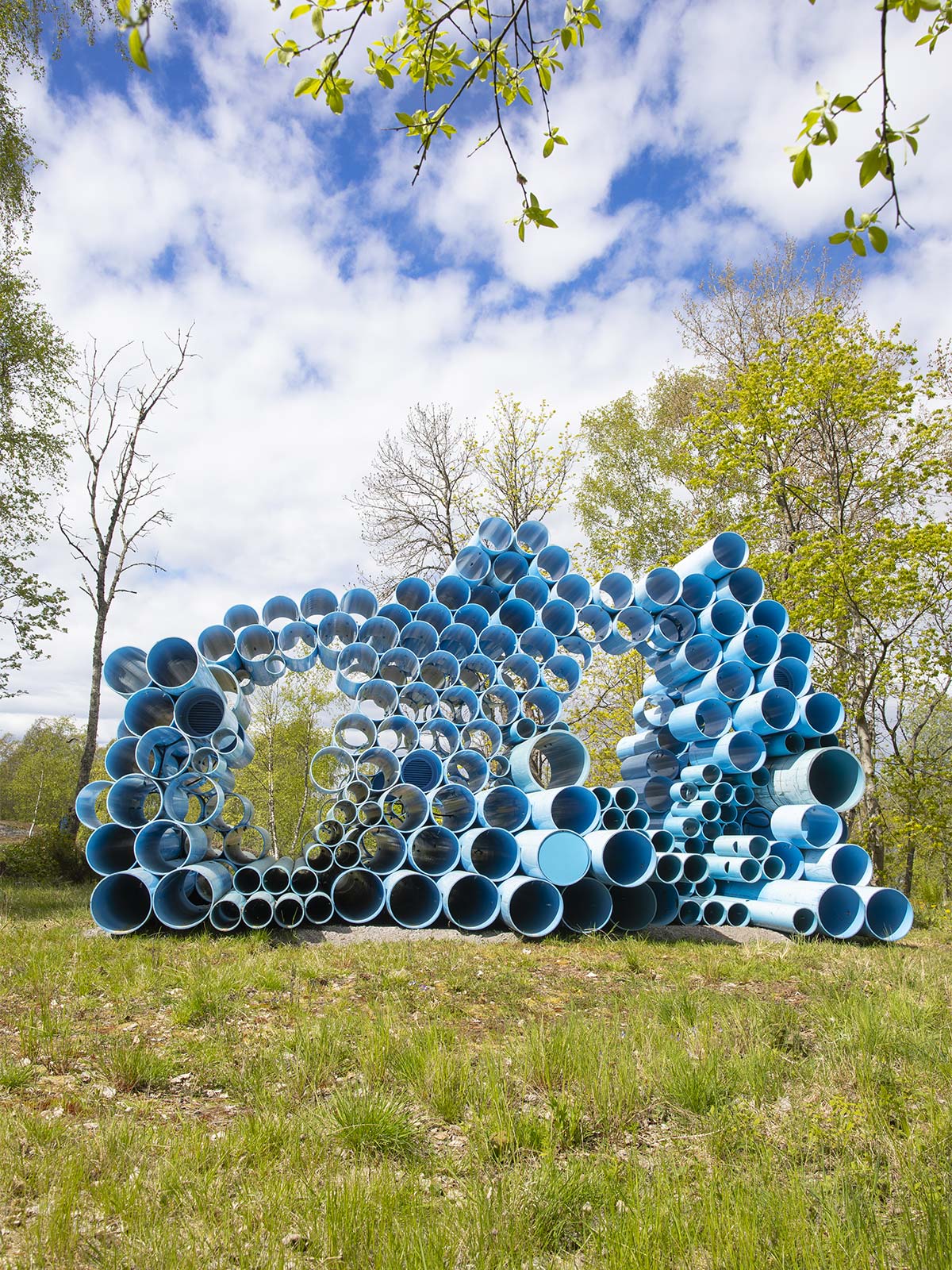
Futurity Island, design Nomeda & Gediminas Urbonas
Like the latter, the Helsinki Biennale is premised on the abandonment of anthropocentric thought and practice. «After an extensive series of online studio visits, we sought project proposals in line with the idea of repair and alternative narratives, intertwining scientific knowledge with indigenous cosmologies, mythologies, and folklore», explains de la Torre. «Priority was given to multidimensional, multisensory, and participatory practices, as well as public art». «What makes the Helsinki Biennale so special? We believe there are three key aspects», says Arja Miller, Director of the Biennale and HAM, the Helsinki Art Museum. «The first is the close collaboration with the city, the second is the public dimension of art. The third is the presence of the sea and the islands in front of Helsinki, and the stories they carry». There are also three event sites, each offering a very different context in which to experience artworks, pushing visitors to engage with different modes of fruition in diverse environments: the white cube, the forest, and the garden.
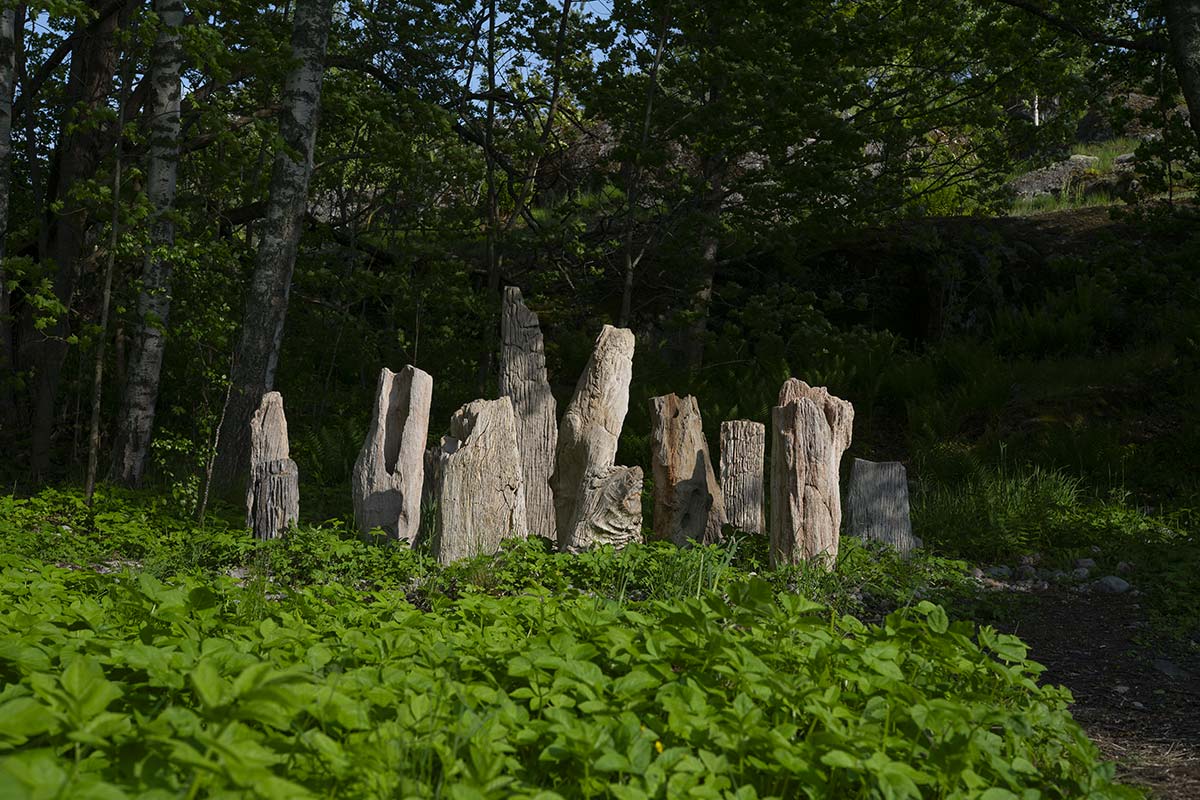
Tidal Tears, design Hans Rosenström, 2025 – Photo © Sonja Hyytiäinen
Three places of fruition
Whether it’s the Venice Biennale or the Istanbul Biennale, it seems every respectable major art event must involve some kind of sea transport. Helsinki is no exception, and in the mist of a rainy day, a ferry takes us to Vallisaari island, once a military outpost, whose historic buildings have now been reclaimed by nature. Here, artworks strive to adapt to the local conditions, to humidity, to the rhythms of the tides, and to pervasive vegetation: «We thought of a space designed not only for human enjoyment, but we imagined how it could also be experienced through the eyes of other species», explains Kivinen. «On Vallisaari, artworks interact with the existing environment. In a sense, the island hosts us».
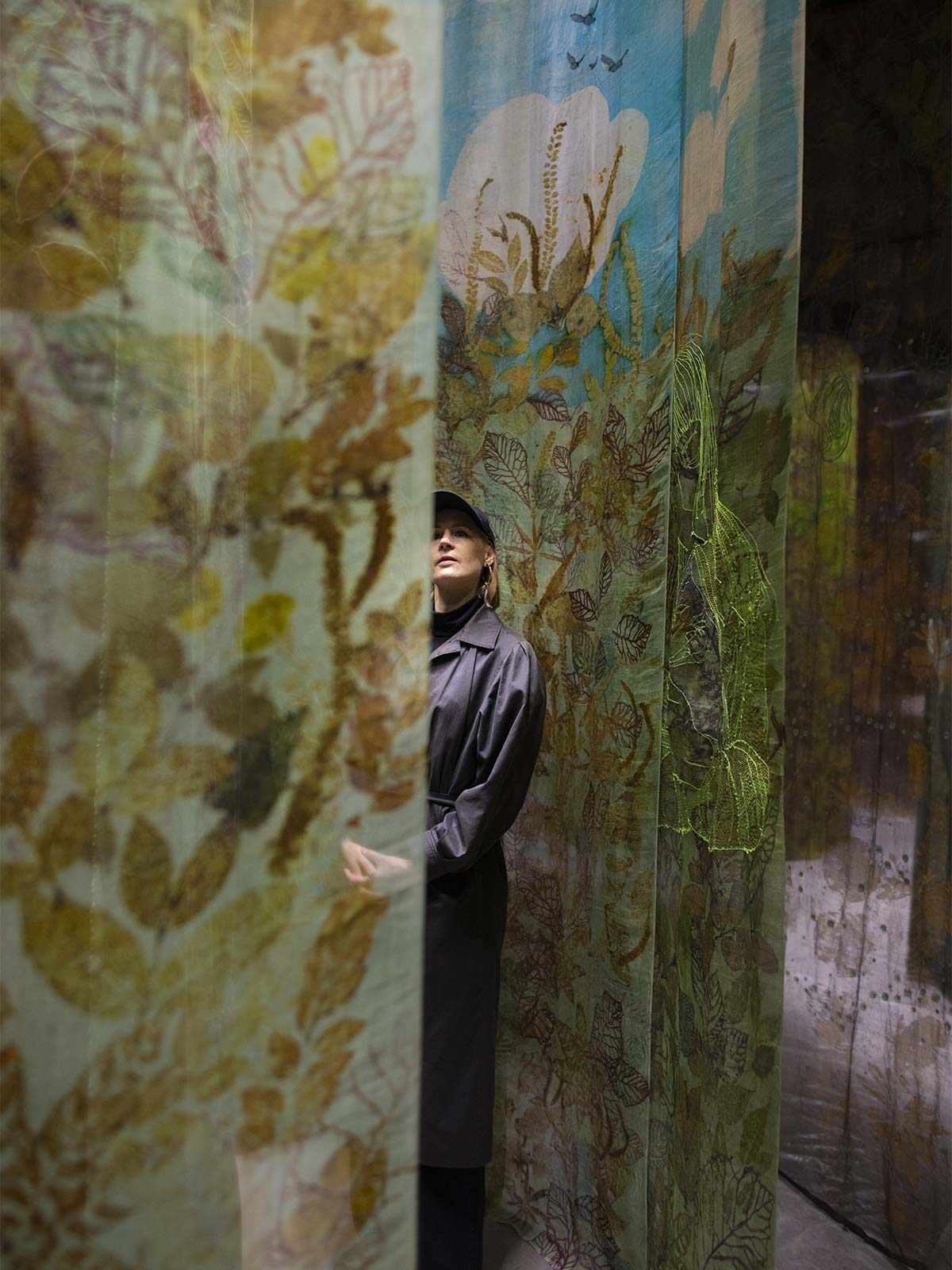
Witness, design Geraldine Javier, 2025 – Photo © Maija Toivanen
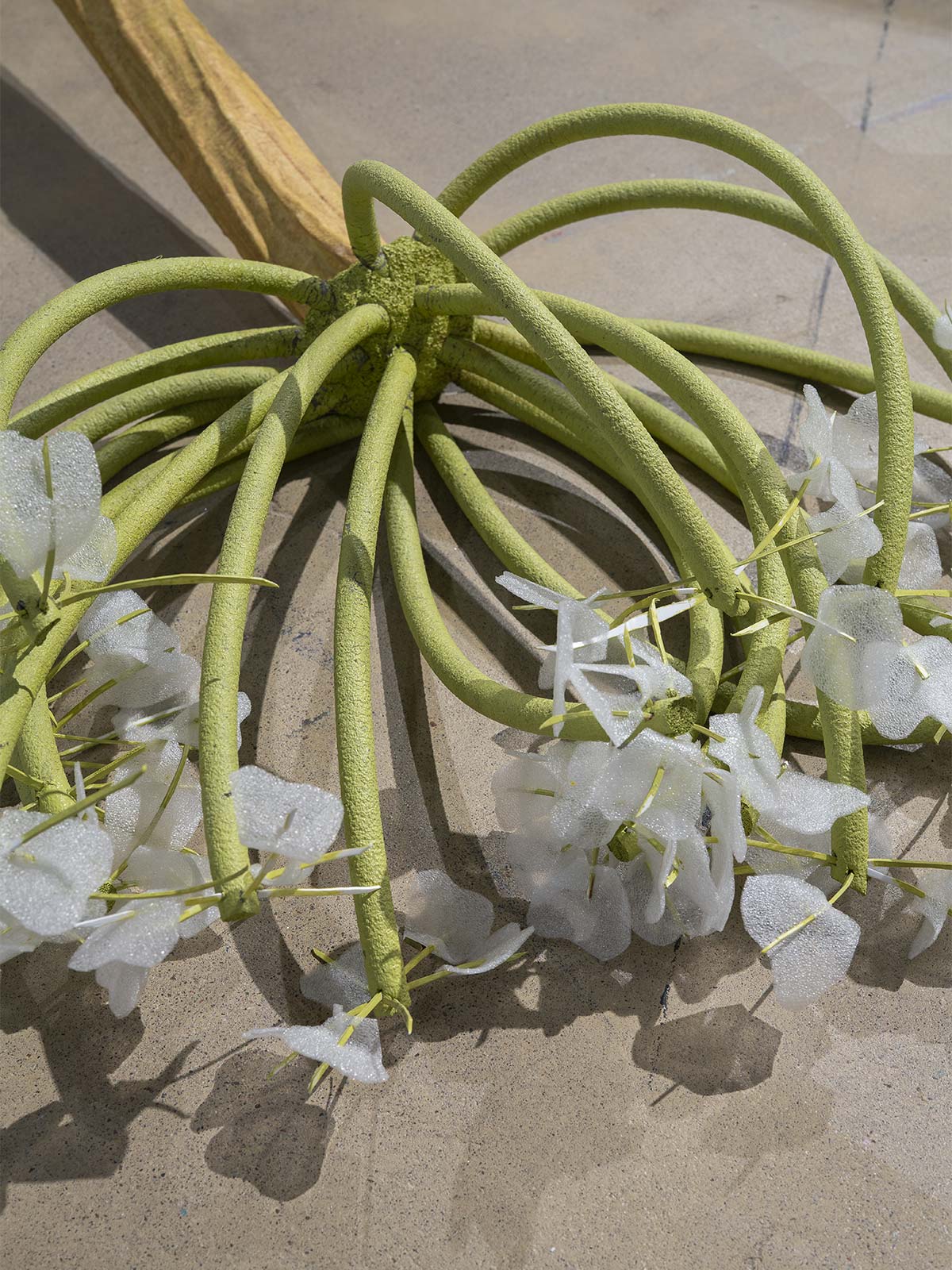
The Giant Hogweed, 2020, design Ingela Ihrman – Photo © Sonja Hyytiäinen
Successful examples of this dialogue include “Witness” by Filipino artist Geraldine Javier, which transforms Vallisaari’s former gunpowder magazine into a container of memory, made of layers of thin printed veil forming ineffable columns. Javier’s process is based on direct printing on fabrics of local flora, and embodies the co-creation process with nature, at the heart of the Biennale. «For me, it was about evoking tree rings, the first to be affected by environmental changes», Javier explains. «Each layer of fabric replicates a ring, and tells a different story. There’s one particular work that evokes Vallisaari’s history, and how the island was abandoned after the war, allowing nature to proliferate».
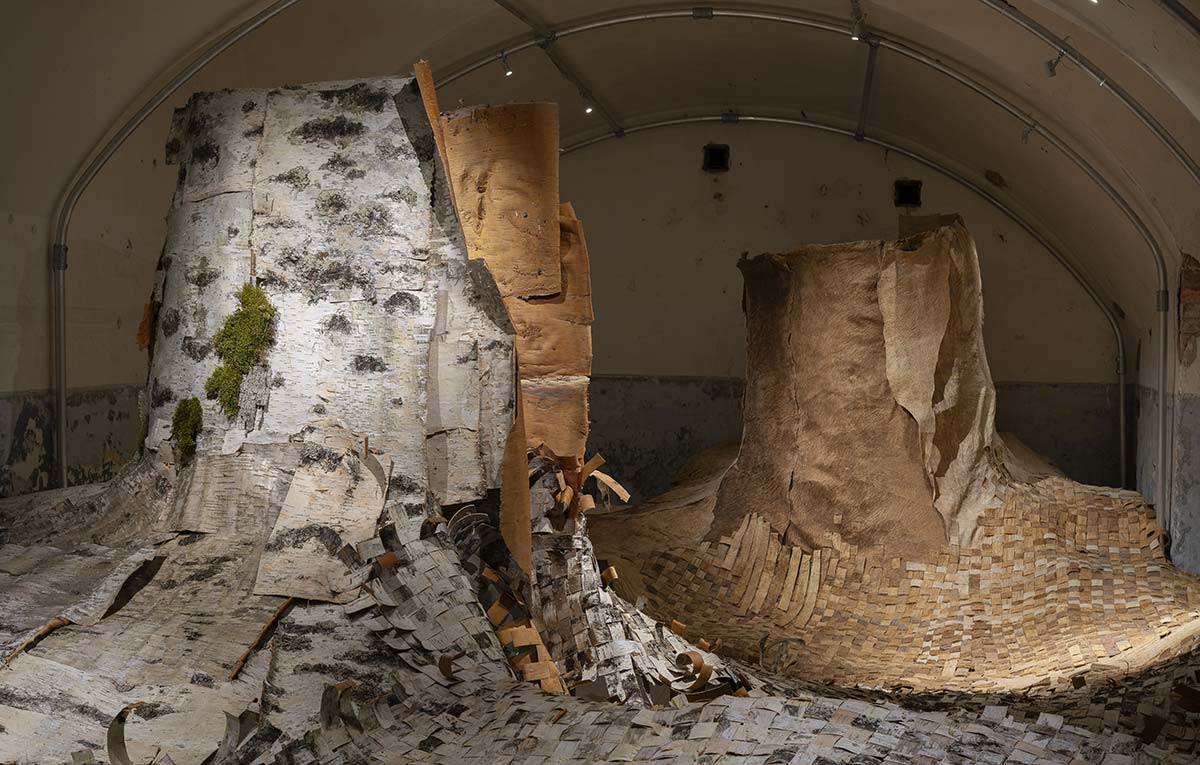
Interwoven Stories, design Ana Teresa Barboza, 2025 – Photo © HAM Helsinki Biennial, Sonja Hyytiäinen
Another work, “Salt Bark” by Ana Teresa Barboza, creates a connection between different hemispheres through the medium of birch bark. Using two types of bark, one from Finland, the other from the Peruvian Amazon, the artist creates an installation that unfolds in different rooms of a gunpowder magazine. Barboza’s collaboration with local artisans from Puerto Maldonado led to reproducing the stories of these workers by carving them onto the bark, intertwining stories from very different geographies.
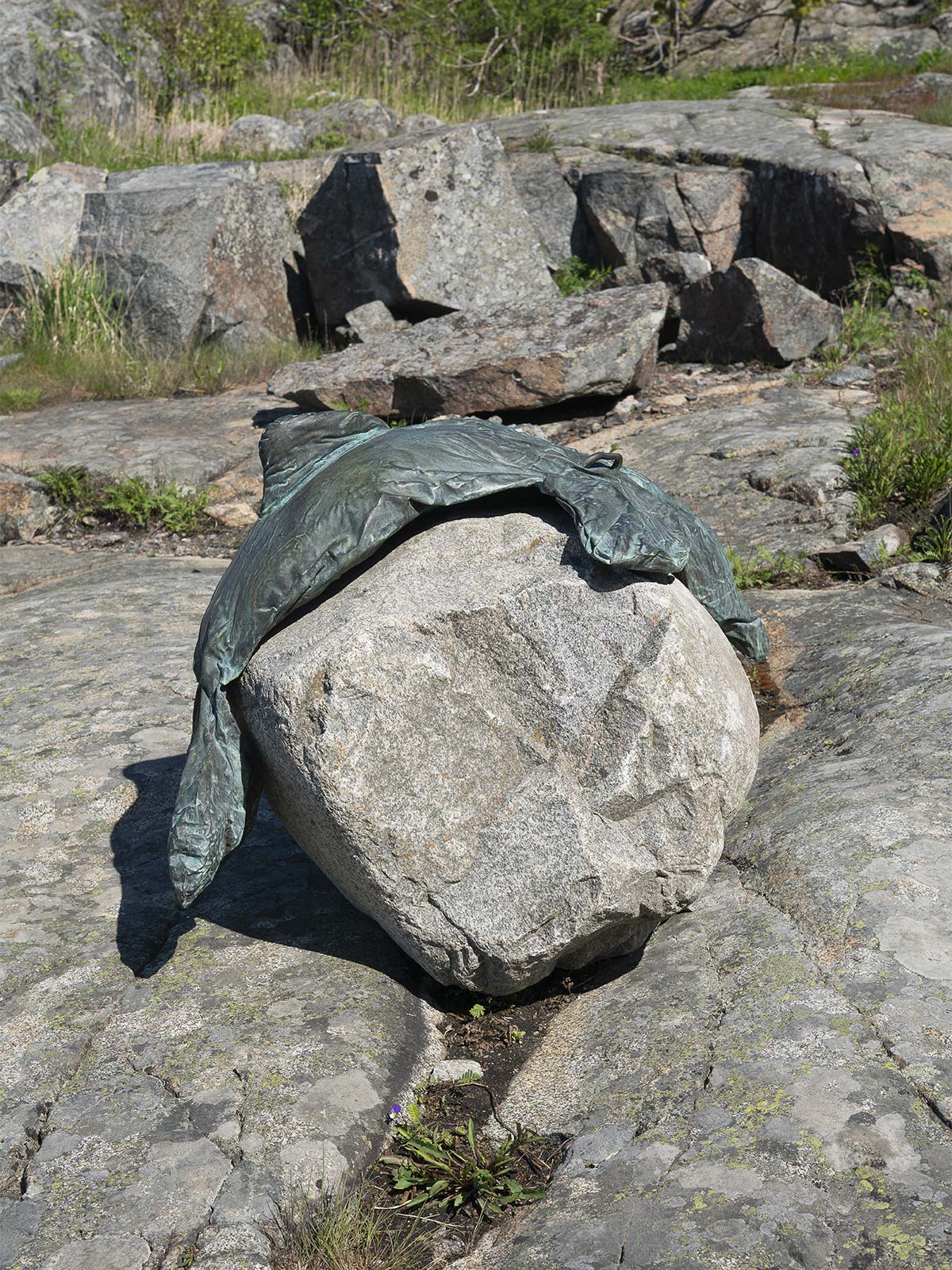
Stranding, design Sara Bjarland, 2025 – Photo © Sonja Hyytiäinen
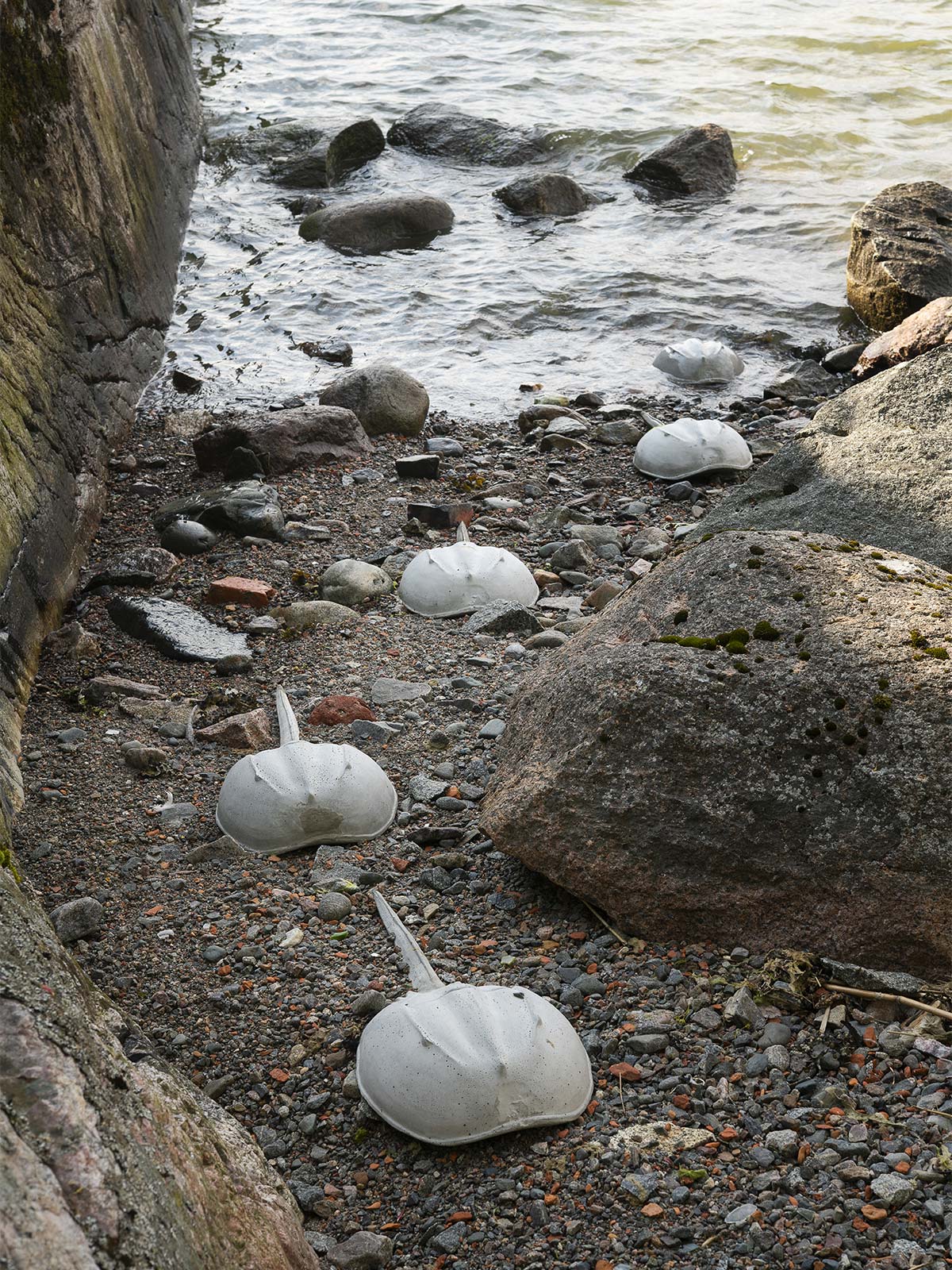
Limulus Polyphemus, design Tue Greenfort – Courtesy of König Galerie
Also interesting is the project “Learning to Be Better Lovers (Forest School)“, housed in a small cabin on the path in Vallisaari by New York-based Irish artist Katie Holten, who for over a decade has been creating “tree alphabets“. «We need to learn to take care of each other, but also of this planet», the artist reminds us. «The idea of learning to ‘love better’ also extends to nature». However, one might think that even if the island itinerary, and the pilgrimage from work to work, which takes about an hour in a wild nature, is fascinating from a conceptual point of view, this does not necessarily work from a practical point of view.
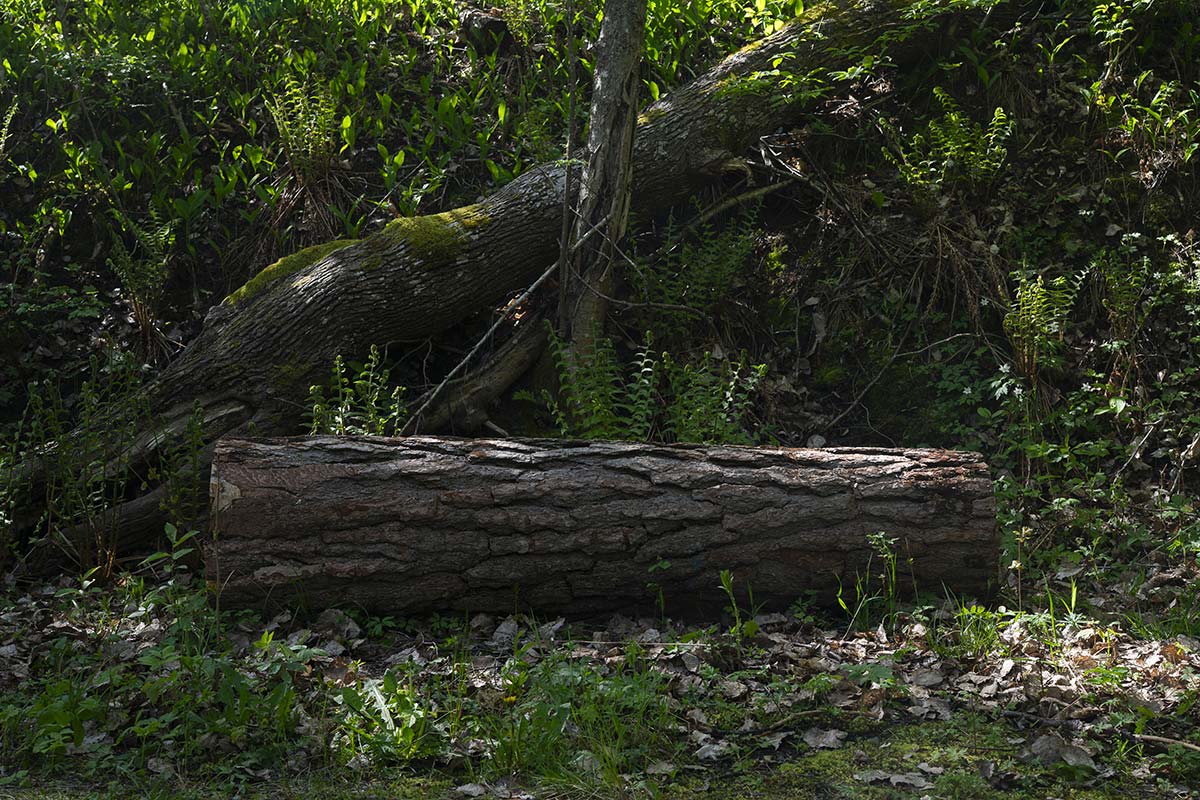
Invasive Scent, design Raimo Saarinen, 2025 – Photo © Sonja Hyytiäinen
The first question that comes to mind is whether there is really a need to add artworks to the natural space, especially if these are not conceived as land art, and thus often intended for other contexts, and are not necessarily in direct dialogue with the space. From art experiments in natural sites like the Khao Yao Art Forest near Bangkok, which places videos and a series of installations in the natural environment, to the spectacular and booming technological and luminous works on the islands of Abu Dhabi, it emerges that nature is beautiful and rich as it is.
And if placing works in the desert favors artistic vision, making mirages appear in a fundamentally empty space, the forest is already full of elements, it is an already “furnished” space, so to speak. The presence of works in the forest most often ends up confusing the viewer, just as when art exhibitions are held inside historic houses, where art is hidden among lamps, relics, and old prints. Moreover, participating in a light forest trek in the drizzle does not necessarily predispose the mind to art enjoyment in the same way as a neutral space. Walking through the different sites on Vallisaari island, one finds more the need to detach from civilization and the imprint of humanity, rather than seeking it in installations and works. In short, if art may need nature, the truth is that nature does not need art.
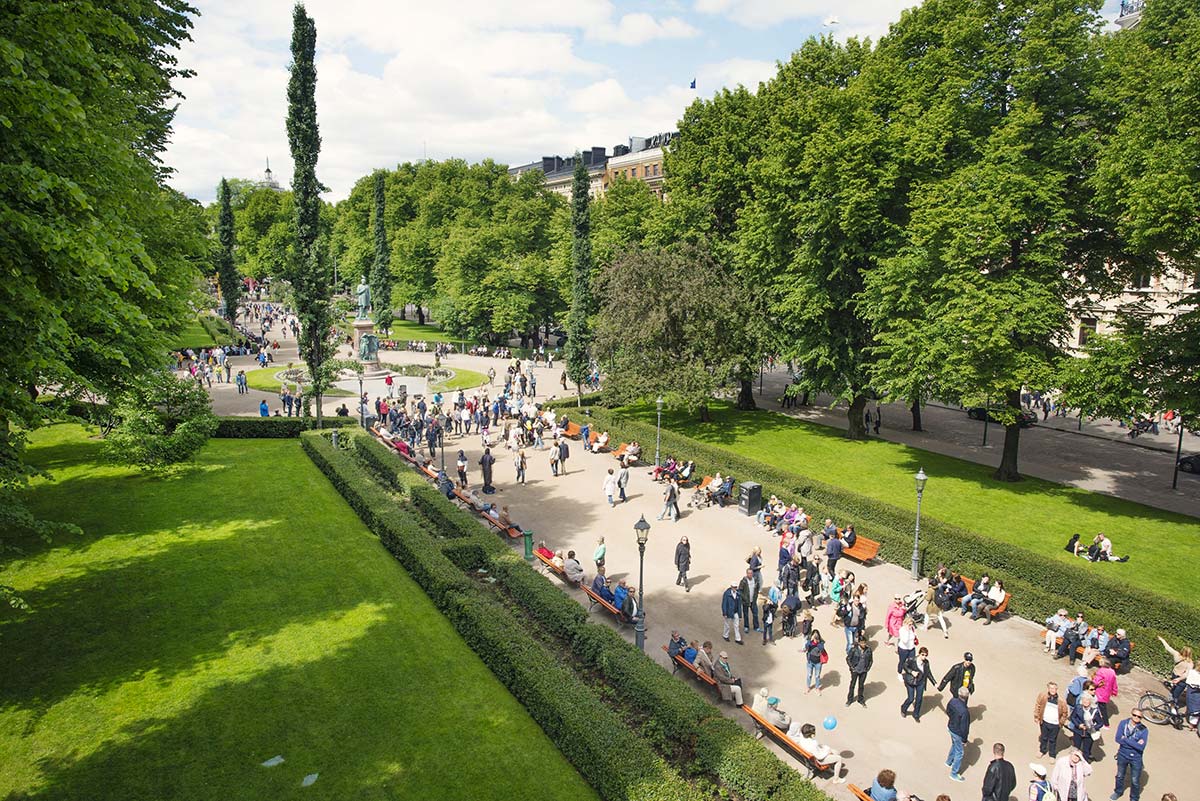
Esplanade Park – Photo © Lauri Rotko
The garden as synthesis
The White Cube might seem the most boring option for addressing the theme of the environment, yet it remains the most reliable. In this sense, the part of the Biennale inside HAM works better, although the exhibition itself does not present particular poetic peaks. At HAM, the visitor is greeted by a gigantic seagull head, which in some way exemplifies the playful spirit and love for the animal kingdom that animates Helsinki residents (representations of local fauna are omnipresent in squares and buildings). In the museum, indigenous and diasporic stories dominate, emphasizing the inseparability of climate and social justice. Yet, the impression is somewhat similar to what one gets looking out from the terrace of Helsinki’s tallest building, Hotel Torni: the view of the Finnish capital is that of a city where no building stands out, but all integrate harmoniously into an ecosystem.
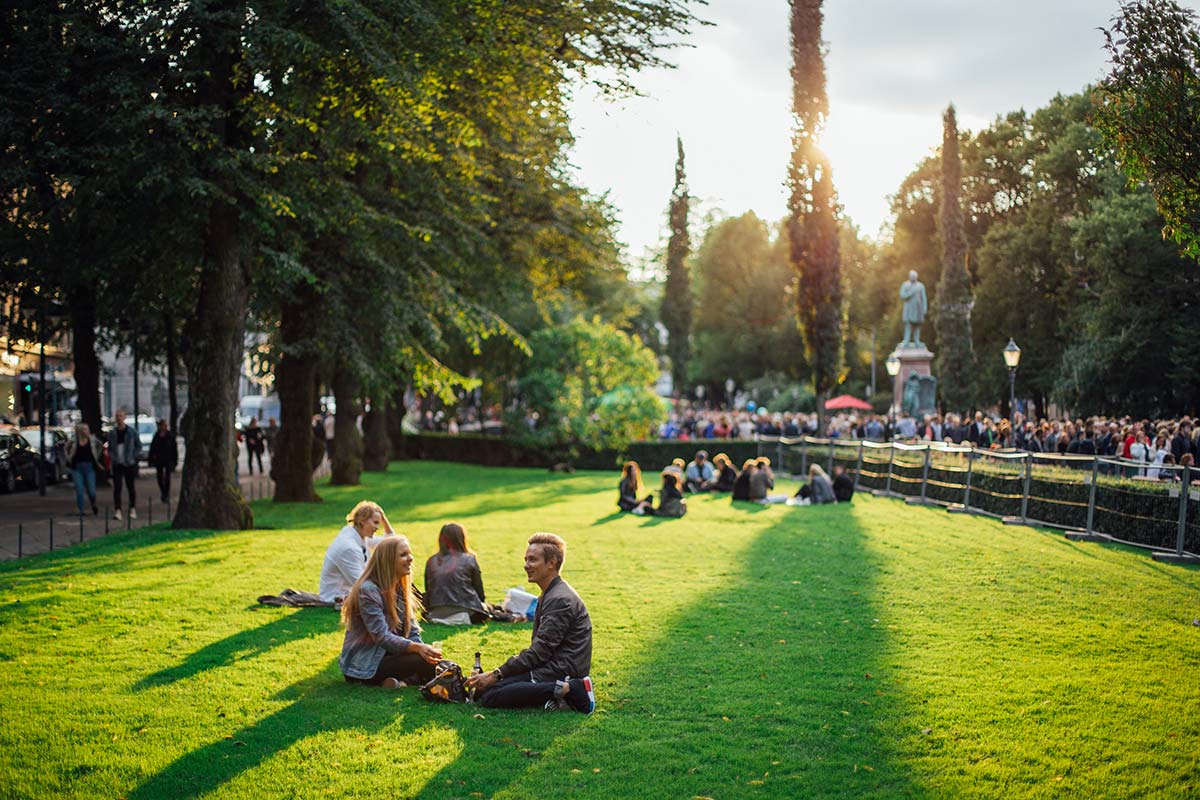
Esplanade Park – Photo Lauri Rotko
If the white cube is the thesis and the wild island the antithesis, the garden is the synthesis. And indeed, in Helsinki, the synthesis between the two sites of HAM and Vallisaari is found in Esplanade Park, a lush space in the heart of the city, where manicured lawns and proximity to city life connect the wooded spaces of Vallisaari and the linearity of the museum space. It is precisely here that the Biennale finds a kind of equilibrium. Esplanade Park evokes the concept of a garden, which since antiquity, from the gardens of Versailles to Japanese gardens, has pushed humans to find a meeting point between art and nature. Perhaps from this happy “mediated” encounter, the Biennale can move forward in the future, maintaining its ethical rigor, its premises of a holistic event, and the idea of creating a slow biennale and a laboratory of possibilities for sustainable human action. «It is important to maintain a certain optimism regarding climate challenges», concludes Kivinen. «Pessimistic visions and apocalyptic landscapes only lead to paralysis and inaction».
Photo credits: HAM / Helsinki Biennial