That Helsinki is a city where the love for art meets that for nature and animals is immediately perceptible upon stepping into the airport. In the most unexpected place, the terminal bathrooms, birdsong echoes, so realistic that for a moment you have the impression of being in a forest.
To reach the punctual and silent train that connects the airport to the city center, you descend a majestic escalator. On one of the large concrete walls, contemporary dance images are projected: these are often video installations linked to the renowned Finnish National Opera and Ballet, an “appetizer” of this fusion of art and sensory attention that accompanies the visitor throughout their stay.
Of contained dimensions, without towering buildings, sober yet creatively architectural, Helsinki is a city that perfectly reflects the ethics of its people: attention to the community, respect for others’ rhythms, an inclination for introspection, and an overriding calm.
Cars stop far away to let pedestrians pass; in the squares, there are no equestrian statues or celebratory monuments, but rather sculptures of bears, seals, and other animals. Certainly, it won’t be the ideal city for those seeking nightly revelry, but it’s perfect for anyone nurturing a creative project, in a country where leisure time is sacred.
Moreover, thanks to efficient transport and a compact center, Helsinki lends itself very well to exploration, even for those with little time.
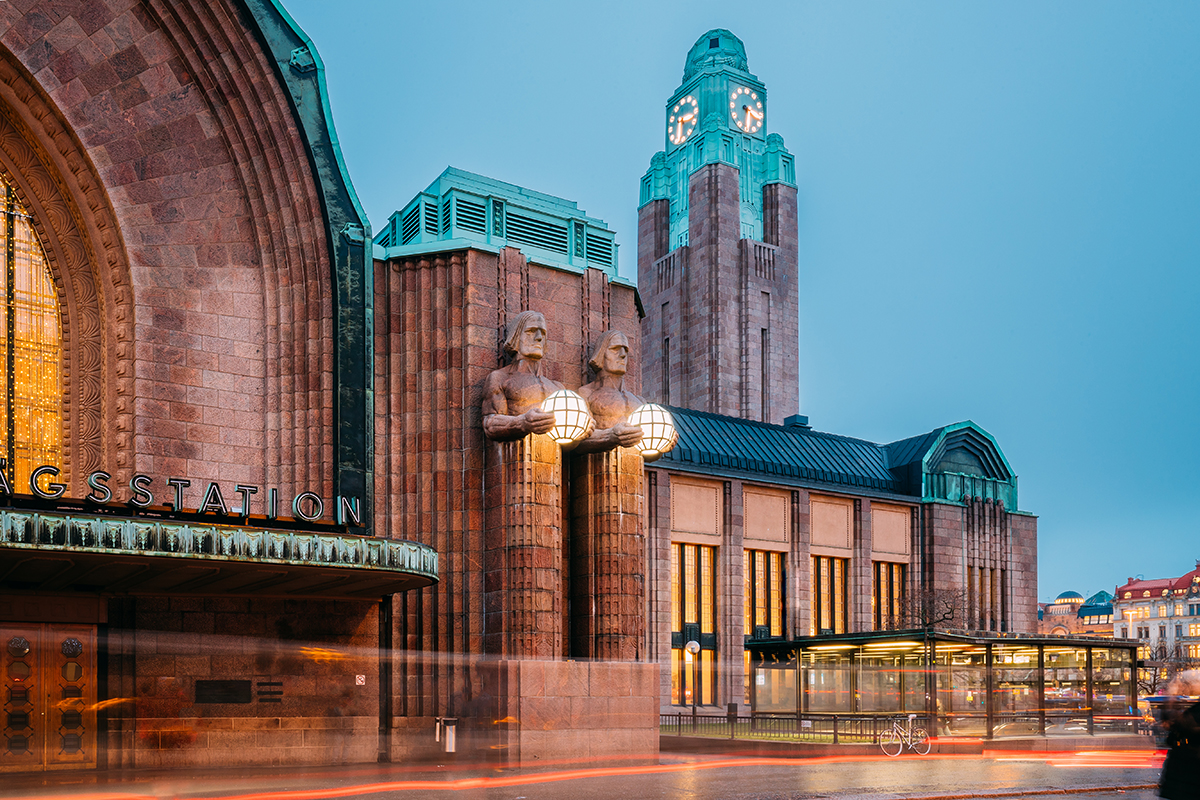
Central Railway Station, Helsinki – Photo © George Trumpeter
First impression: the city center
The first architectural impression is received at the central station, in Jugendstil (Art Nouveau) style. The entrance is guarded by two imposing male stone figures holding luminous spheres. These statues, known to locals as “the lantern bearers,” are occasionally dressed thematically for city events or celebrations; memorable was the episode when they were disguised as members of the band Kiss, coinciding with the band’s city concert.
Original Sokos Hotel Vaakuna, Helsinki – Photo © Riikka Kantinkoski
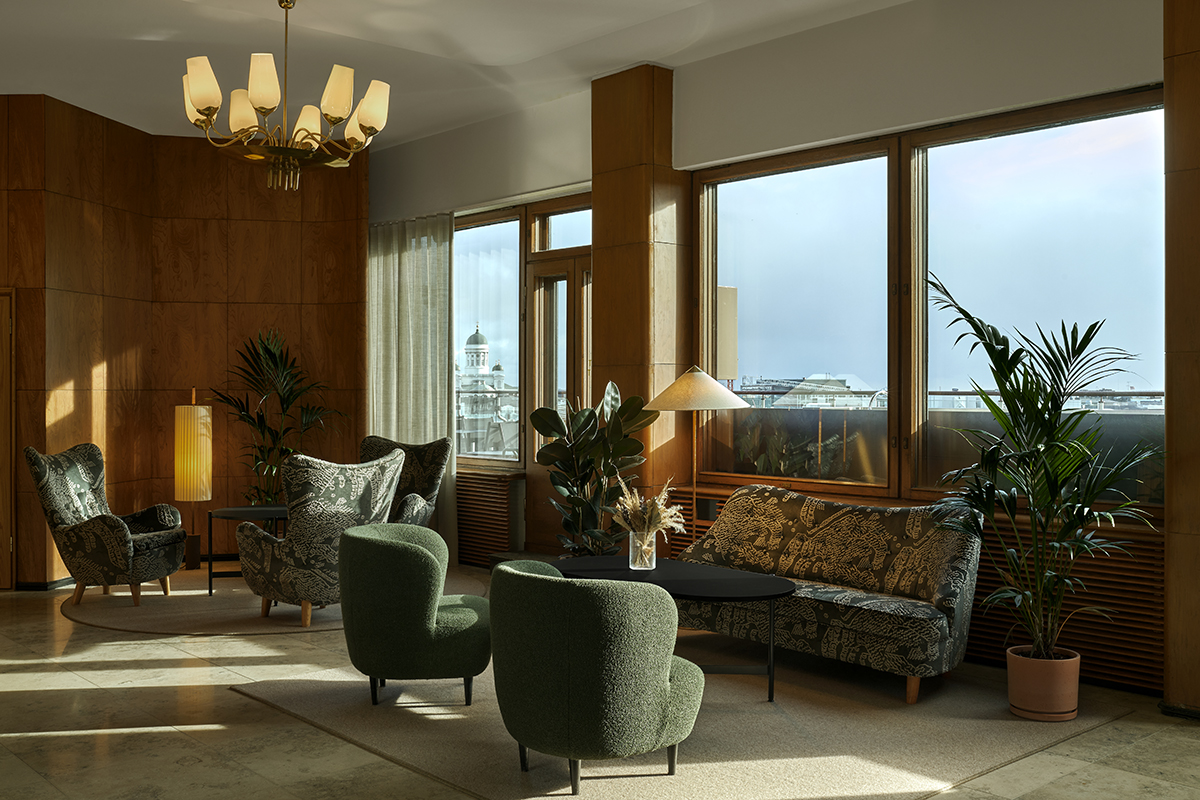
A few steps from the station are two emblematic hotels. The first is the Original Sokos Hotel Vaakuna, an elegant 1950s building; nearby, the Solo Sokos Hotel Torni is worth a visit just for its panoramic bar on the top floor: a 360-degree view of the city and, at certain times of the year, the chance to witness sunsets that brush midnight. This was Helsinki’s first “skyscraper,” with its 14 floors inaugurated in 1931, and surprisingly, it remains the tallest building even today.
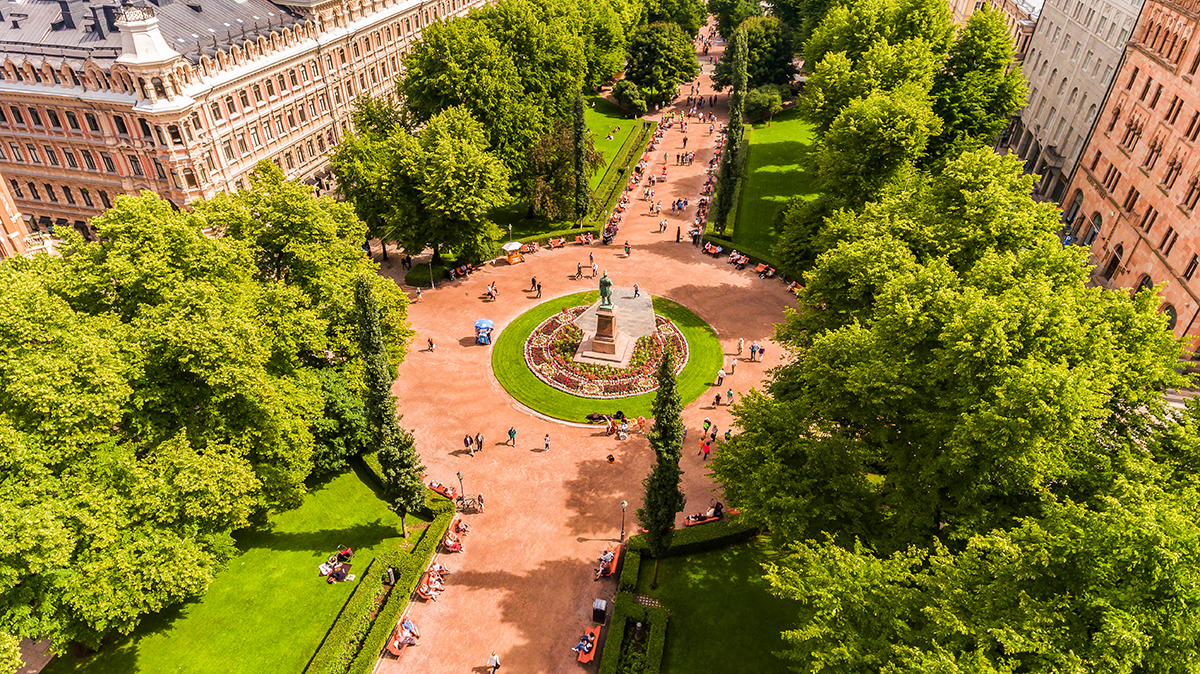
Esplanade Park, Helsinki – Photo © Tero Sivula
Morning walk
Ideal for a morning stroll is the Esplanade, the park that crosses the city’s heart. Lined with design boutiques, historic cafes, and galleries, it’s the perfect place to observe daily life: couples cycling, street artists, children playing under ancient trees
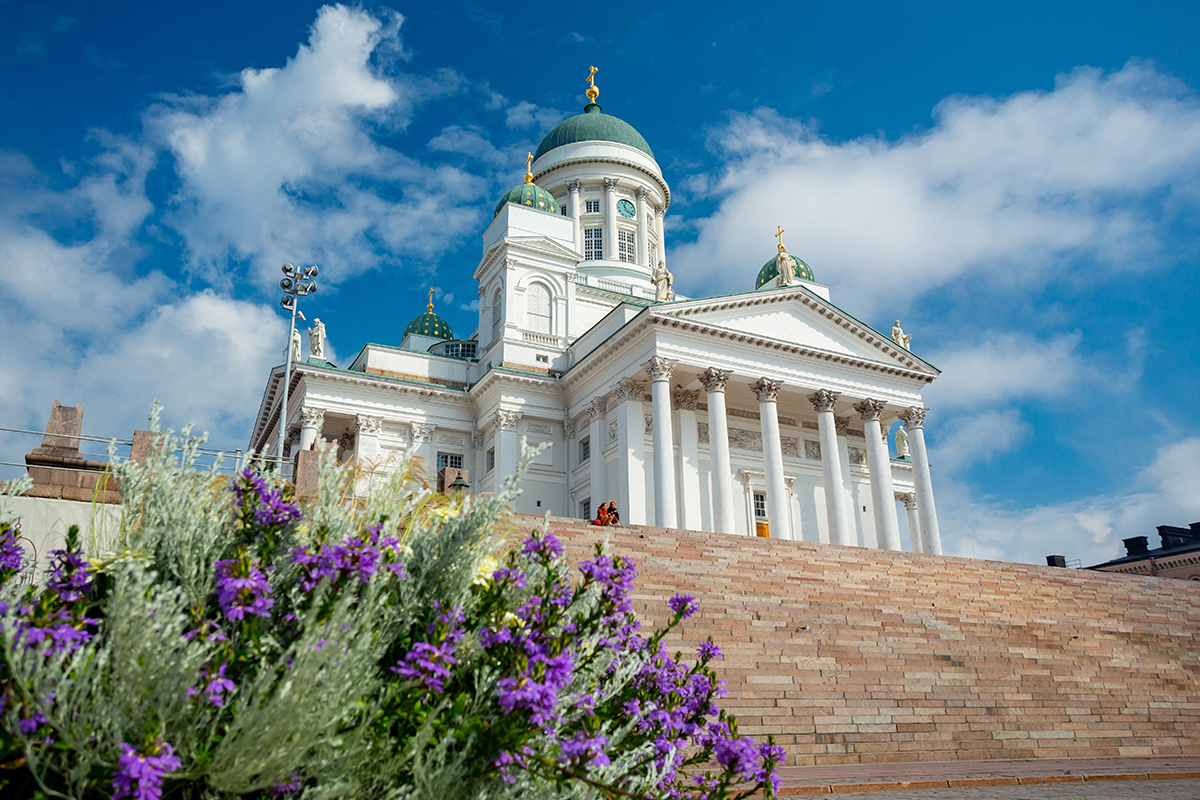
Helsinki cathedral – Photo © Florian Augustin
Not far from the park, the view opens onto Helsinki Cathedral (Tuomiokirkko). White, neoclassical, perched on a hill that makes it visible from much of the city, it is one of the most recognizable symbols of the Finnish capital.
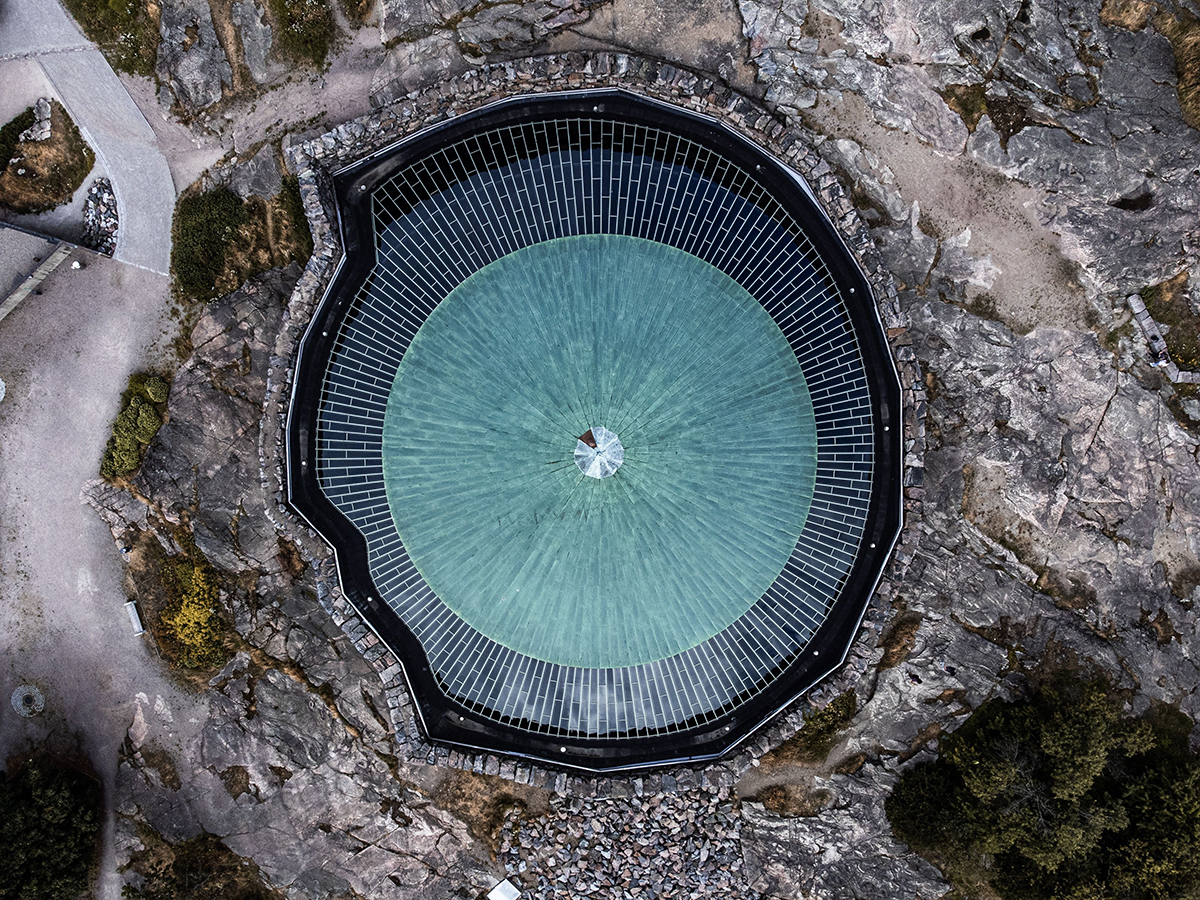
Temppeliaukio Church, Helsinki – Photo © Wirestock Creators
Another architectural icon of Helsinki is the Temppeliaukio Church, also known as the “Rock Church.” This highly original brutalist concrete architecture is partly carved directly into granite rock, and its circular shape resembles a spaceship from some Star Wars spin-off, stranded for some obscure reason in an unsuspecting residential neighborhood. The church’s roof resembles an installation by Eliseo Mattiacci, with its copper dome allowing natural light to filter in, creating an intimate and evocative atmosphere.
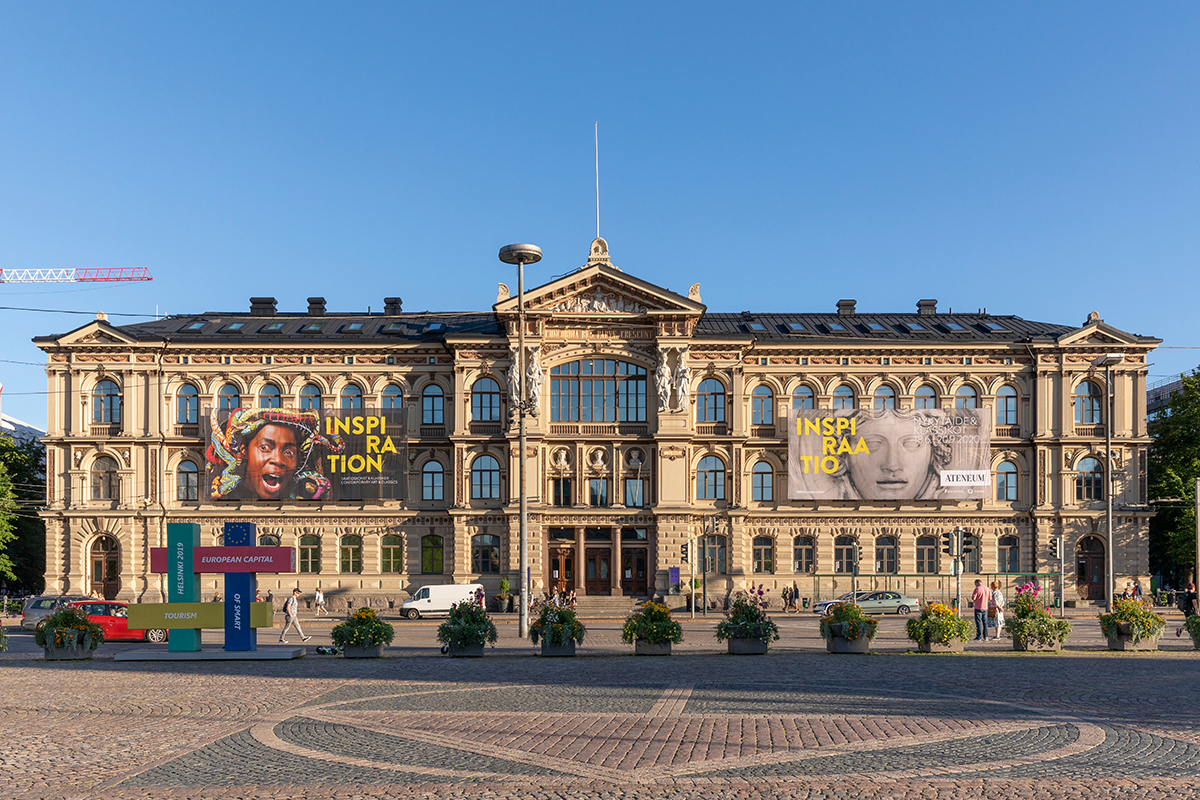
Ateneum Art Museum, Helsinki – Photo © Ilari Nackel
Between art and nature
Helsinki’s center is teeming with museums, from the Ateneum modern art museum, currently hosting an exhibition dedicated to 19th-century female artists, to the brand-new Amos Rex, a contemporary exhibition space adjacent to a refined shopping center. The exceptional ongoing exhibition – dedicated to Anna Estarriola – reflects on the human body and its decay.
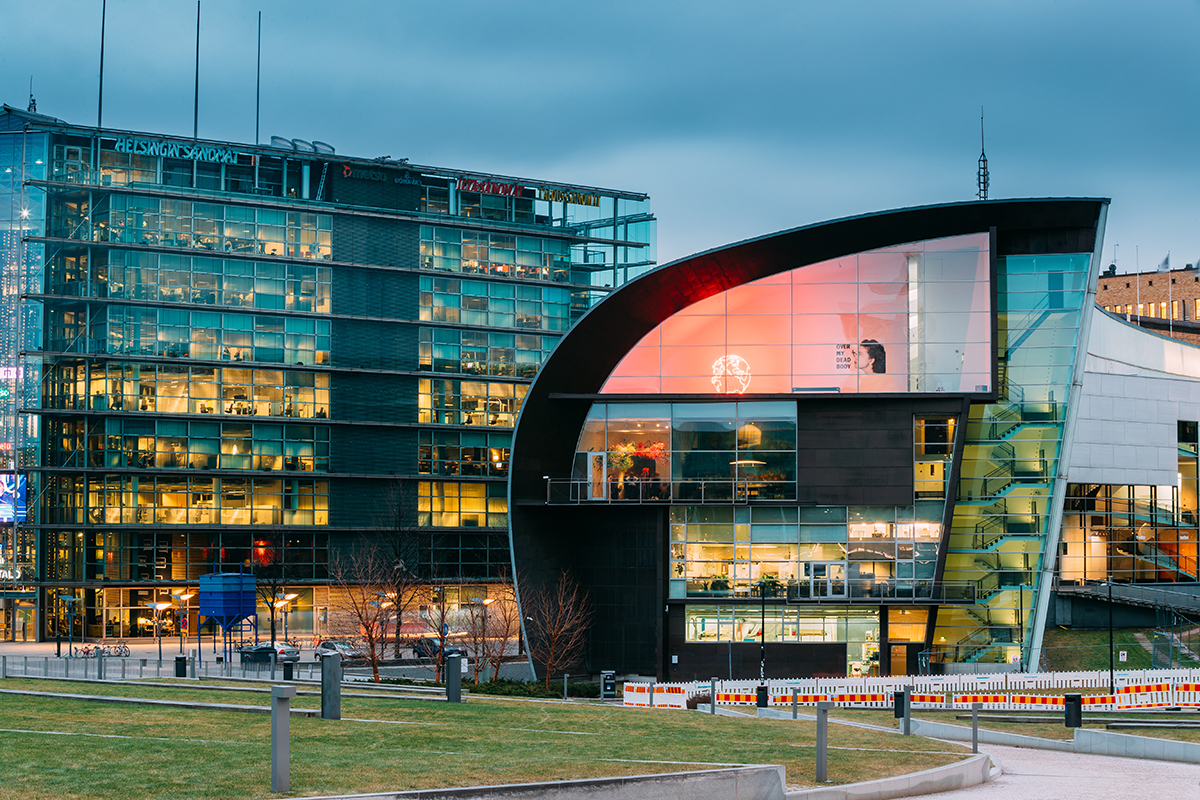
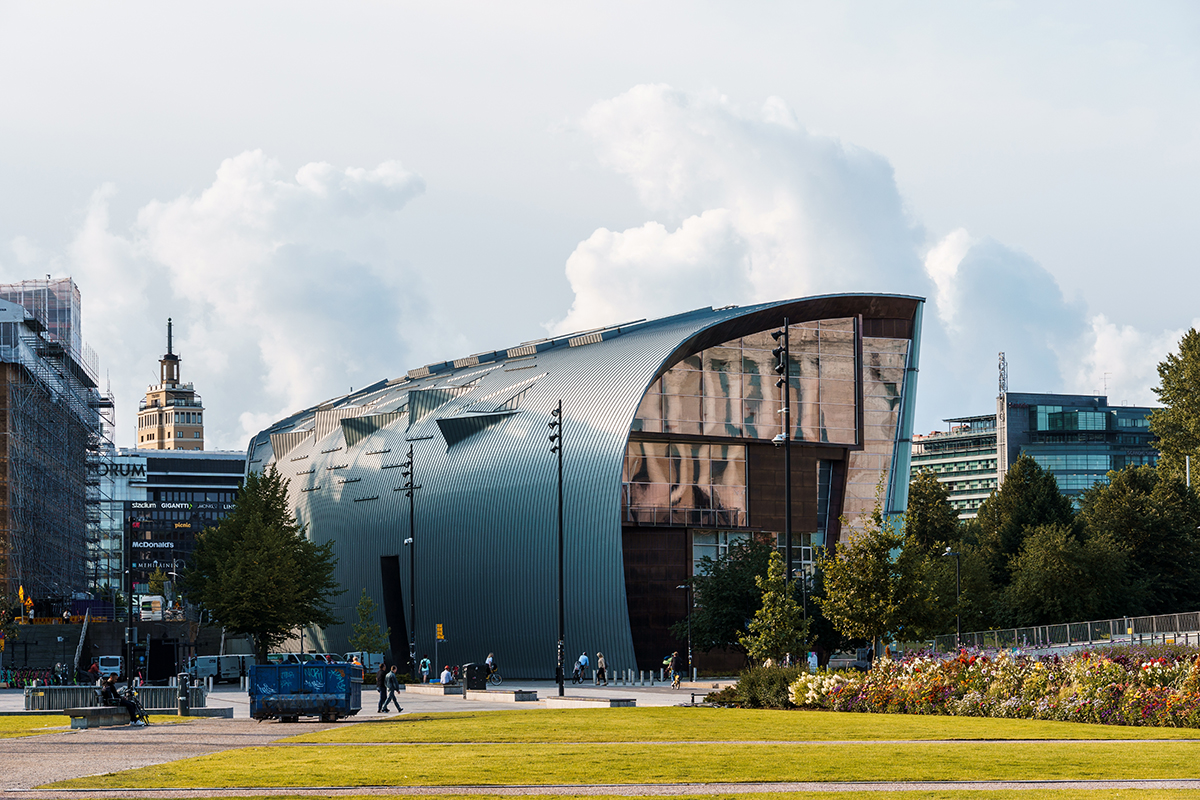
Kiasma, Museum of Contemporary Art, Helsinki – Photo © George Trumpeter
Continuing west, you reach Kiasma, another hub of contemporary art. The building, designed by American architect Steven Holl, develops in unexpected curves and volumes. Current exhibitions include a powerful show by Monira Al Qadiri, an artist from the Gulf, who intertwines futuristic and post-oil imaginaries; and a project by Dafna Maimon focusing on the body-soul dualism, where humor mixes with a profound reflection on how much our thought is actually influenced by our intestines.
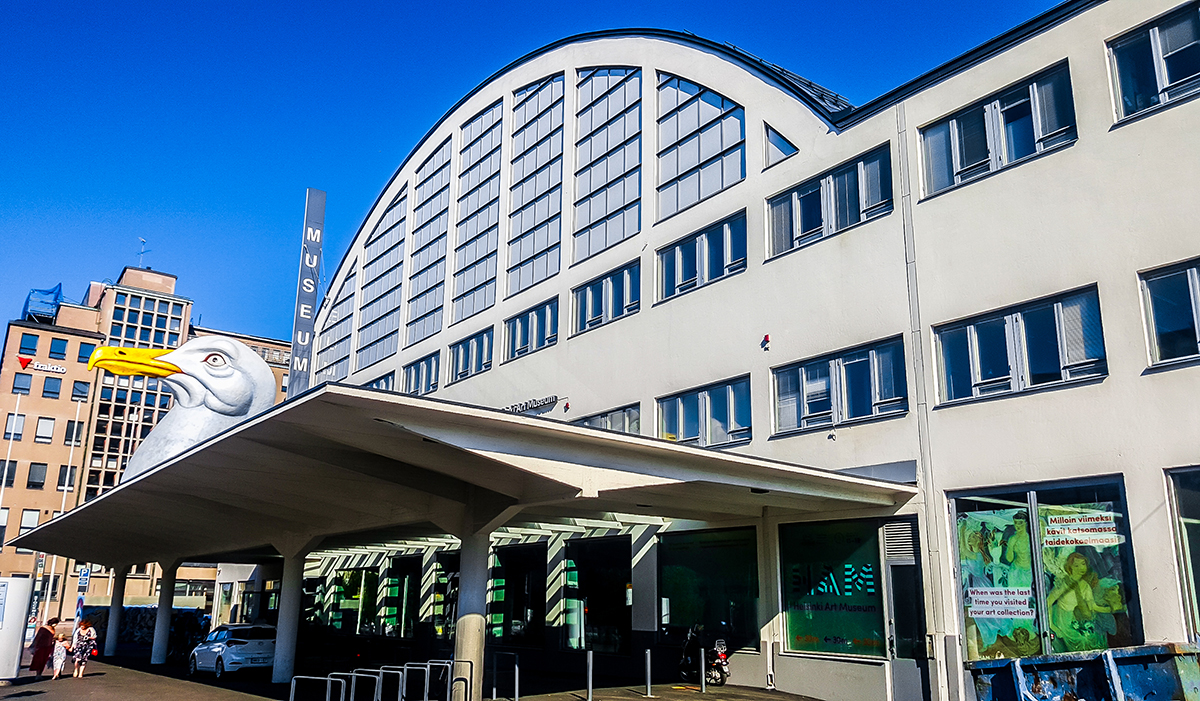
HAM – Helsinki Art Museum – Photo © Zabotnova Inna
For lunch, you can stop at Ravintola Ateljé Finne, a refined bistro located in the historic atelier of sculptor Gunnar Finne. Next door is HAM – Helsinki Art Museum, which houses permanent collections of Finnish artists and international temporary exhibitions. This summer 2025, the museum is one of the main venues of the Helsinki Biennale, with installations spread across indoor spaces and public artworks in the city center.
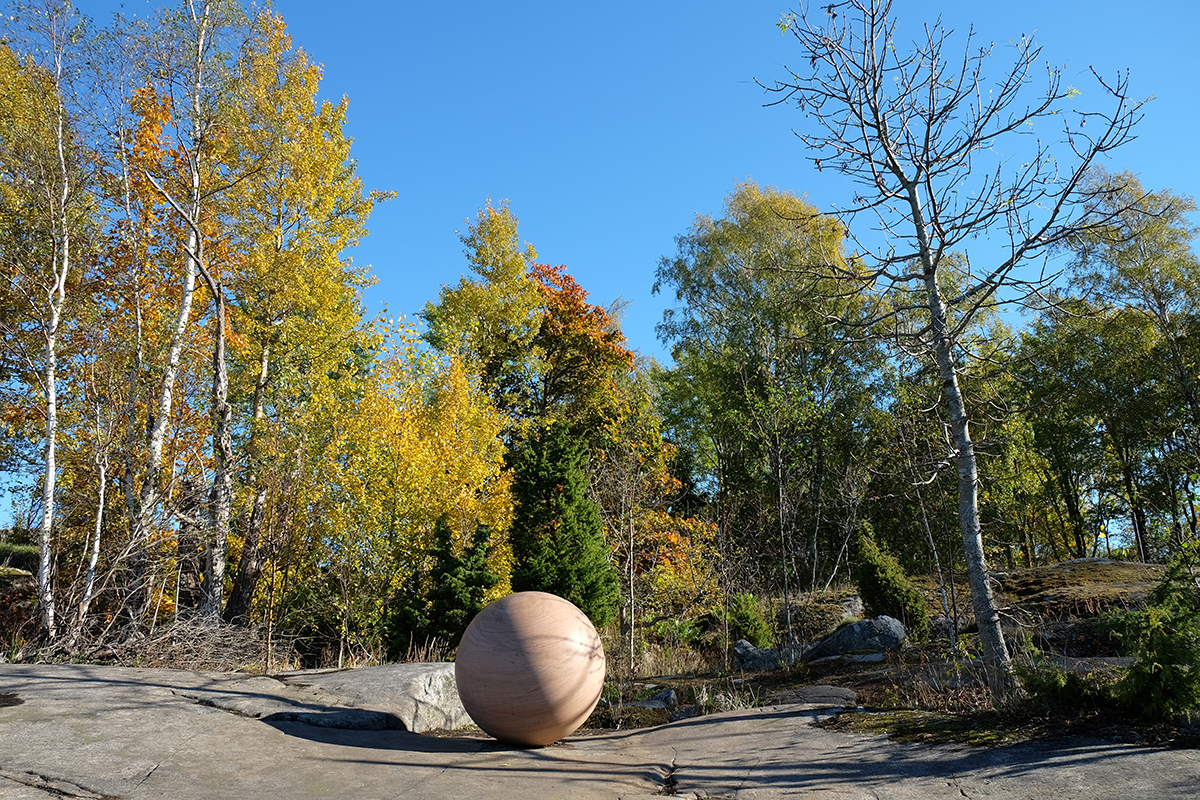
Vallisaari island, Helsinki biennial 2021 – Photo © Natsku
In the afternoon, a ferry from Kauppatori harbor leads to Vallisaari, an island overlooking the archipelago in front of the capital. Once a military base, today it is a green oasis with trails among the rocks, Baltic views, and immense biodiversity. The island is also the second exhibition venue for the Biennale: among abandoned fortresses and natural shelters, sculptures, video installations, and site-specific interventions dialogue with the environment.
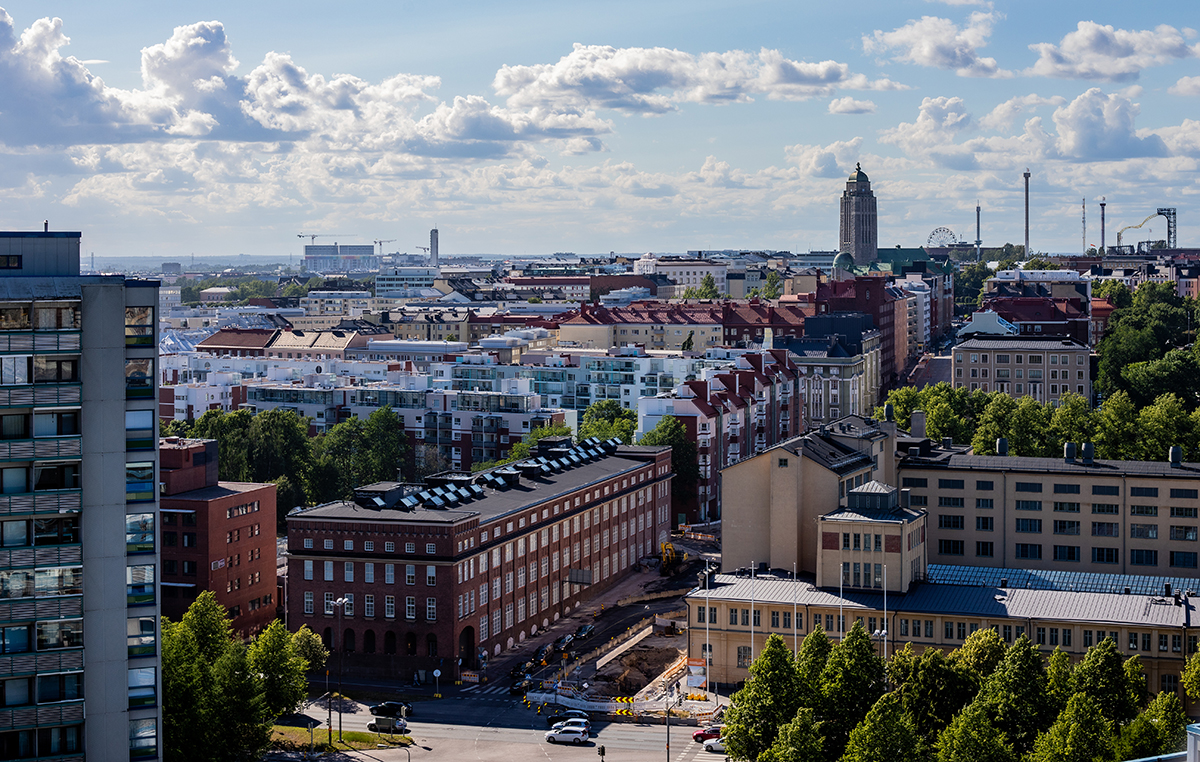
Kallio district, Helsinki – Photo © Kuvatoive
Alternative neighborhoods: Kallio, Design District, Punavuori
Leaving the center, you can venture towards the more alternative neighborhoods. The first is Kallio, the Finnish equivalent of Rome’s Pigneto, Melbourne’s Fitzroy, or Marseille’s Plaine: only much, much quieter. Once a working-class district, today it hosts independent bars, vintage shops, and cafes where matcha lattes are served on artisanal ceramics. If you arrive early in the morning, everything is still closed; but it is precisely in those moments of suspension that you best perceive the character of the place, and perhaps you can pop into the neighborhood church and library, little architectural gems with a distinctively Nordic character.
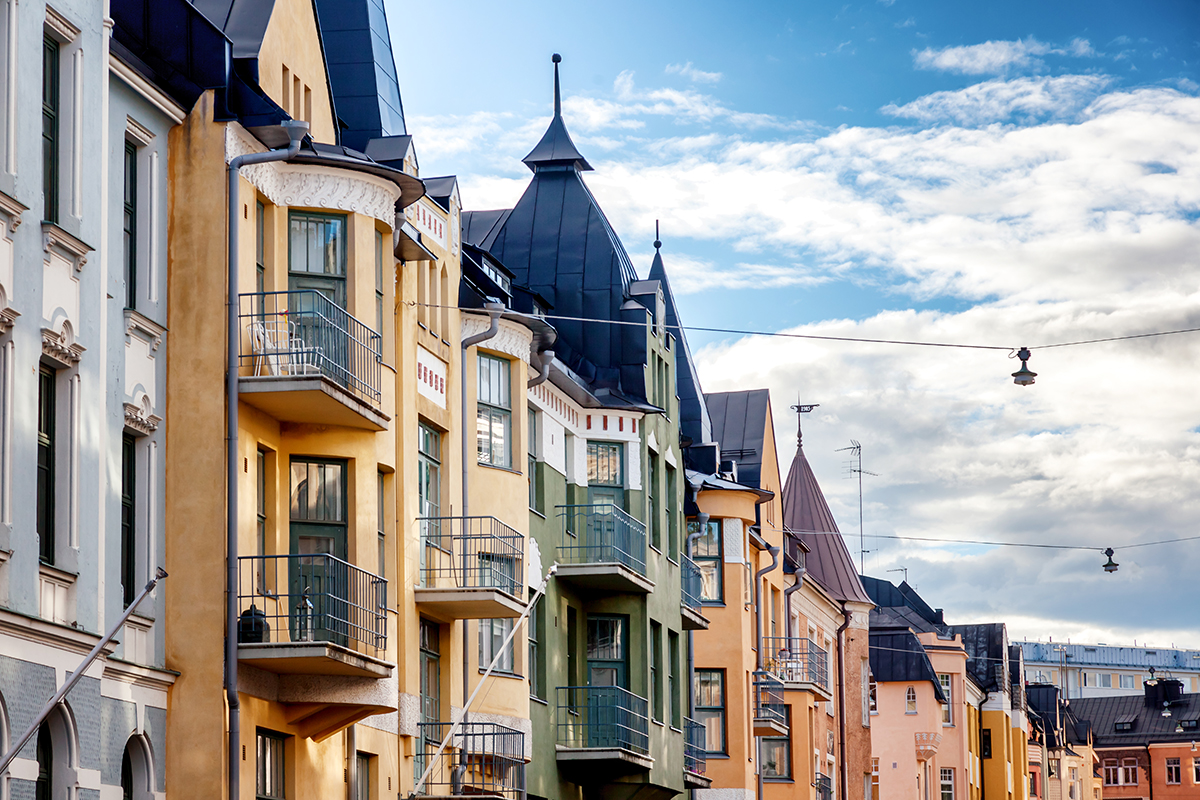
Design District, Helsinki – Photo © Olezzo
To the south extends the Design District, an area that also includes Punavuori, a residential and artistic neighborhood. The streets are lined with perfectly restored Art Nouveau buildings. Here you’ll find small galleries, handmade object shops, fashion ateliers, and local design showrooms. The ideal is to wander aimlessly through these streets, letting yourself be charmed by small restaurants, tea boutiques, and clothing stores.
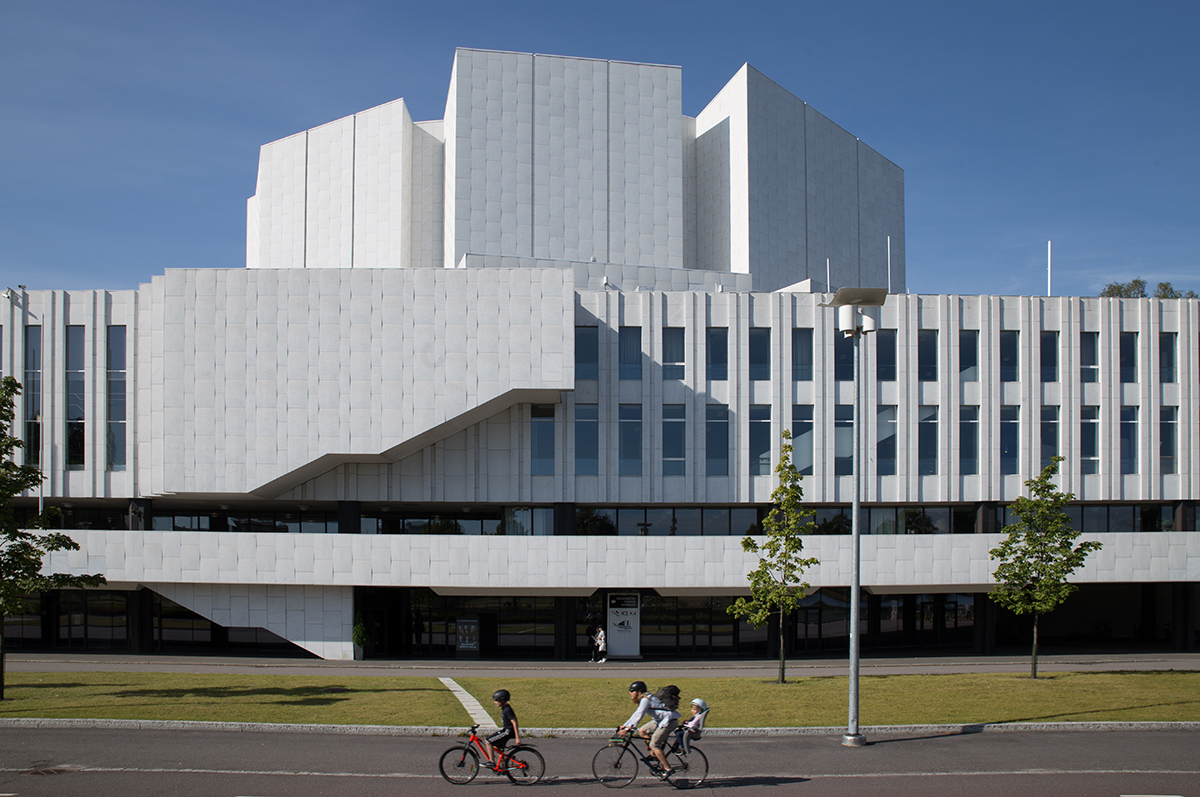
Finlandia Hall, Helsinki – Photo © Chris Hall
Finlandia Hall: epilogue in music and architecture
To conclude the day, you can dine at Finlandia Bistro, a place whose subdued atmosphere can only give the illusion of being in a Kaurismäki film. The restaurant is located inside the Finlandia Hall, designed by Alvar Aalto, which also contains his apartment. The building consists of a large, low, wide body, surmounted by an auditorium tower. The white Carrara marble facades are matched by green copper roofs, while the window frames are teak.
Concerts, events, and exhibitions are held here: if the program allows, it’s worth stopping for a performance. Alternatively, even just a visit to the interior spaces offers a final opportunity to be surprised by that structural lightness that seems to belong to Helsinki like no other city.