
Silvia Prandelli, Senior Principal and General Manager of Populous Italia, guides us through the philosophy that has taken the firm to the forefront of global sports architecture. Founded on the idea that architecture should unite communities, Populous embodies the belief “Drawing People Together” — a method that transcends physical design to focus on the vibrant experiences spaces can facilitate. Under Prandelli’s leadership, Populous Italia continues to innovate, integrating local cultures into their iconic stadiums and arenas worldwide. Projects like the Principality Stadium in Cardiff and the Tottenham Hotspur Stadium in London showcase how design can regenerate urban areas and promote community cohesion. In Italy, Populous faces unique challenges, adapting to diverse landscapes and complex regulations, while maintaining a commitment to sustainability and accessibility. With projects like the new AS Roma Stadium and the redevelopment of the Como 1907 stadium, Populous is set to redefine live event experiences, blending digital innovation and cultural richness. With Prandelli’s vision, the firm ensures their architecture continues to integrate into urban life.
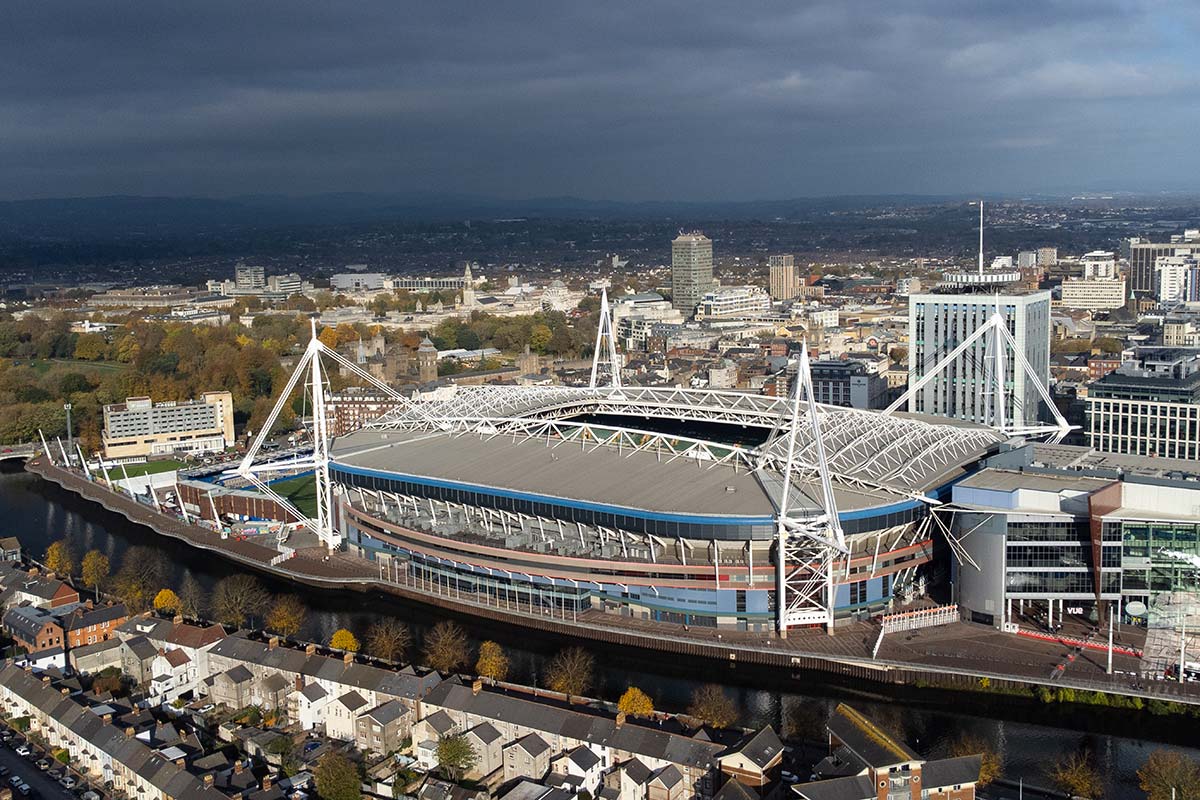
Principality Stadium, Cardiff, UK
Which projects have been fundamental to Populous’ evolution and growth?
In my view, the Principality Stadium in Cardiff, Wembley Stadium, and the Tottenham Hotspur Stadium are excellent examples of evolutions in sports design. The Principality Stadium is a custom, multifunctional structure with a retractable roof for various events, including concerts. Wembley Stadium is a great example of the regenerative power of stadiums, leading to the creation of a whole new district in London with leisure facilities, workspaces, and retail outlets. The Tottenham Hotspur Stadium is the pinnacle of cutting-edge facilities: not only multifunctional with a retractable field for NFL games and other events, but also perfectly integrated into the urban fabric, with year-round accessible local services and attractions. In arenas, projects like the O2 Arena or the Sphere in Las Vegas are benchmarks, marking the evolution of today’s structures. The innovative integration of digital technologies in Sphere, enhancing the audience experience, represents what many consider the next frontier in event space design.
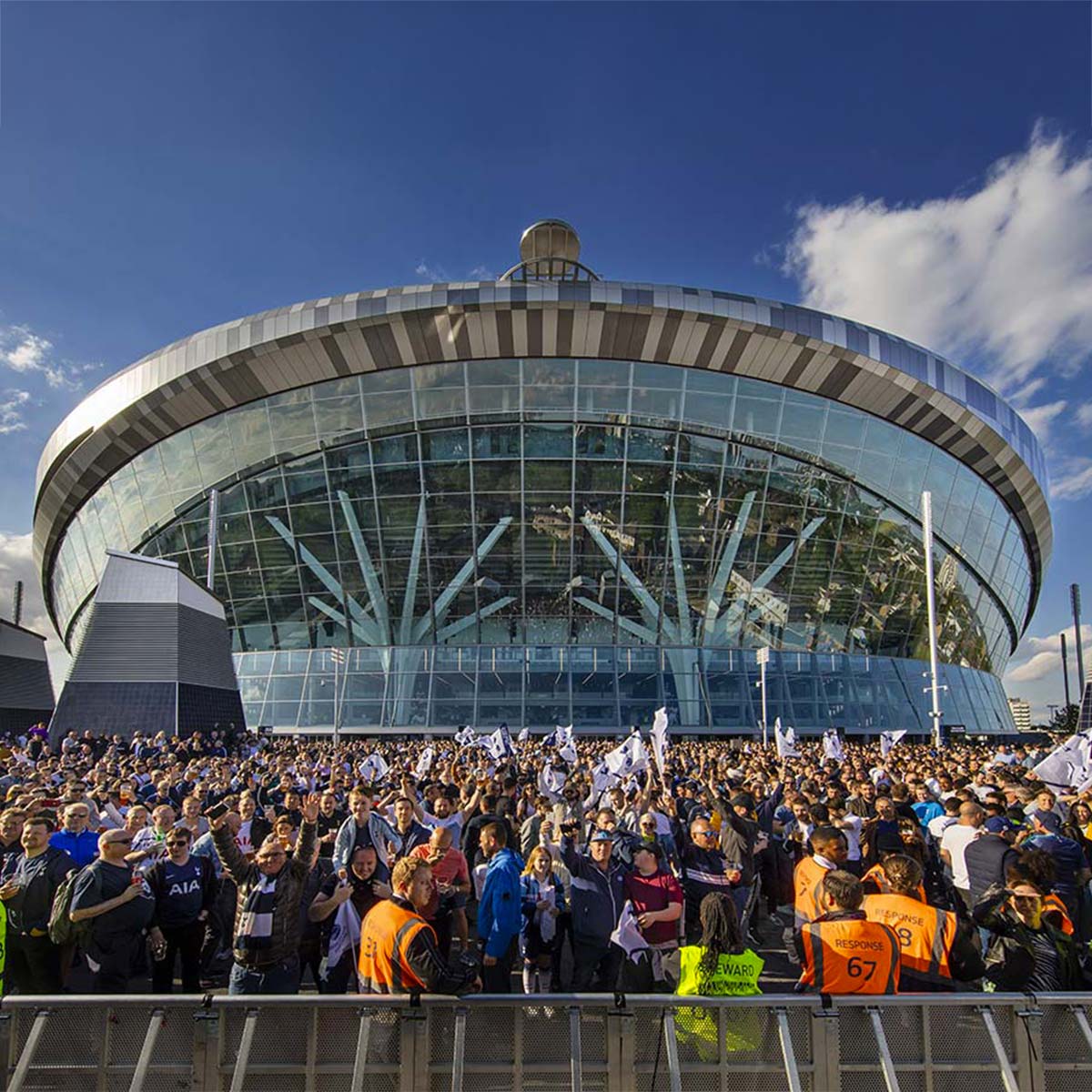
Tottenham Hotspur Stadium, UK
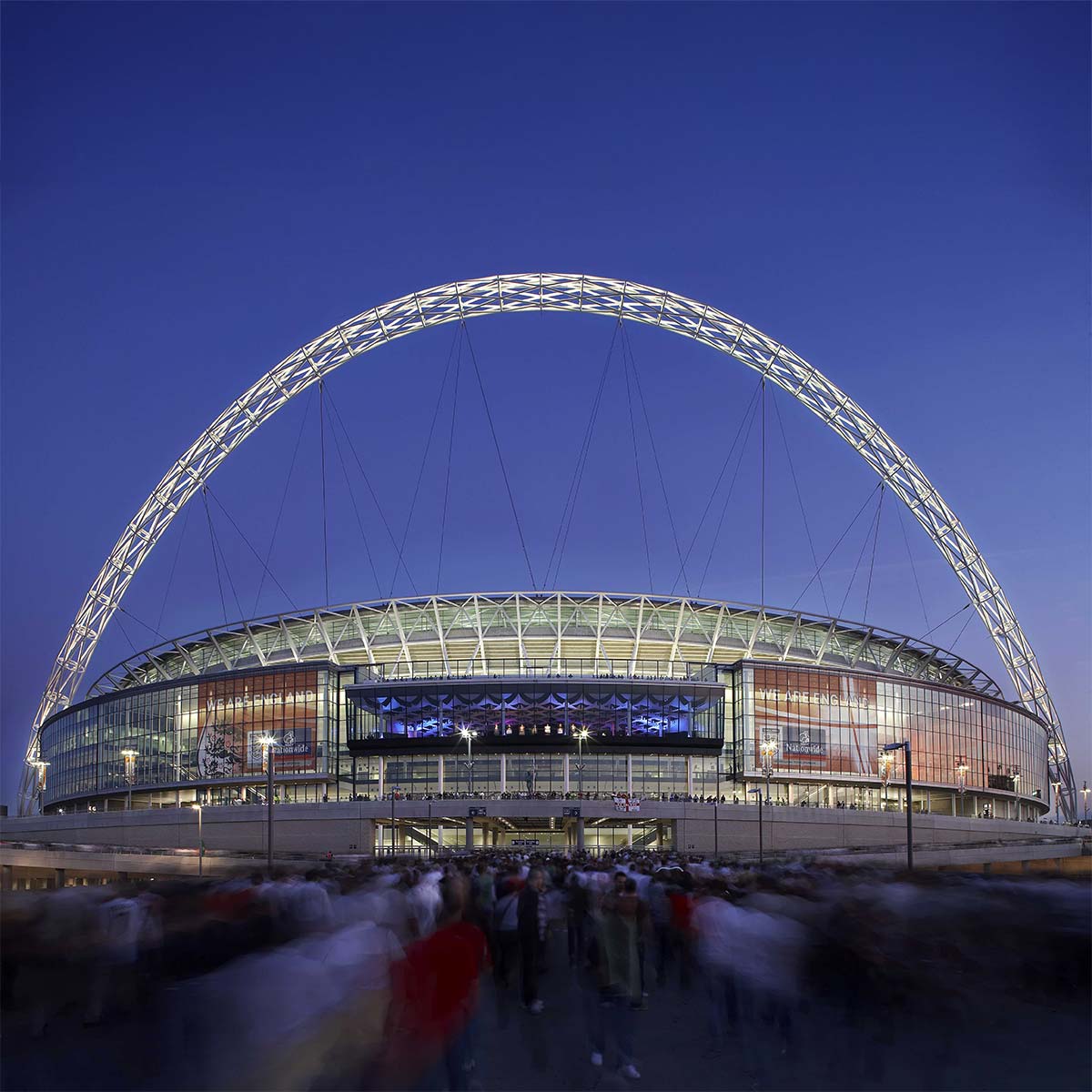
Wembley, Stadium, London, UK
How does your “Drawing People Together” method work?
Bringing people together is more than a slogan: it embodies the essence of our practice. We are committed to building experiences that offer something special. This commitment guides and precedes building design and never allows us to think of people as a generic audience—a philosophy inspiring all our teams and characterizing every project we undertake.
How do you integrate local culture into your global projects?
Local culture and geographic context are crucial elements. We are a global firm with offices and teams in all major markets. Here in Italy, our headquarters is in Milan. The people working on each project have a deep knowledge of the area, some come from there or have lived and worked there for many years.
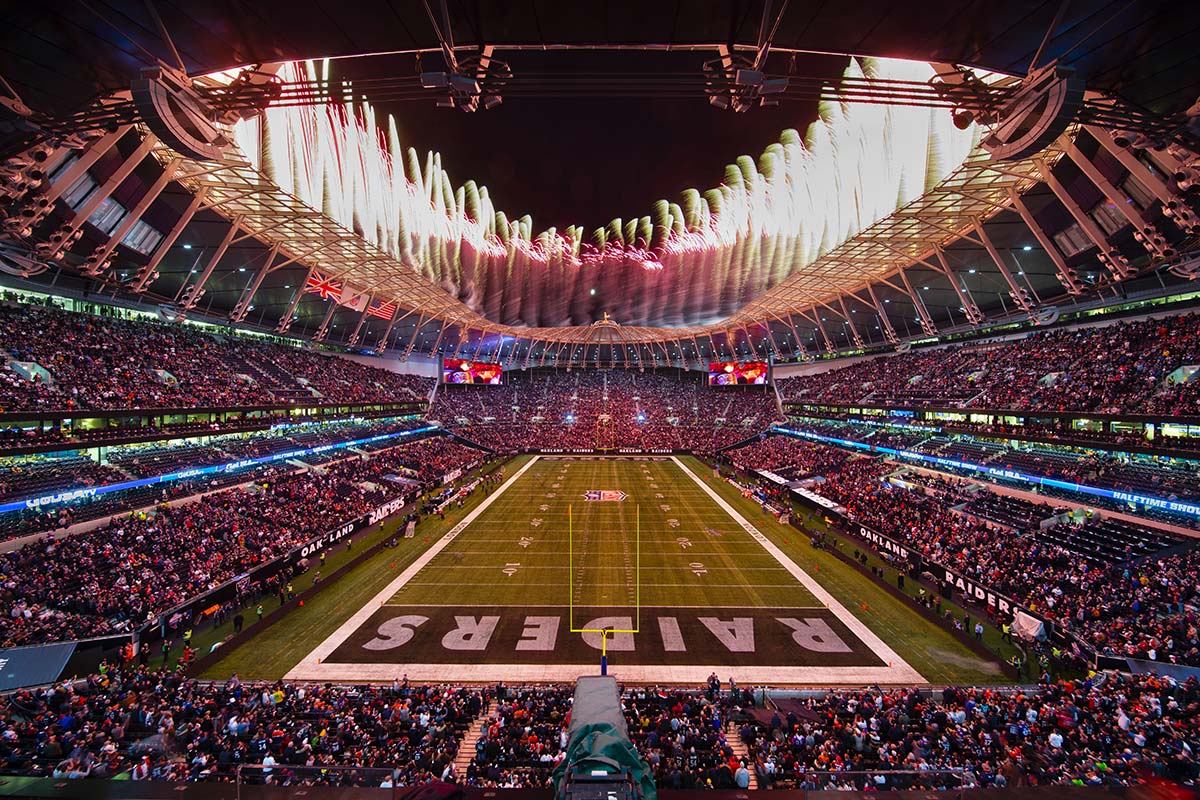
Tottenham Hotspur Stadium, UK
What specific challenges have you faced in Italian projects compared to other countries?
As mentioned, the vocation of stadiums and sports venues is to be integral parts of cities and their context, elements connected to the urban fabric and its evolutions. When imagining such projects, it is essential to broaden the view, integrating architectural design with political and strategic planning. In Italy, where the territory is extremely varied, each project requires a new and innovative approach. The Oval, built for the skating events during the 2006 Winter Olympics, was designed in harmony with surrounding buildings and conceived as a key element of a vast redevelopment project in the Lingotto district. Looking from a more practical perspective, in Italy there is a particularly complex aspect that designers must face: heterogeneous regulatory frameworks at a regional and local level, procedural complexities, and fragmented decision-making processes.
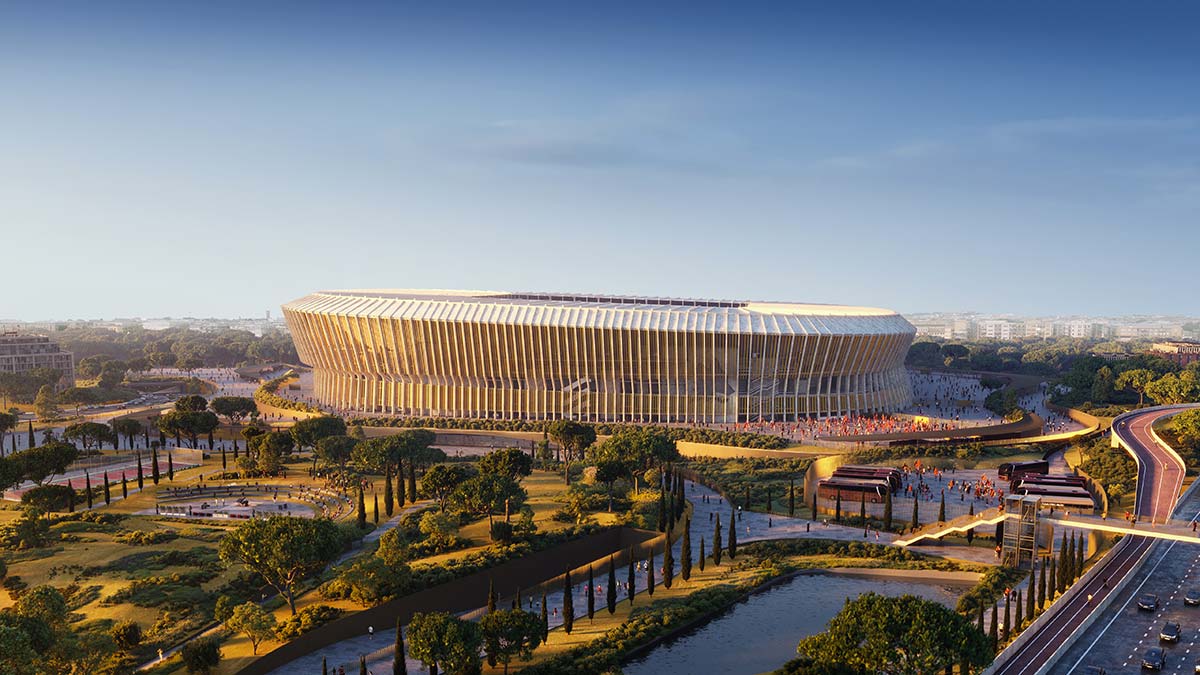
AS Roma Stadium, Rome, Italy
How do you see the evolution of live events in Italy, considering sustainability and digital innovation?
Sustainability and digital innovation are universal trends shaping the world of sports and entertainment and are key drivers of our global projects. In Italy, both clubs and fans demand high-quality experiences in stadiums. This means—for the public—experiencing a more engaging atmosphere during matches, while also creating greater revenue opportunities. We are currently working on several major projects here, including the new AS Roma stadium and the redevelopment of the Como 1907 stadium. Digital innovation will play a central role in this evolution, enhancing the fan experience during live events. There are several revolutionary projects redefining the boundaries of live entertainment, such as the previously mentioned Sphere in Las Vegas and the Prince Mohammed bin Salman Stadium in Qiddiya, both designed by Populous.
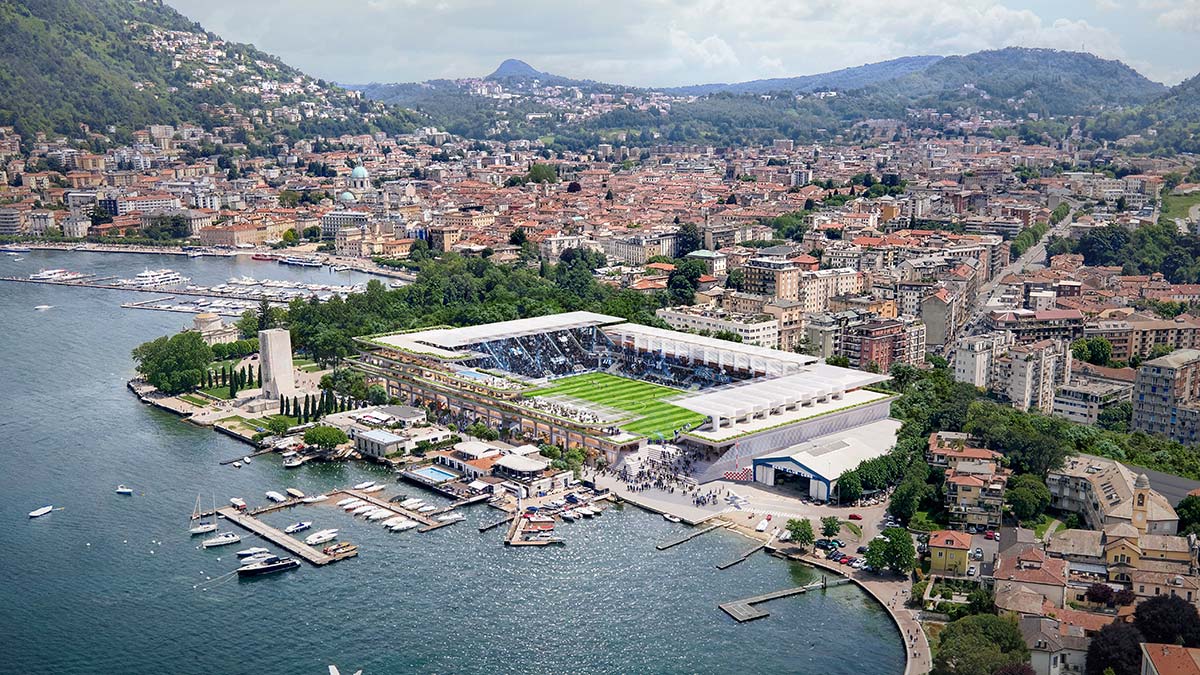
Concept of Como 1907 Stadium, Como, Italy
What steps are you taking to ensure your projects in Italy are accessible and sustainable?
Sustainability and inclusive design are integrated elements from the early stages of a project: they cannot simply be added later as they influence every decision. We have a dedicated team with sustainability experts working on all our projects to ensure we meet and exceed the highest international standards. Similarly, accessibility is a central aspect. Our stadiums are designed to accommodate a wide audience with diverse needs.
How could your approach contribute to the urban development of Italian neighborhoods, like the new stadium in Como?
Urban integration, as mentioned, is crucial. These are large buildings integrated within communities. Our approach starts with a holistic and strategic vision, considering the project from a master planning perspective. We ensure that development integrates with pedestrian paths and transport infrastructure. Stadiums are not only homes to clubs and their fans, but they can also foster the creation of new attractions for people who live in and frequent these city areas. Our goal is to keep them alive beyond match days, ensuring the venue and surrounding area remain active and dynamic for as many days as possible throughout the year.
Can you tell us about your future projects in Italy?
We are fortunate to be working on several exciting projects, but they are currently confidential.