Marseille might be a dream city, but it’s not the kind you’ll exclusively find plastered on Pinterest boards or flowing through Instagram feeds. While “EuroSummer” 2025 embraced a glossy aesthetic, often sidestepping the Mediterranean’s social complexities, Marseille truly embodies them. It engages with capitalist trends but layers on the rich depth of its multicultural, intricate reality.
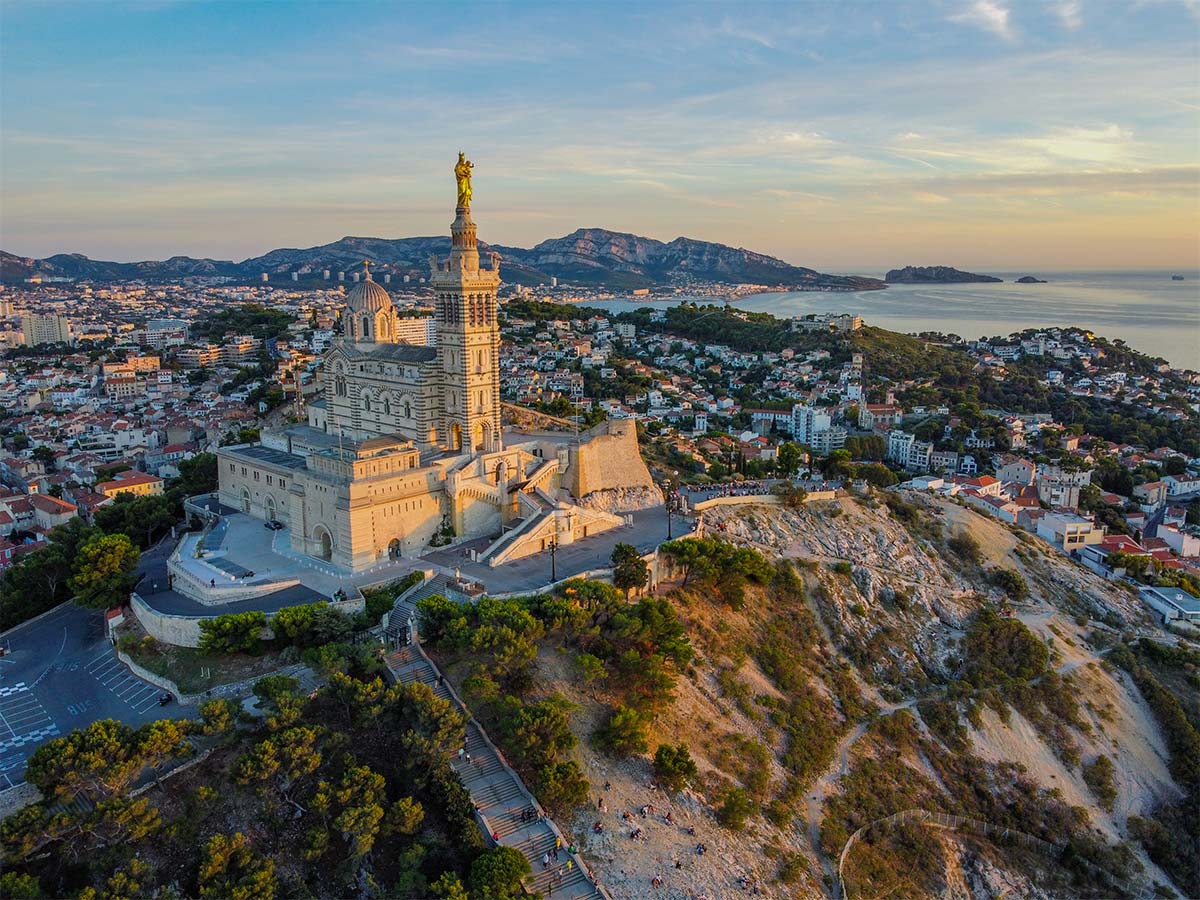
While some perceive Marseille as a nurturing mother, akin to Notre Dame de la Garde with her protective gaze over the city, it also holds the undeniable charm of a tanned, joyous, playful southern kid with a thick accent – the type who’d effortlessly pull off a fourteen-meter dive.
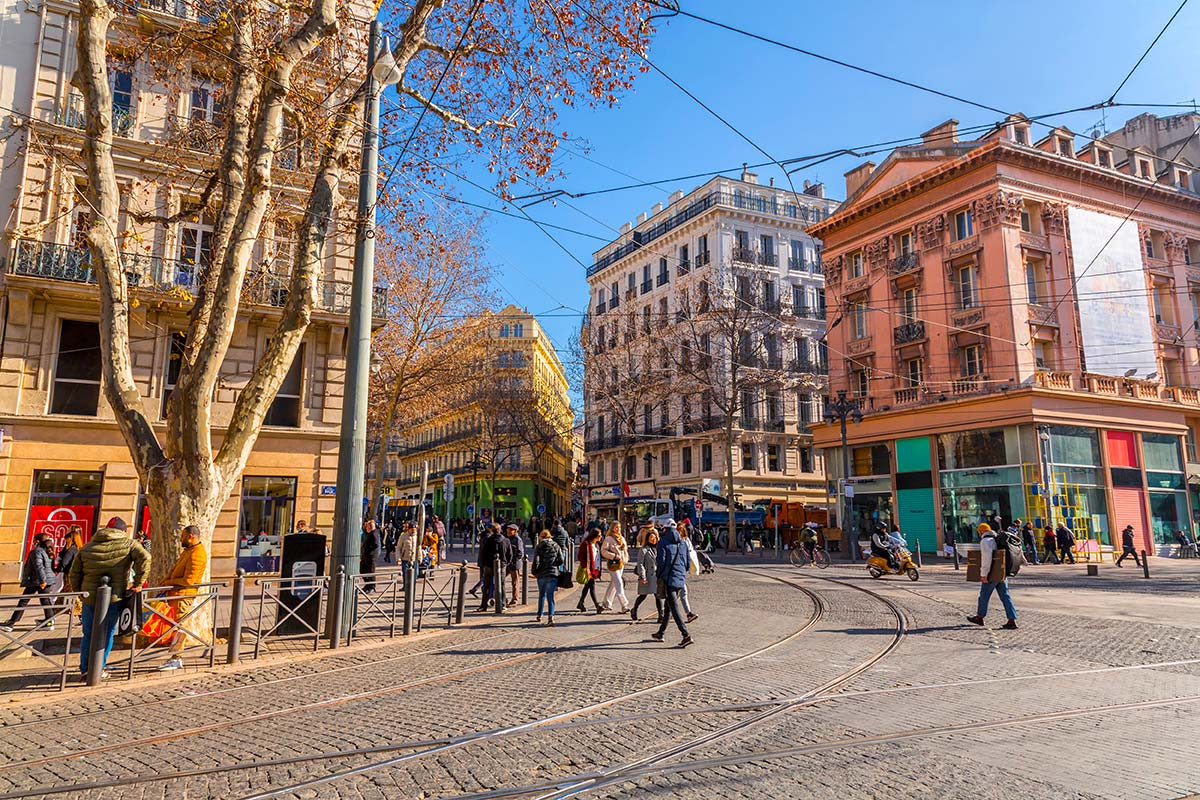
La Canebière, Marseille – Photo © ColorMaker
In this thousand-year-old city, founded by the Greeks as Massalia, immigration is a visible, central force, pulsing through neighborhoods like Noailles and along La Canebière, the main street celebrated by local rappers, stretching from the Gothic Réformés church to the Old Port.
This rich cultural blend is Marseille’s true wealth. For instance, walking from the alternative Cours Julien neighborhood to the Old Port, you pass through Rue d’Aubagne. Sadly known for a 2018 building collapse that spurred residents to demand better housing care, the street is also a vibrant tapestry of Lebanese and Tunisian caterers, African shops, and an array of oriental pastries whose golden, orange, and pink-hued windows mesmerize passersby.
Visitors to Marseille typically fall into two camps: those who fall madly in love with it, and those who caution others about its perceived crime. A rarer, more diplomatic third group acknowledges its beauty but wouldn’t choose to live there. Its undeniable intensity isn’t for everyone.
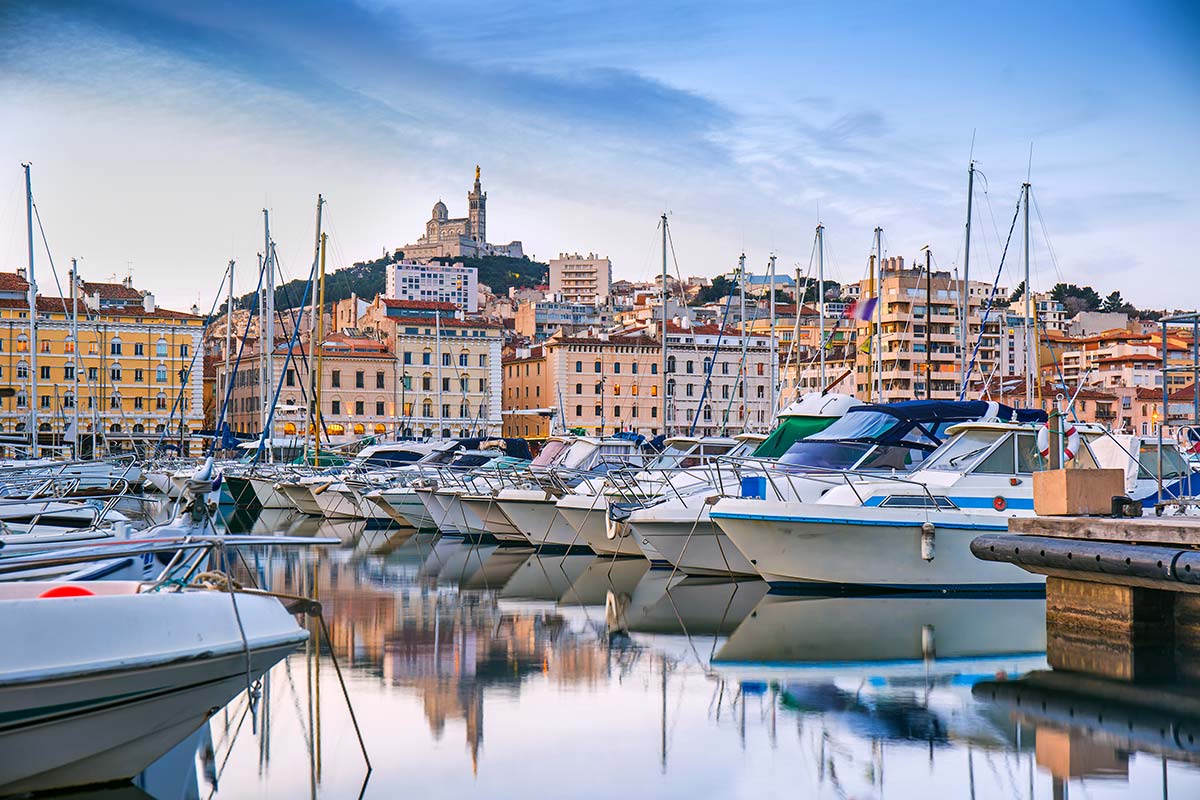
Old Port, Marseille – Photo © Pani Garmyder
The Old Port and Le Panier
The Marseille you might expect – with its stylish boutiques and seaside cafés – can be found in two close-knit areas: the Old Port, the city’s vibrant heart, and Le Panier, Marseille’s most ancient district, continuously inhabited since Greek antiquity. To kick off your exploration, there’s no better starting point than the MUCEM – the Museum of European and Mediterranean Civilisations.
Approaching from the Vieux Port and tracing the golden-hued walls of Fort Saint-Jean – a 17th-century fortification now repurposed and seamlessly integrated into the museum – an unexpected turn reveals the MUCEM’s onyx-colored edifice. It emerges almost from a galaxy far, far away, connected to the fort by a majestic suspended bridge, where one can easily picture a parade of Stormtroopers.
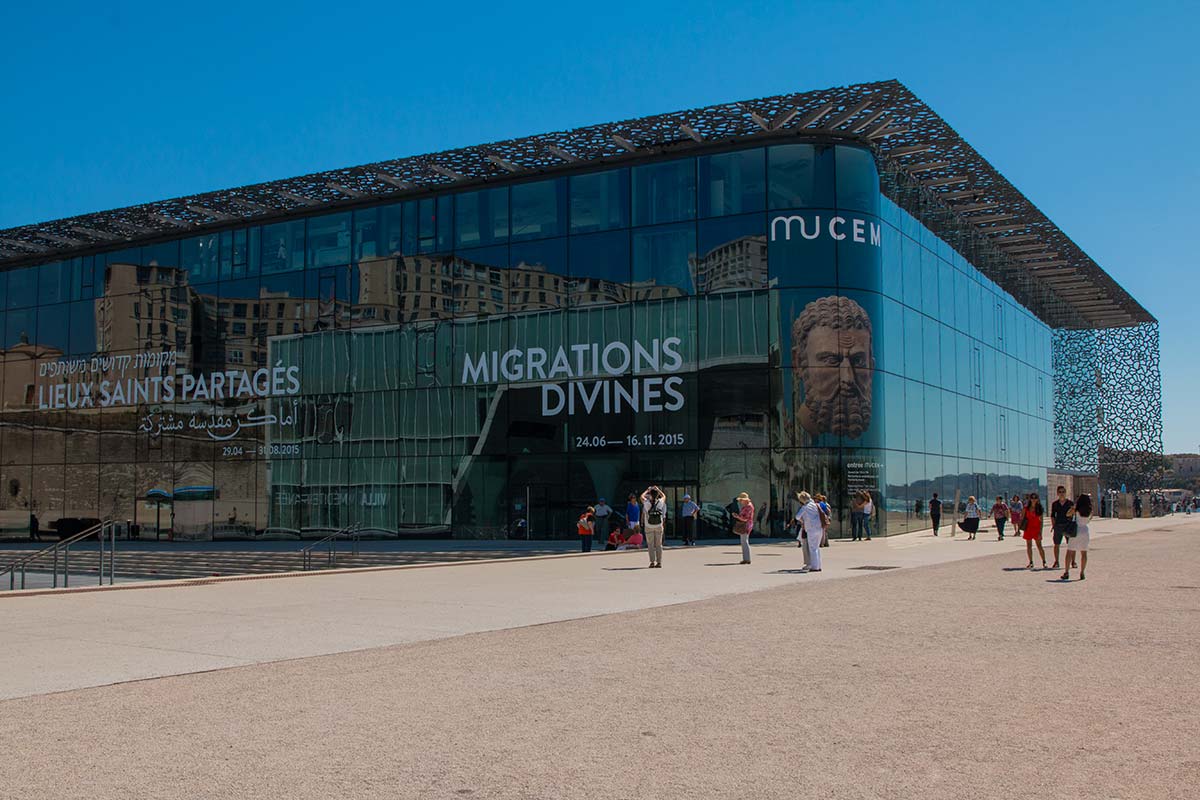
MUCEM – Musée des Civilisations de l’Europe et de la Méditerranée, Marsiglia – Photo © Mary Doggett
The museum delves deep into the geography and Mediterranean cultures intrinsically linked to Marseille. Its halls have hosted exhibitions on diverse topics, from the culture of nudism (where last year visitors could even explore au naturel) to the Mediterranean perspective on astronomy (a newly opened exhibition), and features on circus and Provençal artists. All this is housed within a striking architectural design by Rudy Ricciotti, featuring a perforated UHPC concrete structure that echoes the intricate moucharabieh of Arab architecture.
For a bite to eat, Le Panier is the ideal destination. Perhaps pause at Bar des 13 Coins for a cold coffee in its charming little square, before continuing your exploration to La Vieille Charité. This baroque building, designed by Pierre Puget in the 17th century, originally served as a hospice for the poor but now functions as a museum. The cultural center currently features Laure Prouvost’s contemporary installation, “Mère We Sea,” alongside a captivating exhibition on the history of tattooing in the Mediterranean, titled “Tattoos: Stories from the Mediterranean,” running until the end of September.
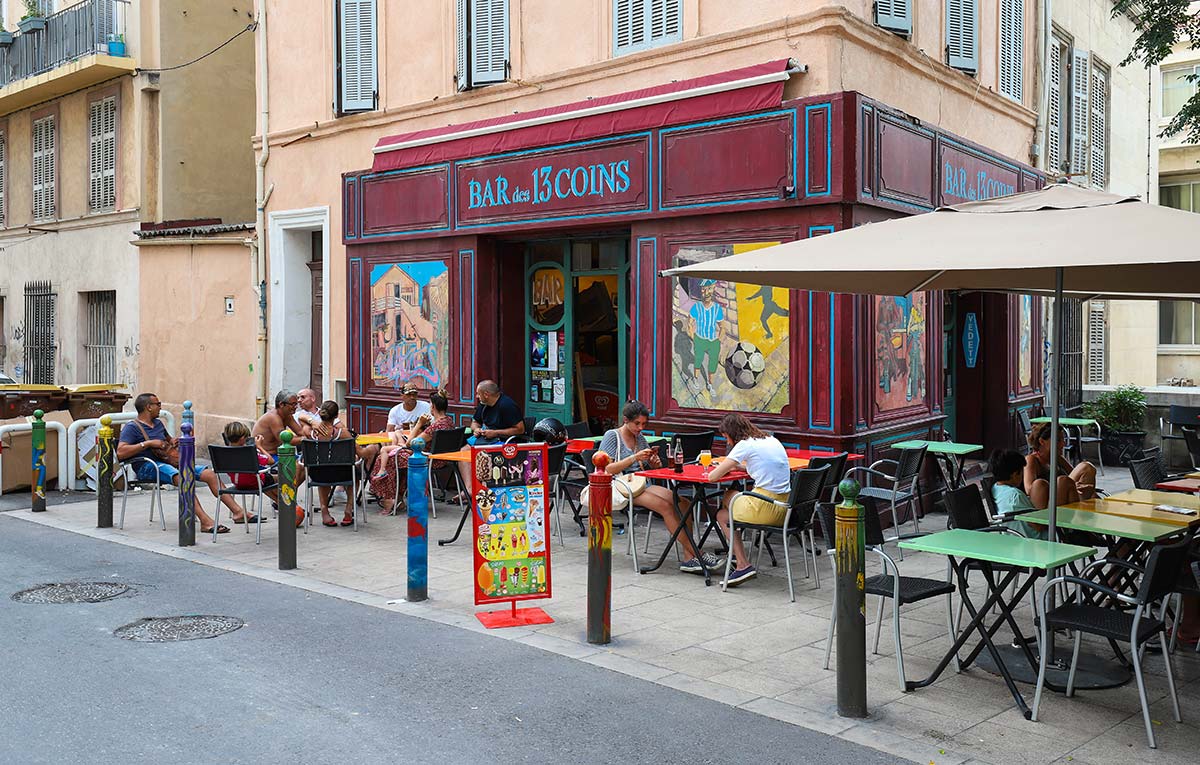
Bar des 13 Coins, Panier, Marsiglia – Photo © Petr Kovalenkov
Cours Julien and La Plaine
But don’t be fooled by Le Panier’s boho chic; Marseille’s true alternative hub is undoubtedly La Plaine. This district spans out from Cours Julien, a vibrant area accessed via a striking graffiti-covered staircase and equally adorned underpasses near the Notre-Dame du Mont metro. The streets here undulate much like San Francisco, bathed in a beautiful raking light at sunset.
Today, Cours Julien is a sprawling pedestrian square, ringed by bars and restaurants popular with young creatives. Its labyrinthine alleys, stretching towards Place Jean Jaurès, hold everything a typical millennial (like me!) or Gen Z could desire: remote-work-friendly cafes that also host plein-air watercolorists, yoga studios serving matcha, Aikido and BJJ gyms, vintage shops, pottery and sewing classes, organic stores, Lebanese and Senegalese eateries, highly politicized spaces, and both new and used bookstores, from Hydre a Mille Têtes to Histoire de l’Œil.
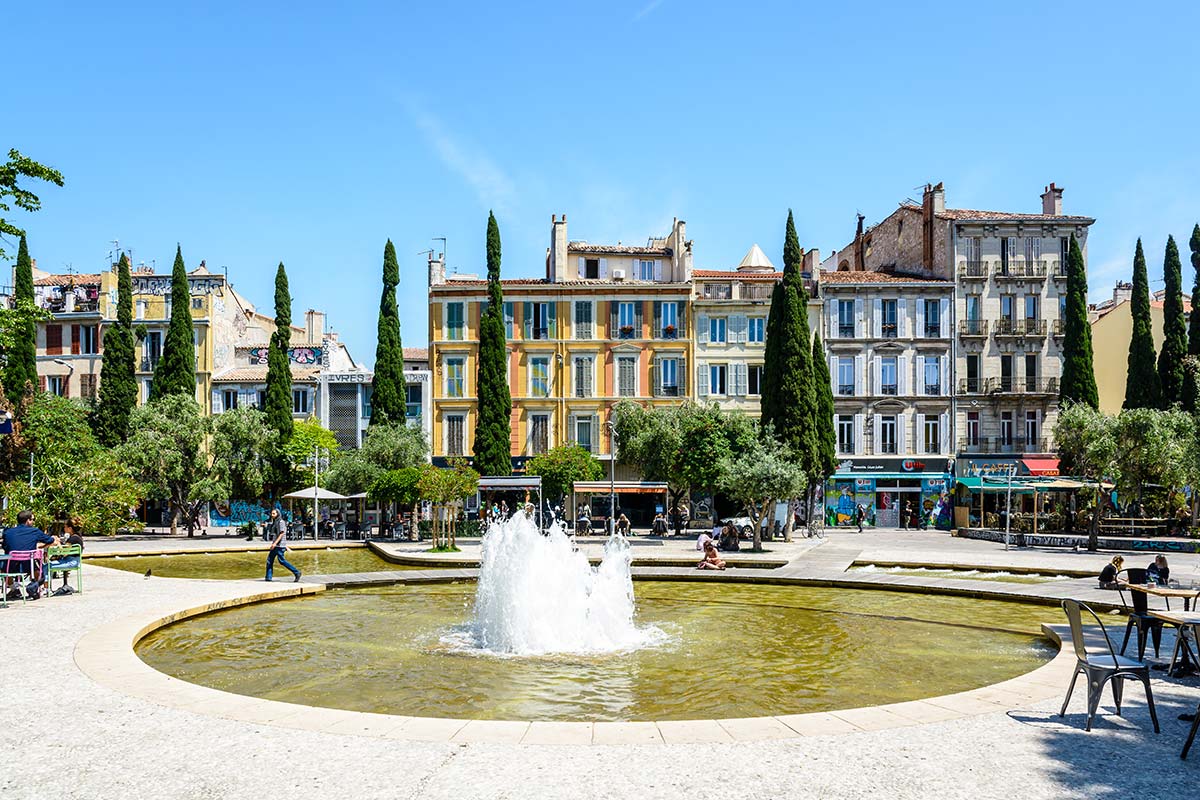
Cours Julien, Marsiglia – Photo © olrat
Forget Le Corbusier’s Unité d’Habitation (more on that in a moment): amidst croissants and cappuccinos, one could easily spend a lifetime without ever needing to leave this neighborhood, perhaps only venturing as far as Les Réformés, another area brimming with artist studios and small galleries.
From La Plaine, a must-do detour leads to La Friche Belle de Mai. This creative hub, nestled beyond a tunnel that’s perhaps notorious at night but undeniably atmospheric by day and adorned with urban art, is a former tobacco factory repurposed into a dynamic cultural center. La Friche is home to countless residencies, exhibitions, and artist studios, including Dernier Cri, and hosts the Art-O-Rama fair in late August. Whether you drop by for an afternoon game of basketball or stay until evening for a concert, La Friche is where Marseille’s urban energy finds a positive, constructive outlet, forging a defiant, punk beauty uniquely its own.
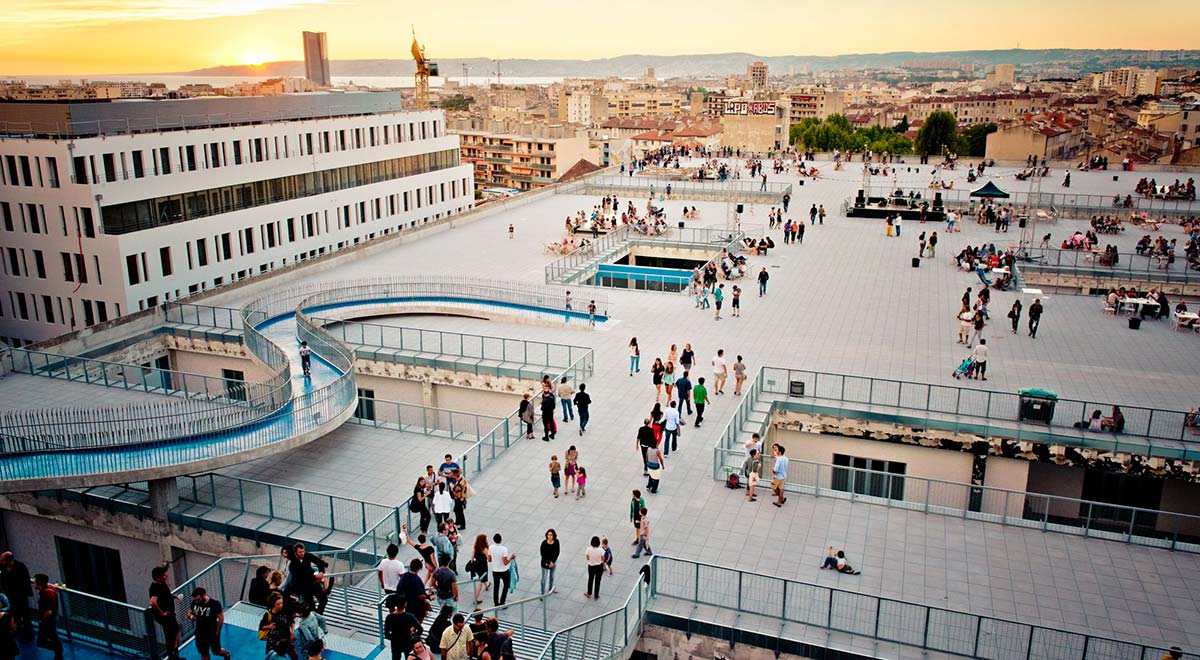
Friche Belle de Mai, Marseille
Le Corbusier and Le Prado
For those seeking to venture beyond the typical tourist trails, an essential trio includes a visit to Le Corbusier’s Cité Radieuse, a stop at the [mac] contemporary art museum, and finally, a refreshing dip at the Prado beaches.
Completed in 1952, the Cité Radieuse stands as the concrete embodiment of Le Corbusier’s modernist utopia. It exemplifies his vision of a ‘housing unit,’ an integrated complex where residents could find everything they needed under one roof, including schools, shops, and cultural spaces. This brutalist utopian complex, with its distinctive multicolored panel facade, remains inhabited today, with some apartments even available on Airbnb. Visitors can tour one of the units, explore the on-site bar and small architecture museum, and ascend to the rooftop terrace, offering panoramic views of Marseille – perhaps best enjoyed with Ryūichi Sakamoto and Alva Noto’s eponymous soundtrack playing in your ears.
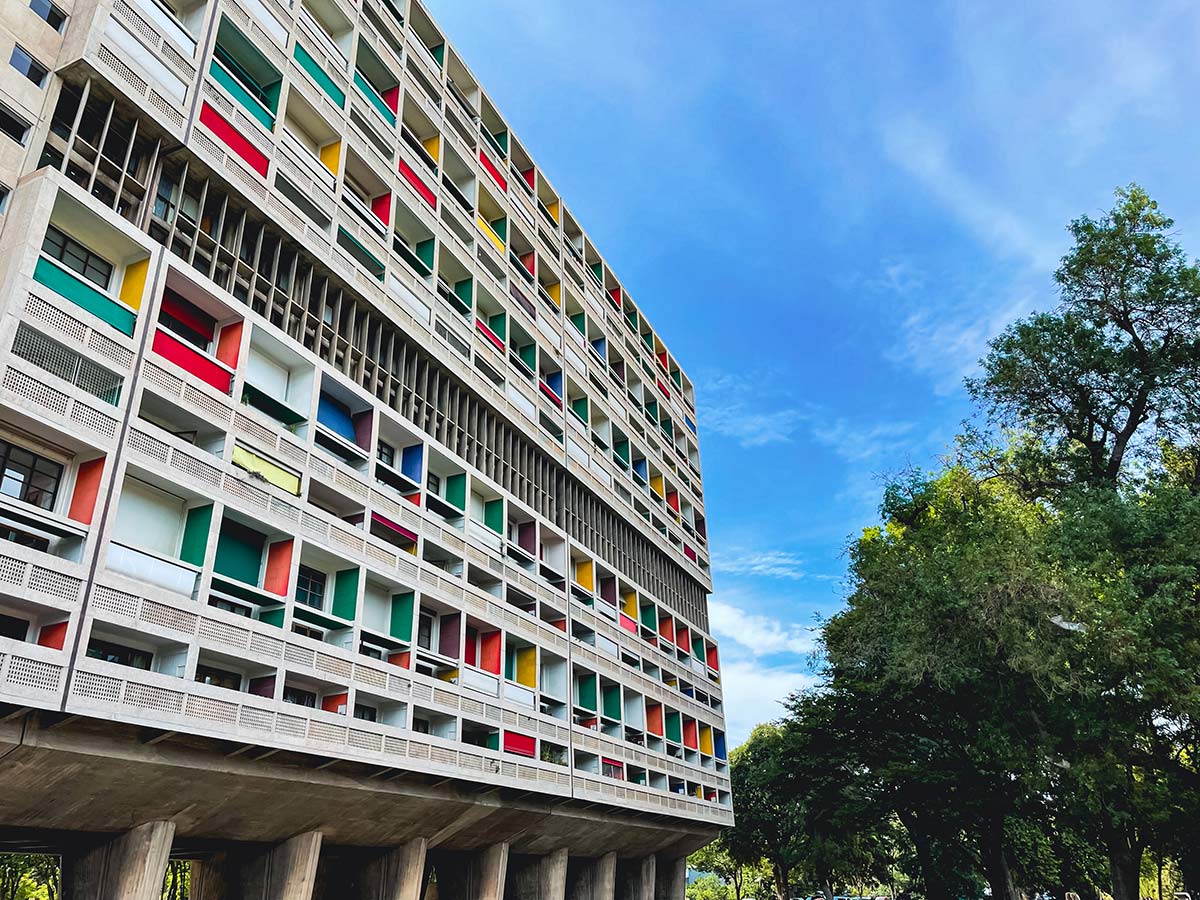
Citè Radieuse, design Le Corbusier, Marseille – Photo © Paul Keller
A few bus stops away, the [mac] (Musée d’Art Contemporain) sits in the quiet, residential 8th arrondissement, close to Borély Park. This small oasis of calm and silence boasts a permanent collection curated by Germano Celant. Its temporary exhibitions are often significant; currently, the Ali Cherri exhibition, by a Lebanese artist who deconstructs the very concept of a museum, offers a compelling reason to step off the well-trodden path.
Finally, for a well-deserved break after absorbing so much art and architecture, head to the long, sandy Prado beaches, which are particularly family-friendly. It’s like a mini-Mediterranean Miami, complete with surf shops and lively beach bars.
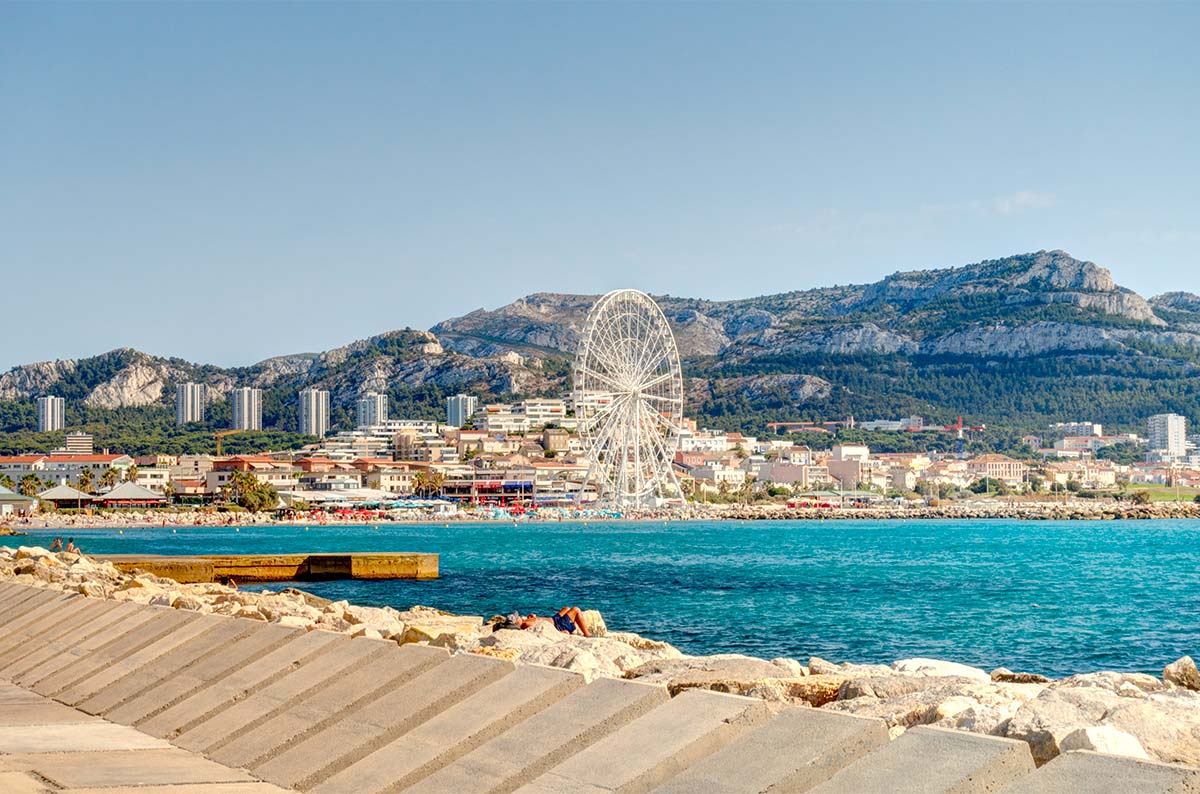
Spiaggia del Prado, Marseille – Photo © mehdi33300
The Beaches, Calanques, and Islands
Marseille’s raw, sun-kissed beauty is undeniable. Just a few turns along the Corniche Kennedy – Europe’s longest scenic coastal road, stretching 5 kilometers – are enough to appreciate the distant glimmer of the sea, as Montale might describe its vibrant pulse.
From the city’s first beach, sandy Les Catalans – where impeccably made-up girls in burkinis swim alongside topless women of all ages, and the sculpted curves of artificial breasts meet the oiled biceps of volleyball players – the journey continues to the more natural beaches of Malmousque. Here, friends gather on the rocky expanse, while women with proudly unshaven legs conform to the stone’s contours, engrossed in second-hand copies of Nietzsche’s Human, All Too Human.
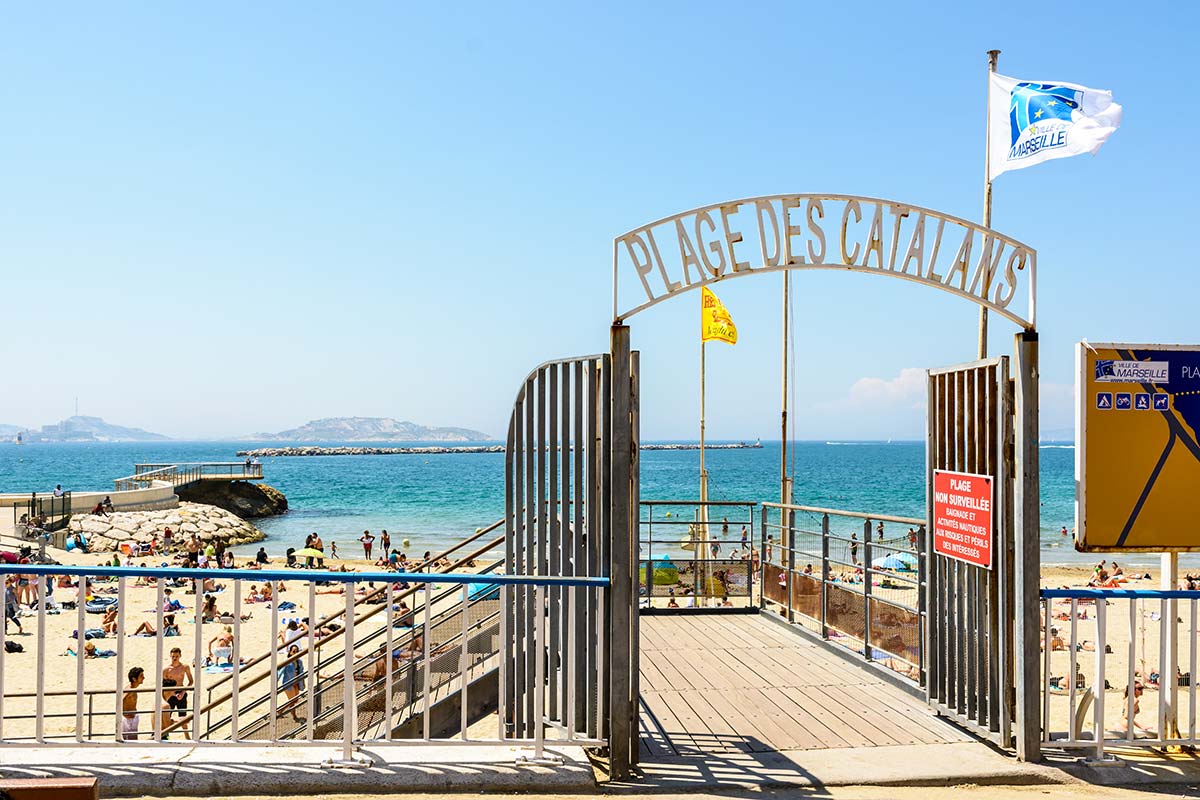
Spiaggia Les Catalans – Photo © olrat
Further still lie the Calanques, a grander, wilder, and untouched version of the Amalfi Coast, where swimmers appear as mere specks. All the Calanques are breathtaking, but for a focused experience, head to Les Goudes, a quaint fishing village. For a truly gourmet experience there, L’Esplaï du Grand Bar des Goudes comes highly recommended.
For those willing to embark on a 45-minute trek through a stunning landscape – amidst sun-drenched rocks and bushes tousled by the mistral wind – Chez Les Belges is an absolute must. A lunch of fresh catch serves as the perfect reward for the hike, an opportunity to truly savor the flavors after your eyes have been filled with endless blue and your hair whipped by the ever-present mistral.
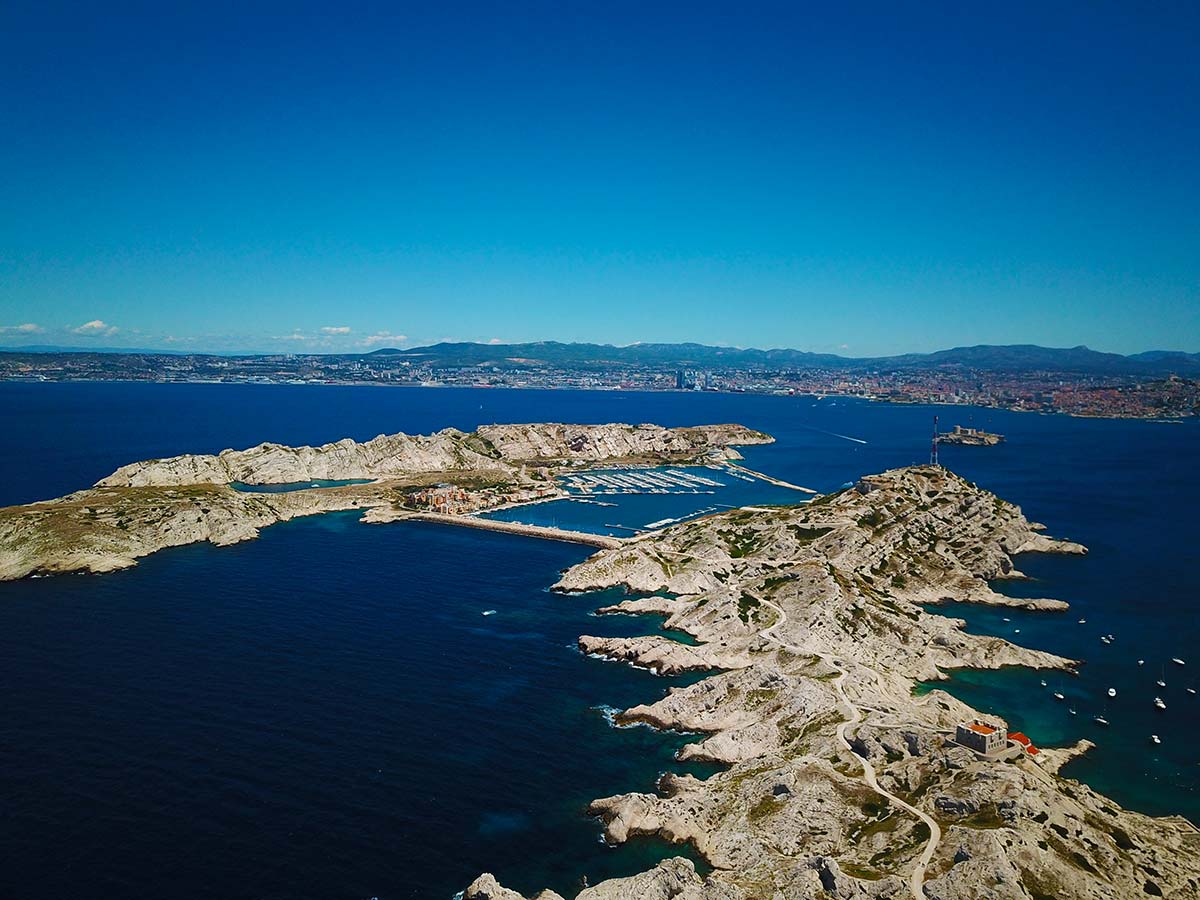
Arcipelago delle Frioul, Provenza-Alpi-Costa Azzurra – Photo © Vincent OME
For a complete immersion in beauty, it’s also worthwhile to take a boat to Frioul Island, directly opposite Marseille, which boasts numerous coves with crystal-clear waters. From there, you can visit the Château d’If, the French fortification built between 1527 and 1529. Though famously known from Alexandre Dumas Père’s The Count of Monte Cristo, it actually held many other prisoners, from two Marseillaise fishermen in 1540 to the last German prisoners during World War I.
It’s true that 24 hours aren’t nearly enough to explore Marseille. And like all these beautiful, vibrant cities across the Mediterranean, sometimes a whole lifetime isn’t enough.