At the 19th International Architecture Exhibition in Venice, national pavilions from Saudi Arabia, Bahrain, the United Arab Emirates, Oman, and Qatar this year explored and analyzed fundamental themes in architectural and urban design, relevant not only to the Arab world but globally. For instance, the Saudi Arabian pavilion’s project, “The Um Slaim School: An Architecture of Connection” curated by Beatrice Leanza with Sara Almutlaq, «expounds upon the architectural heritage of Riyadh in relation to ecology, identity, and urban-making, advancing how local places of knowledge can address the urgencies of a rapidly evolving world—in Saudi Arabia, the Arab region, and beyond». In a rapidly and continuously evolving cultural and social context, these ‘places of knowledge,’ alongside gathering spaces, become vital anchors.
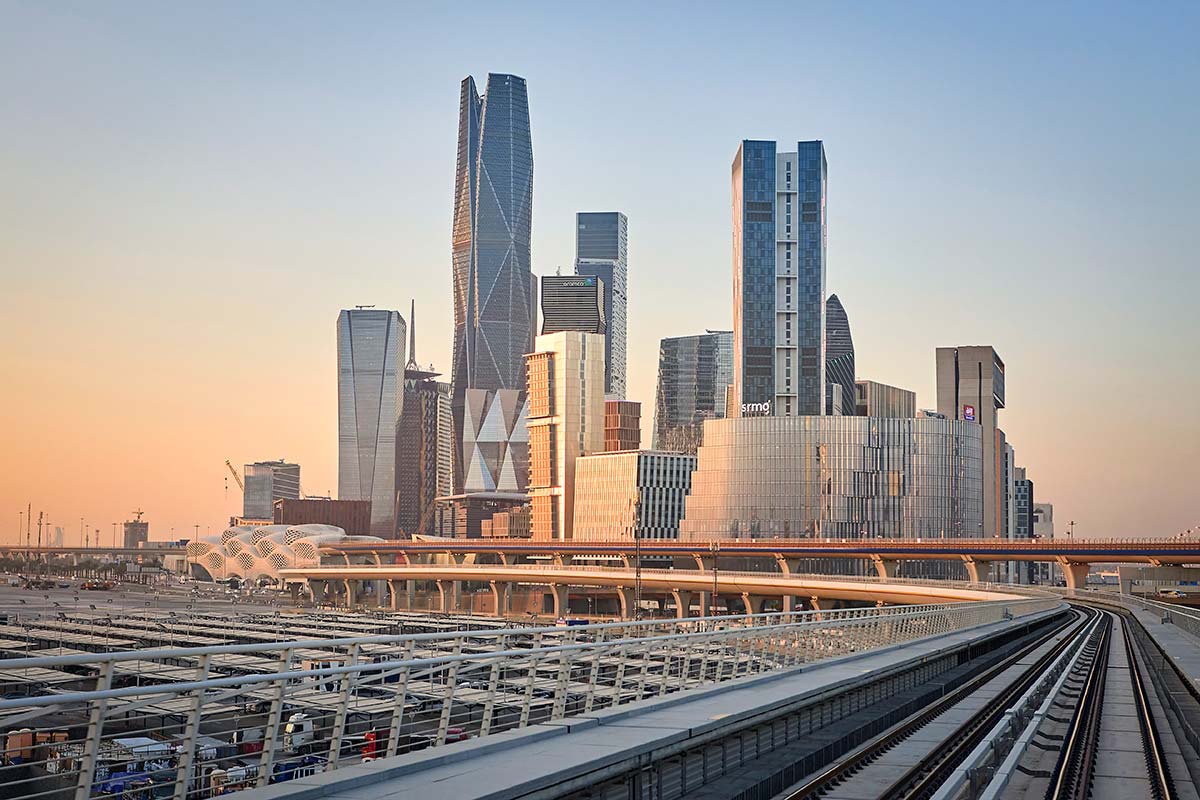
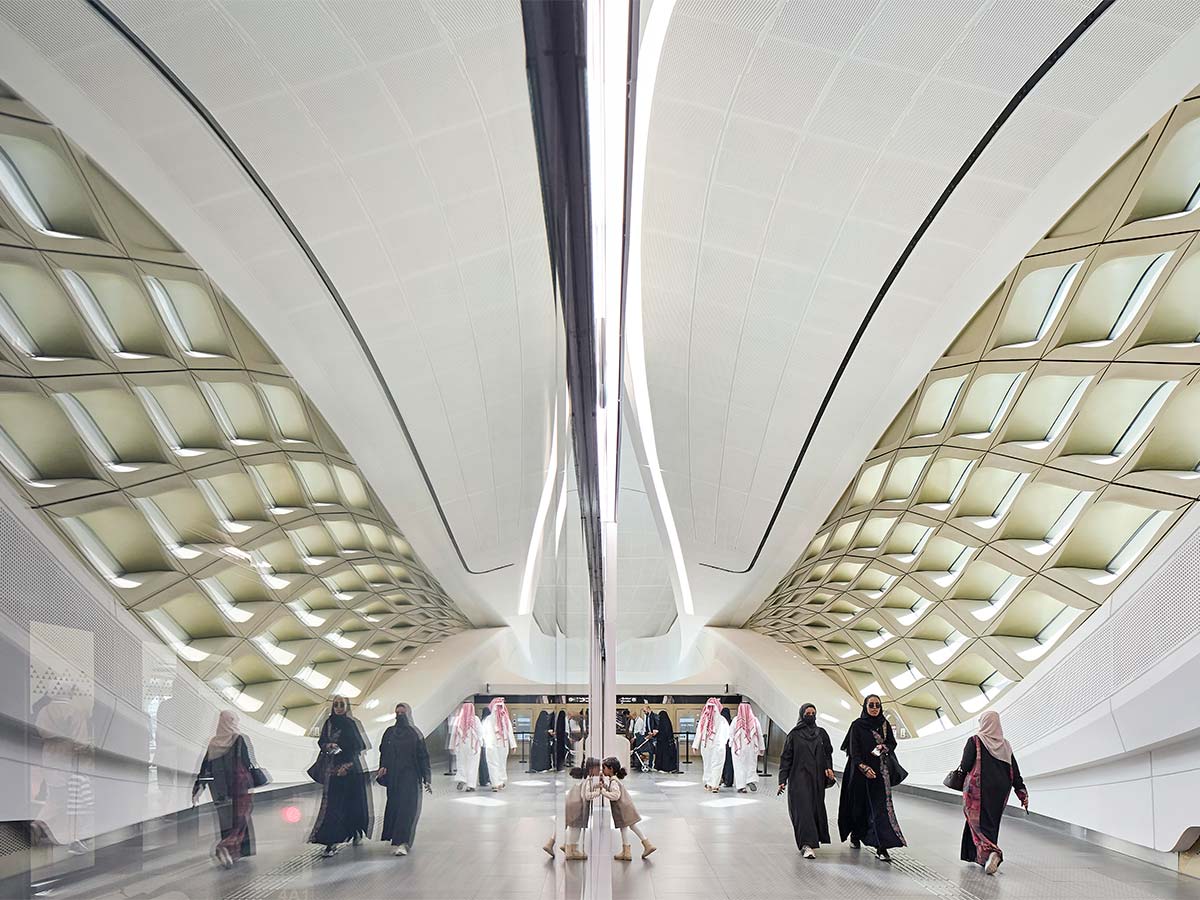
King Abdullah Financial District Metro Station – Photo © Hufton+Crow
Oman’s debut pavilion presented Traces, curated by architect Majeda Alhinai. This exhibition delves into the spatial and social logic of the Sablah, the traditional Omani communal space – a place «positioned at the intersection of heritage and adaptability», serving as a platform where «hospitality, dialogue, and social cohesion across generations» converge. The “extended” concept of hospitality and gathering forms the cornerstone of Qatar’s dual exhibition, Beyti Betak. My home is your home, curated by Aurélien Lemonier and Sean Anderson, with Virgile Alexandre. The exhibition states: «Featuring significant works of modern and contemporary architecture from Middle East, North Africa, and South Asia, Beyti Beytak explores spaces of hospitality at multiple scales across the past 85 years.
Hospitality in architecture is an extension of civic and ethical values, it is understood as a convening of diverse contexts: the museum and the mosque, the garden, the community centre and public spaces». These aspects of cultural and architectural identity inevitably confront urgent (and global) issues such as resilience in extremely hot climates. This was powerfully demonstrated by Bahrain’s Golden Lion-winning “Heatwave” installation, which «envisions adaptable public spaces that mitigate the effects of extreme heat while promoting social interaction and community resilience». Similarly, the UAE pavilion’s Pressure Cooker, curated by Azza Aboualam, explored the correlation between architecture, design, and local food production methods.
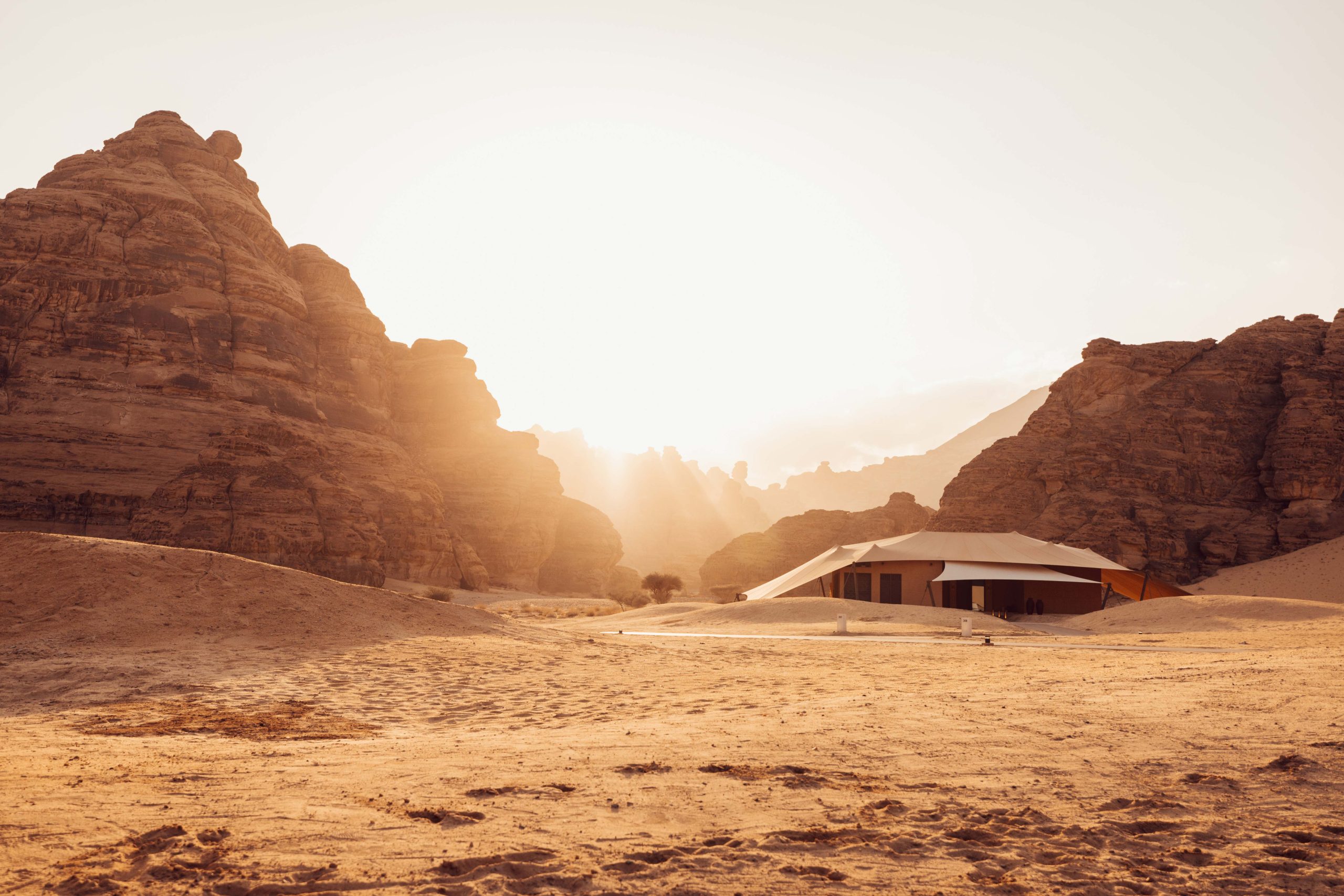
Banyan Tree AlUla
These concrete proposals seem to be forging new narratives and solutions, effectively “reframing” the dominant story of rapid, planned urban expansion that has characterized Arabian Peninsula countries since the 1990s, especially those fueled by oil wealth. This landscape of mega-development is inherently shaped by divergent forces, objectives, and directions, fostering immense creative and identity-based tension. One prominent vector of this development is undoubtedly upward. Chronologically, it was the first and remains the most spectacular: the proliferation of tall and “megatall” mixed-use skyscrapers. This includes the race for the tallest building or the most iconic forms, utilizing typical global architectural structures and cutting-edge construction technologies. These projects, often involving international architectural firms, are built as symbols of prosperity and a quest for a distinct identity by local governments and investors. While such architectural endeavors certainly attract investment, they often fall short of contributing to a cohesive or coherent urban context.
Diriyah Art Futures
A second direction points towards the coast and the natural riches of the marine environment. This is evident in the drive to reclaim waterfronts and coastlines, and the proposal of international tourism and hospitality featuring super-luxury accommodation and services. Following colossal engineering feats like Dubai’s artificial archipelagos or Al Marjan Island in the emirate of Ras Al Khaimah, a potentially more environmentally conscious and harmonious tourism strategy is now focusing on the Saudi Red Sea. Here, Red Sea Global plans to open an airport and develop three new tourist destinations: The Red Sea, Amaala, and Thuwal.
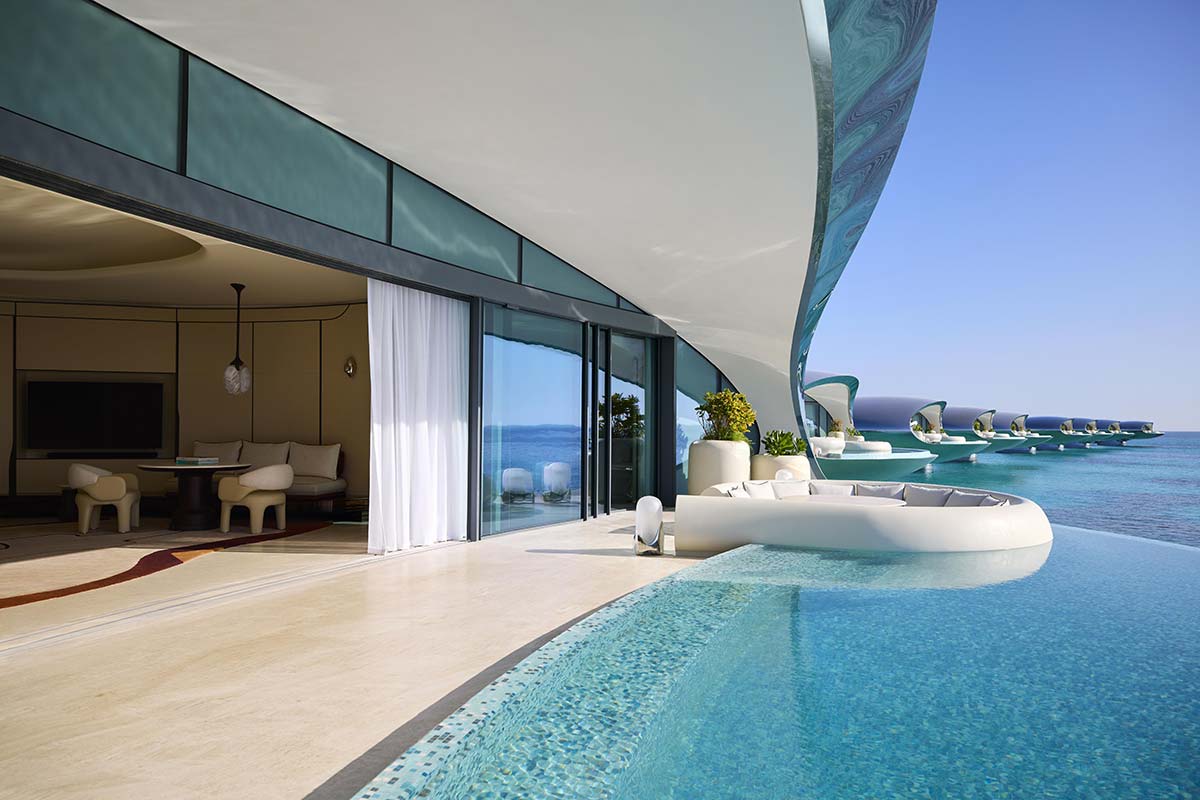
Shebara Resort, The Red Sea – © courtesy Red Sea Global
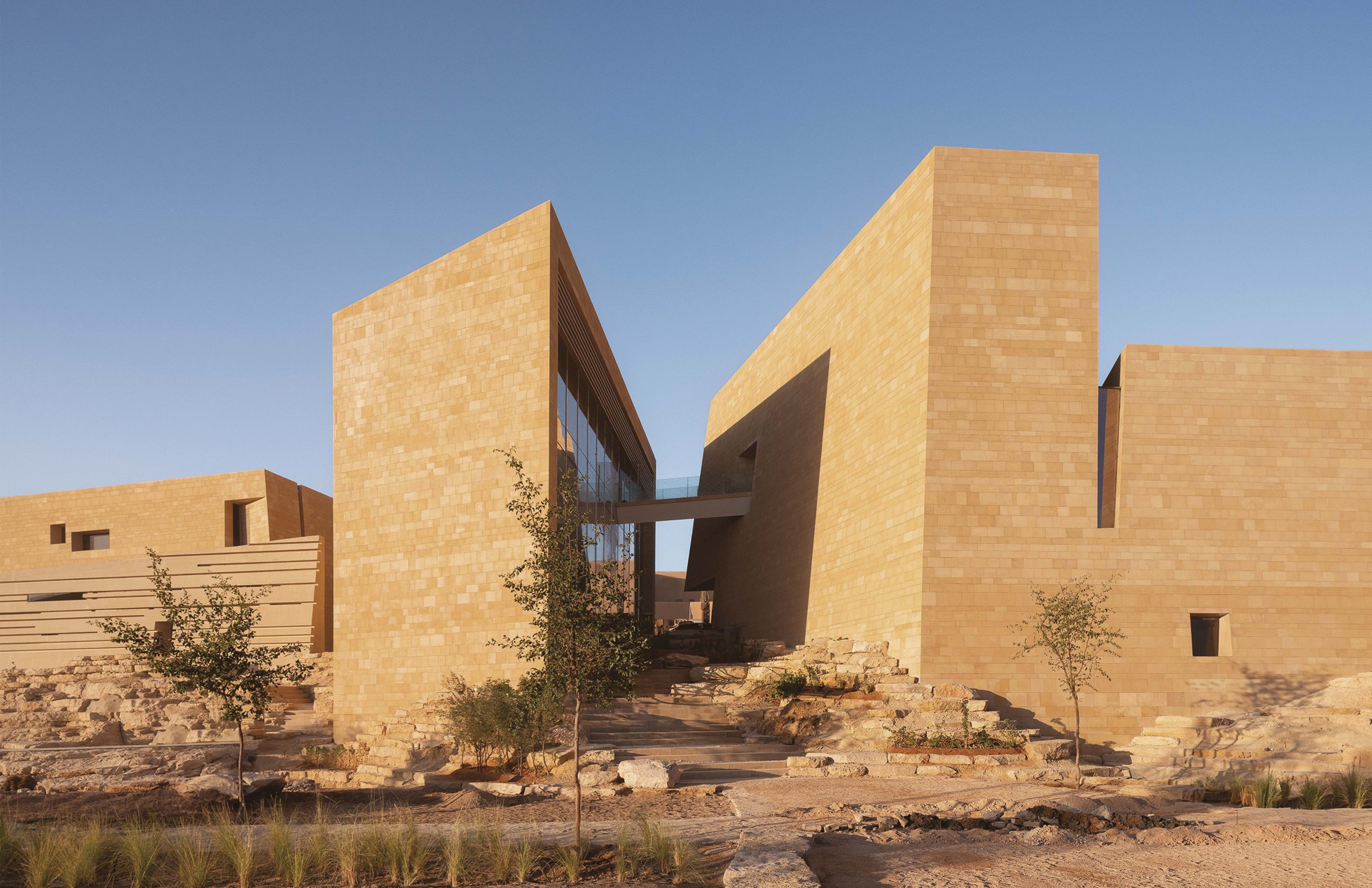
Beyond the mega- and large-scale developments (Saudi Arabia alone has over 50 urban and economic projects under Vision 2030, including the five giga-projects of Qiddiya, Diriyah, Roshn, Neom, and The Red Sea), another direction is shifting focus back to the ‘land.’ This involves valuing existing architectural heritage and local construction systems, integrating with both natural and built landscapes, and creating livable, shared public spaces, often favoring medium and small scales. An increasing number of projects by local firms are embracing adaptive reuse and site-specific transformations.
These projects develop a language that is both contemporary and deeply rooted in the local context, using architecture as a tool for cultural continuity and public engagement within a constantly evolving environment. Here, preserving memory and a sense of belonging is crucial, while simultaneously maintaining a future-oriented vision and remaining receptive to architectural languages from other cultures, both Eastern and Western. In this delicate transition between past and future, sustainability appears to be a central objective, forming the cornerstone of an approach that blends traditional techniques (wind towers, water channeling, local building materials, flat roofs, enclosed volumes, and narrow connecting paths) with modern technologies. The regeneration of the UNESCO site AlUla Old Town, promoted by the Royal Commission for AlUla (RCU), stands as an exemplary case.

Shebara Resort, The Red Sea – © courtesy Red Sea Global
As this region continues to evolve, amidst the tense dialectic between tradition and modernity, historical heritage and contemporary transformation, perhaps it is worth allowing this tension between divergent directions to remain ‘unresolved’? Could finding a balance between these various forces and aspirations allow architecture and cities, in a broader sense, to become fertile ground for experimentation, creativity, identity formation, and a reinterpretation of history and context?