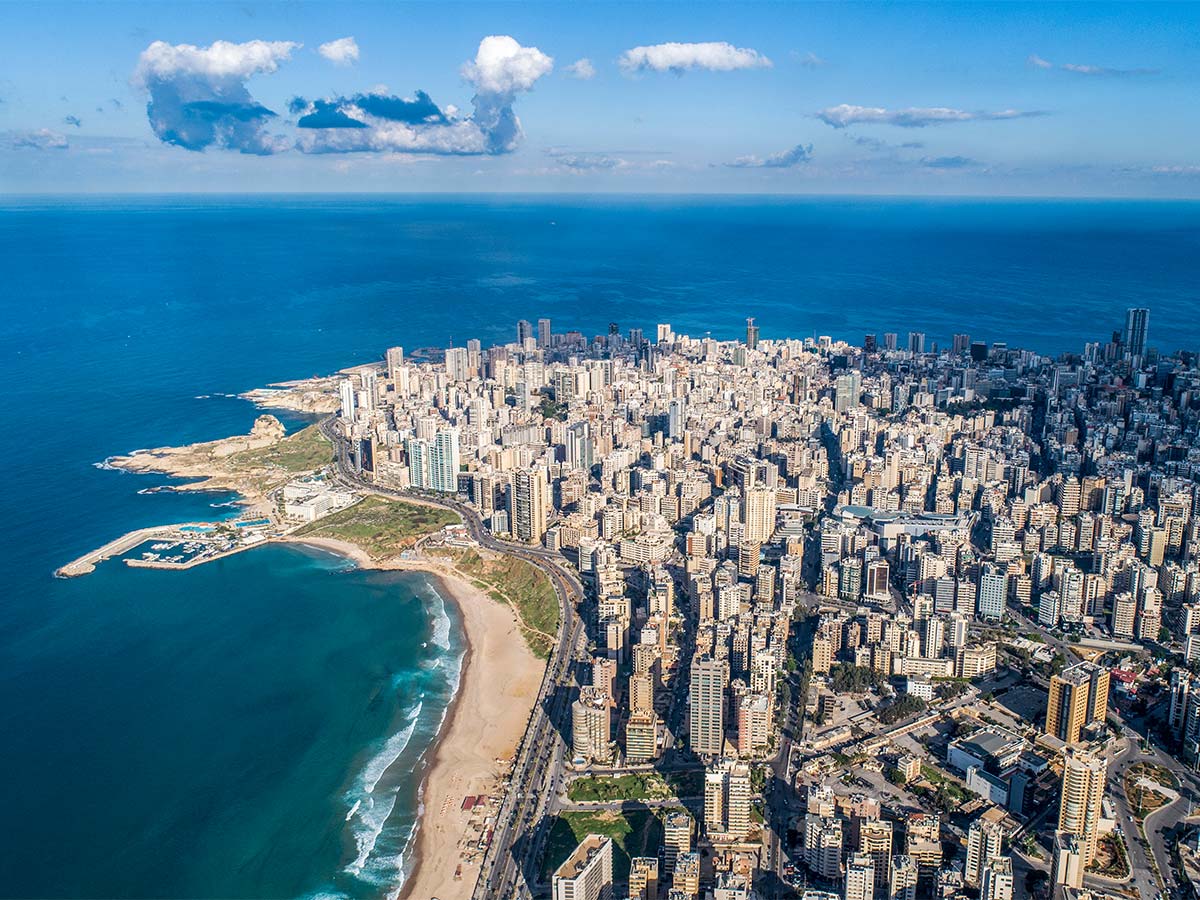
Beirut. A city of many layers, where the past lives quietly in the bones of its buildings and the future pulses in their new uses. Walking its streets is like reading an architectural memoir: Ottoman-era villas shoulder mid-century flats; war-scarred façades wear new glass and signage; intimate alleyways press into wide boulevards, each offering a different glimpse of the city’s identity. In 24 hours you can travel from the dense heartbeat of Hamra to the shimmering downtown, from industrial reuse to luxury interiors, Beirut in full design-rich motion.
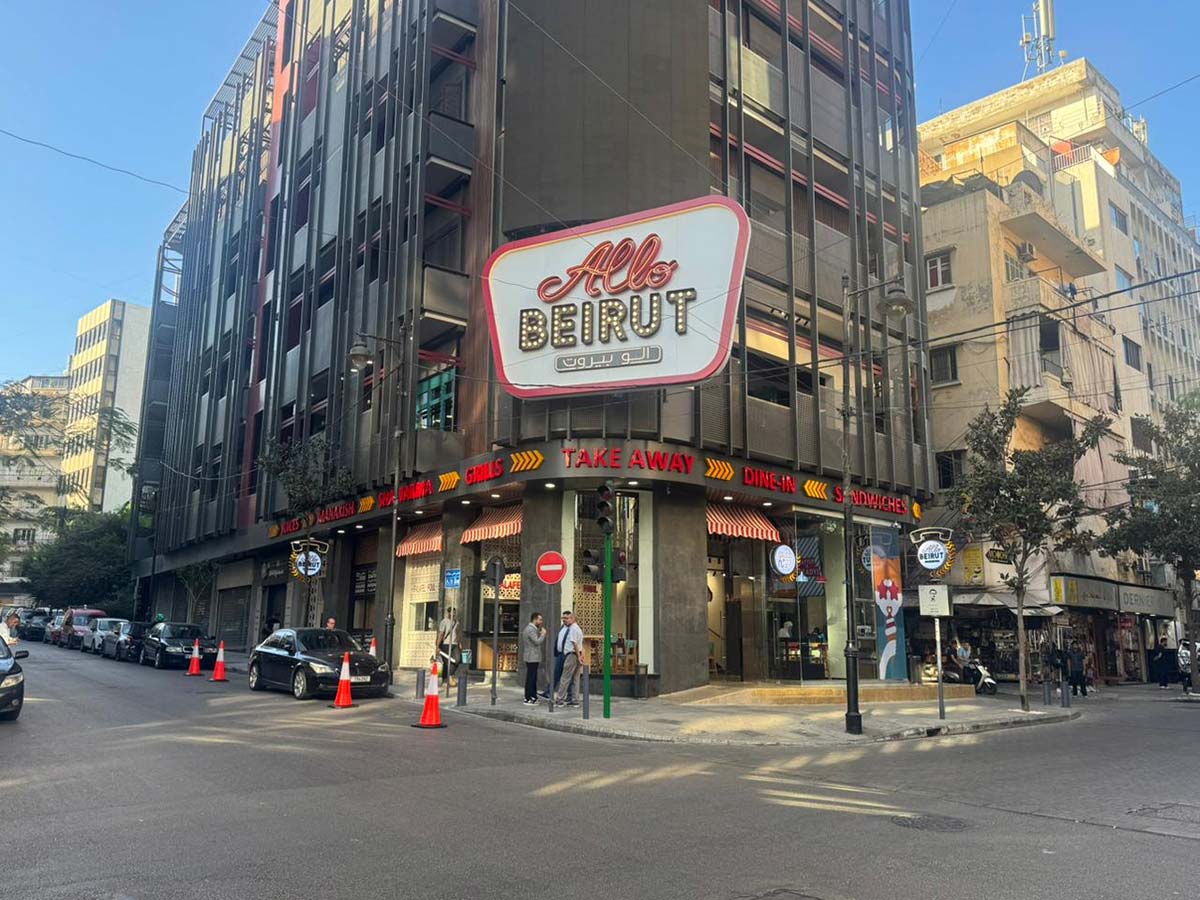
Hamra street, Beirut, Lebanon
You begin in Hamra, where the morning light filters through layered balconies and shop-fronts crowd the sidewalk. Here, among the dense fabric of the city’s intellectual and commercial hub, you find yourself at the restaurant Allo Beirut; at its centre is the vibrant. With its playful exterior of colour, bold seating and greenery spilling out, it’s a perfect starting point. Over your Lebanese coffee and thyme mankoushi (although it serves everything Lebanese), you can sense the city waking: shutters rising, the murmur of traffic, the old façades catching light. The architecture here is intimate, compact, full of stories in the wrought-iron railings, the cracked plaster, the narrow windows pressed into the wall. The design of the 24 hours restaurant itself gestures toward the new Beirut: interior warmth and bold geometry layered inside this older shell.
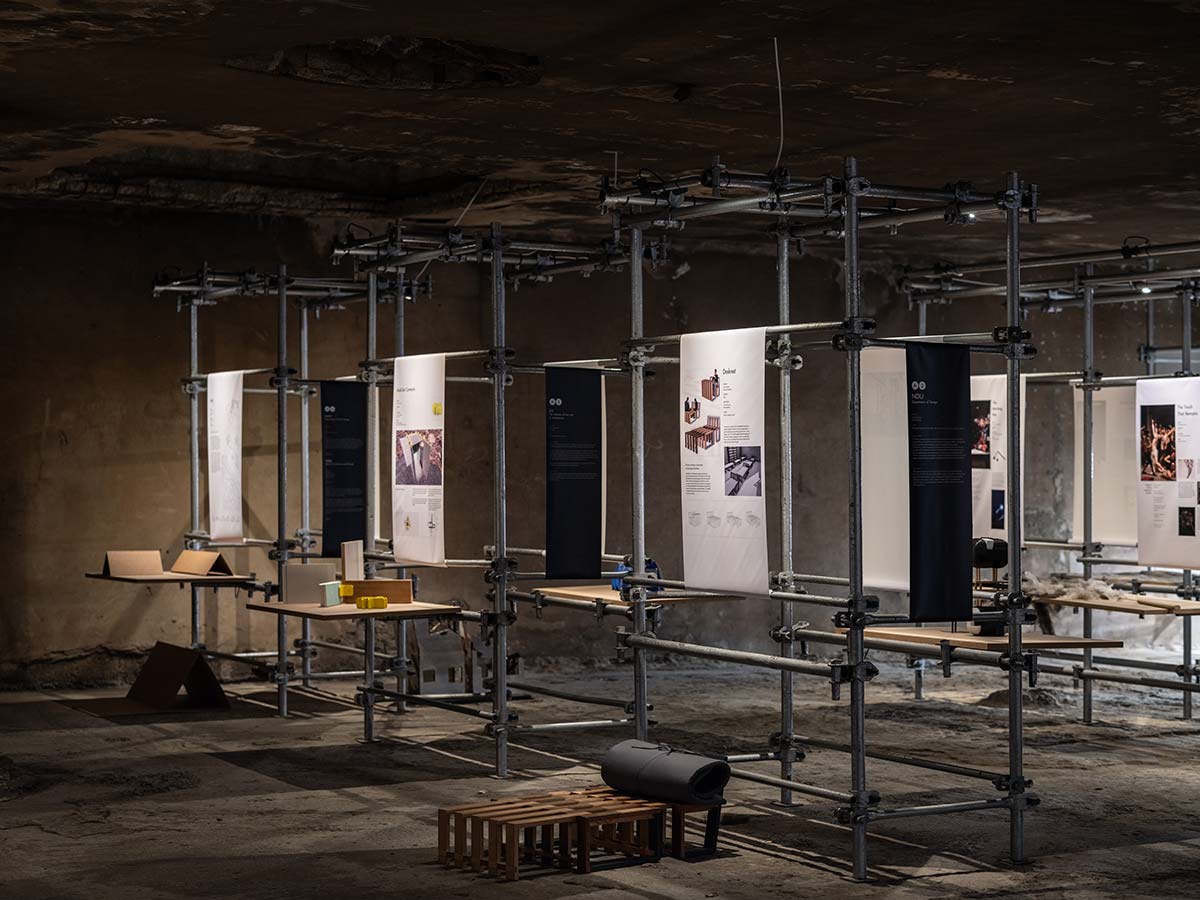
Student work installation at the Burj El Murr, Beirut, Lebanon
Leaving Hamra you step into another mode of the city: the legacy of its old buildings being given new life through design and architecture. First to Burj El Murr. A building roughened by conflict, its structure now celebrated for the very scars that remain. Exposed beams, patched masonry, glass partitions inserted – the architecture narrates trauma and transformation. Here you find creative We Design event opening the space for young university creatives, punching through the old grid, the design intervention respectful of the original form yet clearly contemporary.
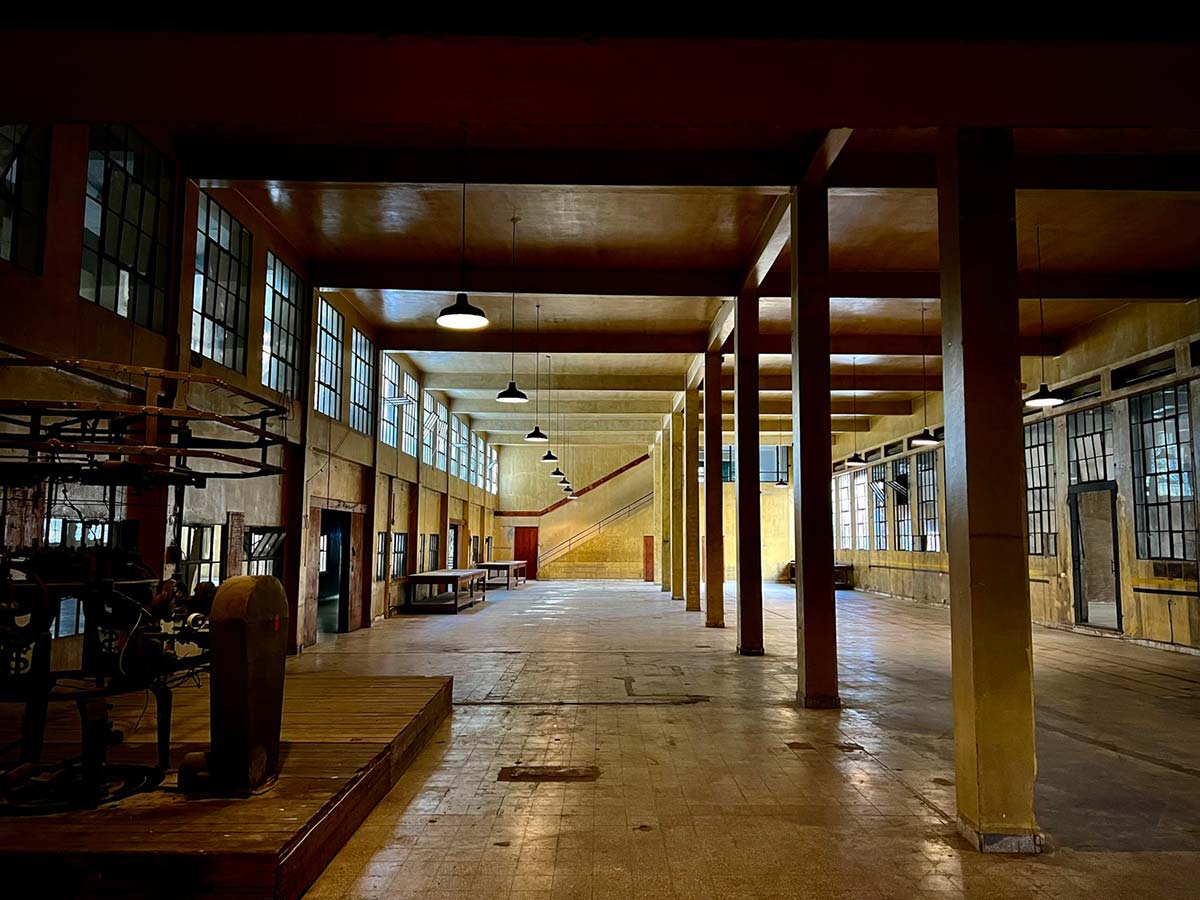
Abroyan Factory, Beirut, Lebanon
Then you wander east to Bourj Hammoud and the former factory at Abroyan: high ceilings, large industrial windows, steel trusses, concrete floors bearing the whisper of century-old machines. Now glass-blowers, stitchers and clay modellers animate the space. Walking through, you sense the continuity: the industrial past converted into creative present; the architecture retains its identity even as its function changes. It’s a record of labour, of economy, of reinvention.
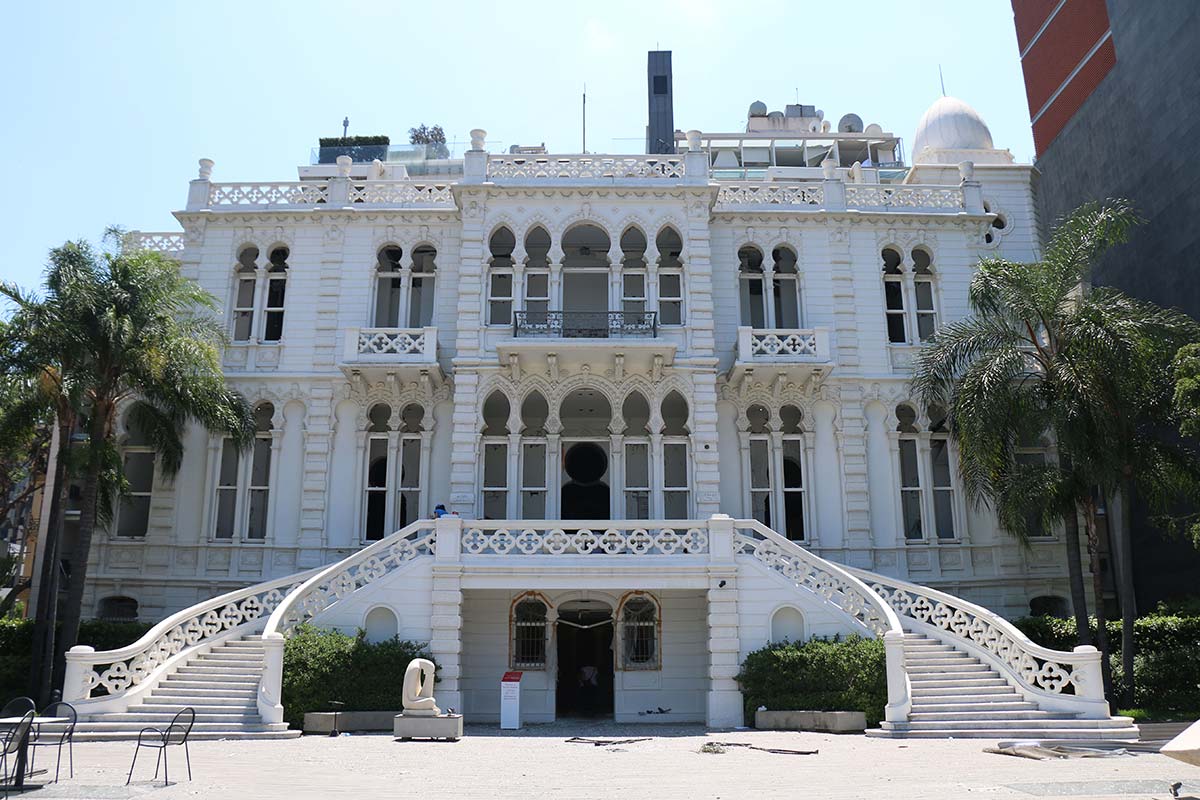
Sursock Museum, Beirut, Lebanon
Lunch time brings you to Sursock Museum in Achrafieh. The 1912 villa, with Venetian-Ottoman motifs, tall ceilings, and aristocratic proportions, was heavily damaged in the 2020 port explosion. Its restoration, completed in 2023, gives the building a second life. Inside you dine at the nearby Im Sherif Resto, under arches and beside terrazzo floor and overlooking the garden. After lunch you wander the museum’s galleries: the stained-glass windows, shattered and painstakingly repaired, are a highlight: their colours deep, their lead-came lines remade. The current exhibition “Divas” brings together Middle-Eastern women singing icons, from Dalida to Fairuz, in a heritage architecture setting, the container itself a part of the story.
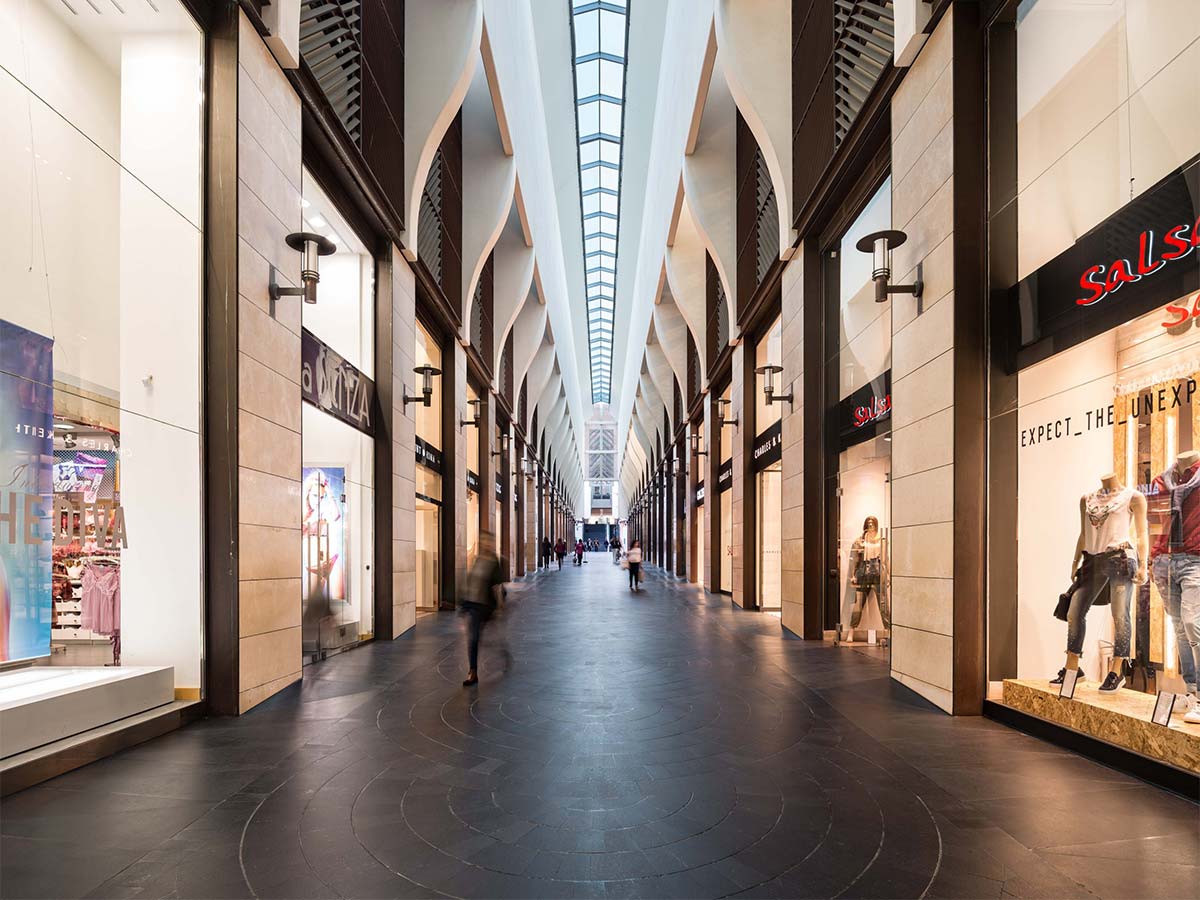
Gallery of Rafael Moneo’s Beirut Souks, Beirut, Lebanon – Photo © Bahaa Ghoussainy
In the afternoon you head into downtown to the revived Beirut Soucks. Once Ottoman commercial lanes, then battered by war, now reborn with shops and boutiques within historic-shell buildings. You walk through narrow pedestrian lanes, pressed between load-bearing stone walls, timber roof-structures glimpsed above modern glass shop-fronts. Here the old envelope remains: mouldings, decorative lintels, proportions of a bygone era. The new inserts: steel frames, minimalist signage, high-design materiality. The architecture is reactivated, old shells hosting new commerce, the city compressing past and present.
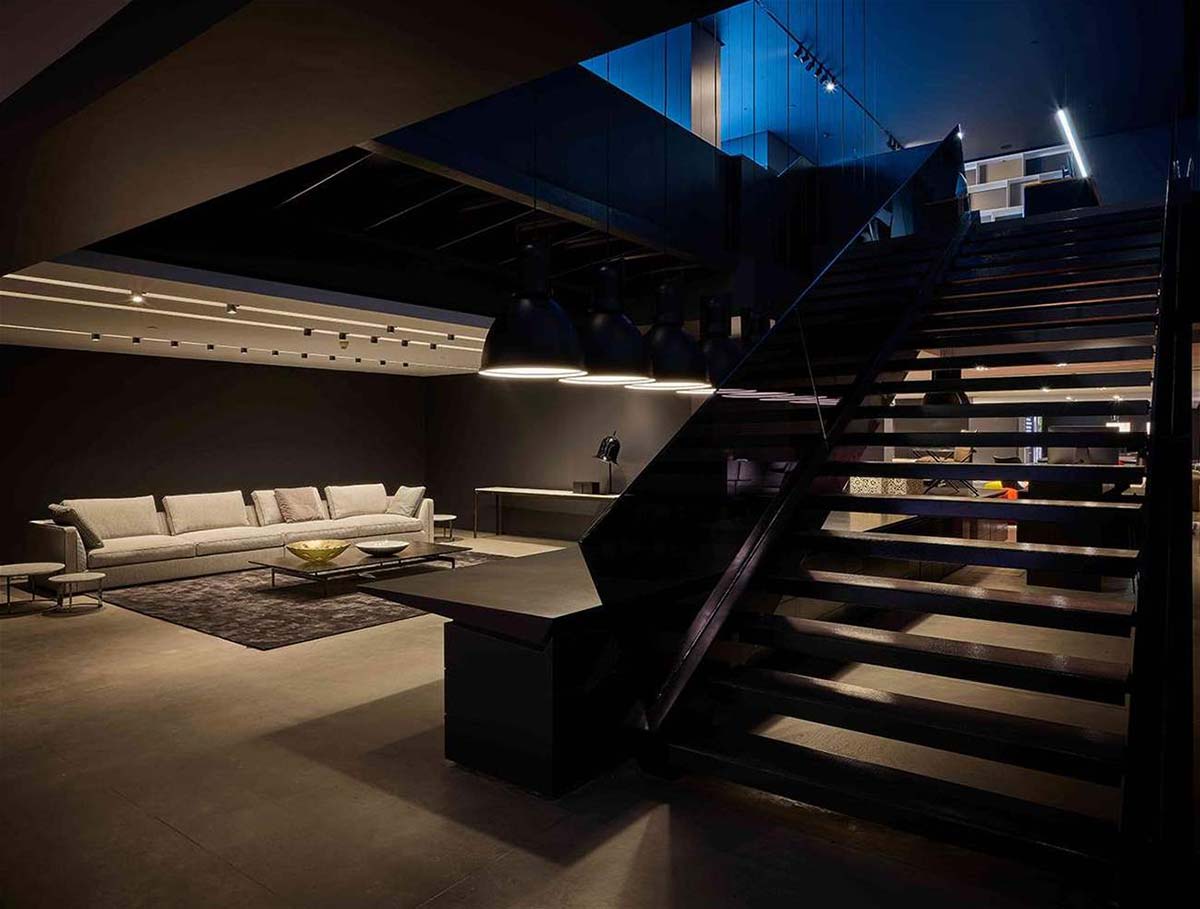
Le Cercle, Beirut, Lebanon
Just before checking in for the night, you stop at Le Cercle, Beirut’s premier luxury furniture and interior design destination. Located near the downtown/luxury district, Le Cercle curates world-class brands such as Roche Bobois (which celebrated its 20-year Beirut anniversary in the showroom), alongside B&B Italia, Ligne Roset and others. At Le Cercle you step into a showroom world of marble, walnut, brass, refined textiles; you witness how interior architecture aligns with high-design furniture. The showroom itself becomes part of your architectural journey, a pause before the hotel, one last immersion in form, material and spatial ambition.
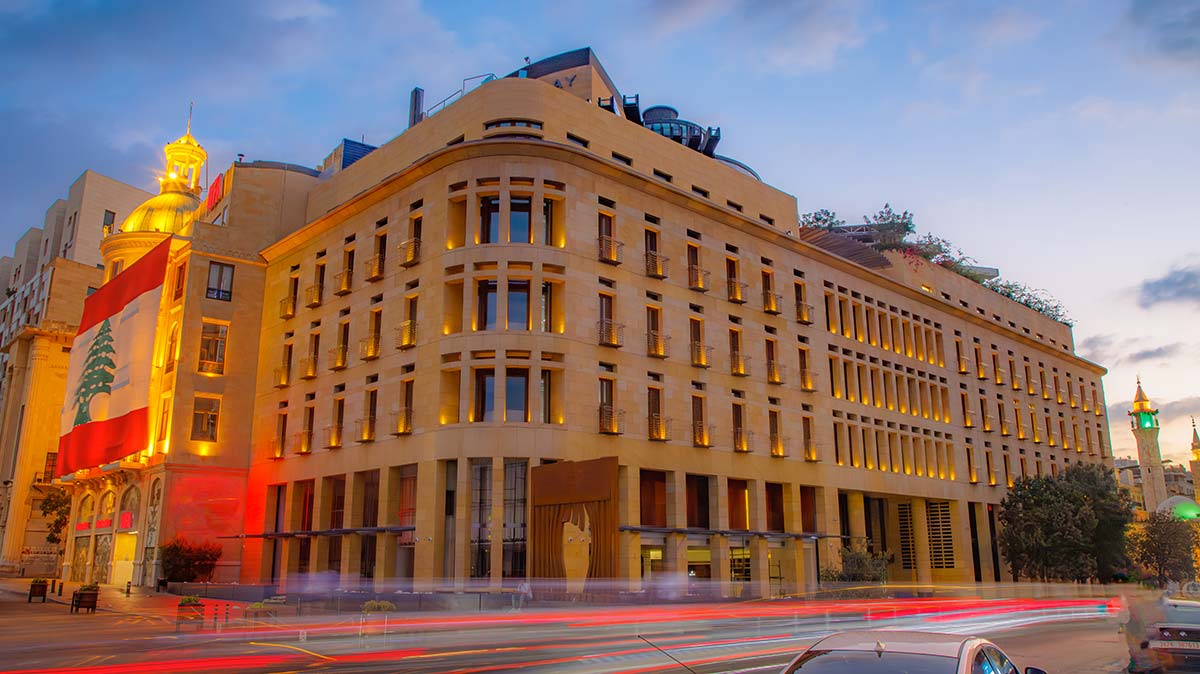
Le Gray Hotel, Beirut, Lebanon
Then you check into the Le Gray Hotel: its lobby because of its heritage-volume, polished surfaces, curated lighting, original windows reframed, materials chosen to honour the past while delivering luxury. Here you let the evening settle.
The night takes you into Mar Mikhael, Beirut’s art & culture quarter: galleries, design-studios, clubs in converted town-houses and warehouses. Each venue’s interior distinct, yet each one sits within architecture that bears the marks of age, raw concrete, exposed structure, faded signage, coexisting with velvet banquettes, terrazzo floors, neon accents. You move from place to place, the city-shell shifting and adapting, the architecture alive.
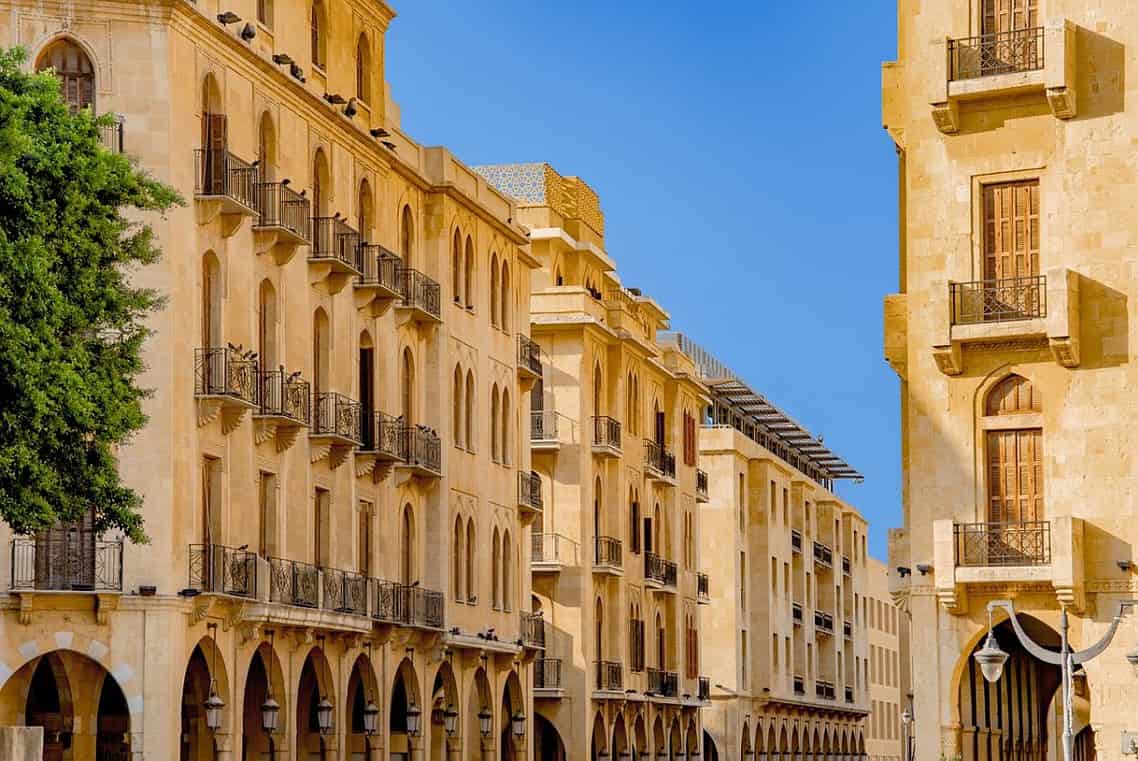
Downtown Beirut, Lebanon
Finally you end on a rooftop bar, looking out across Beirut’s rooftops, cedar-lined sea glimpses, the city lights on old and new alike. You reflect on the arc: from Hamra’s narrow lanes and vibrant café, through industrial reuse, heritage villa and new retail, luxury design showrooms, hotel renewal, creative nightlife, all threaded together by architectural texture, design intent, and the city’s capacity for renewal.
In 24 hours you’ve glimpsed a Beirut that isn’t only a place but a process: of memory, of adaptation, of reinvention. The buildings are not just backdrops, they are participants in the city’s cultural life. And you, in walking them, become part of that narrative.