In 2025, Artek reached its ninetieth anniversary. To mark this milestone, the company chose to revisit the figure of Alvar Aalto, its founder alongside his wife Aino Aalto, Maire Gullichsen, and Nils-Gustav Hahl, reissuing archival pieces and highlighting lesser-known projects by the master. Among them is the Church of Santa Maria Assunta in Riola di Vergato, Aalto’s only realized architectural work in Italy – apart from the small temporary pavilion at the Venice Biennale. Commissioned in the 1960s by Cardinal Giacomo Lercaro and completed in 1994, the church represents a precise translation of Nordic modernist principles into the spiritual and natural context of the Bolognese Apennines.
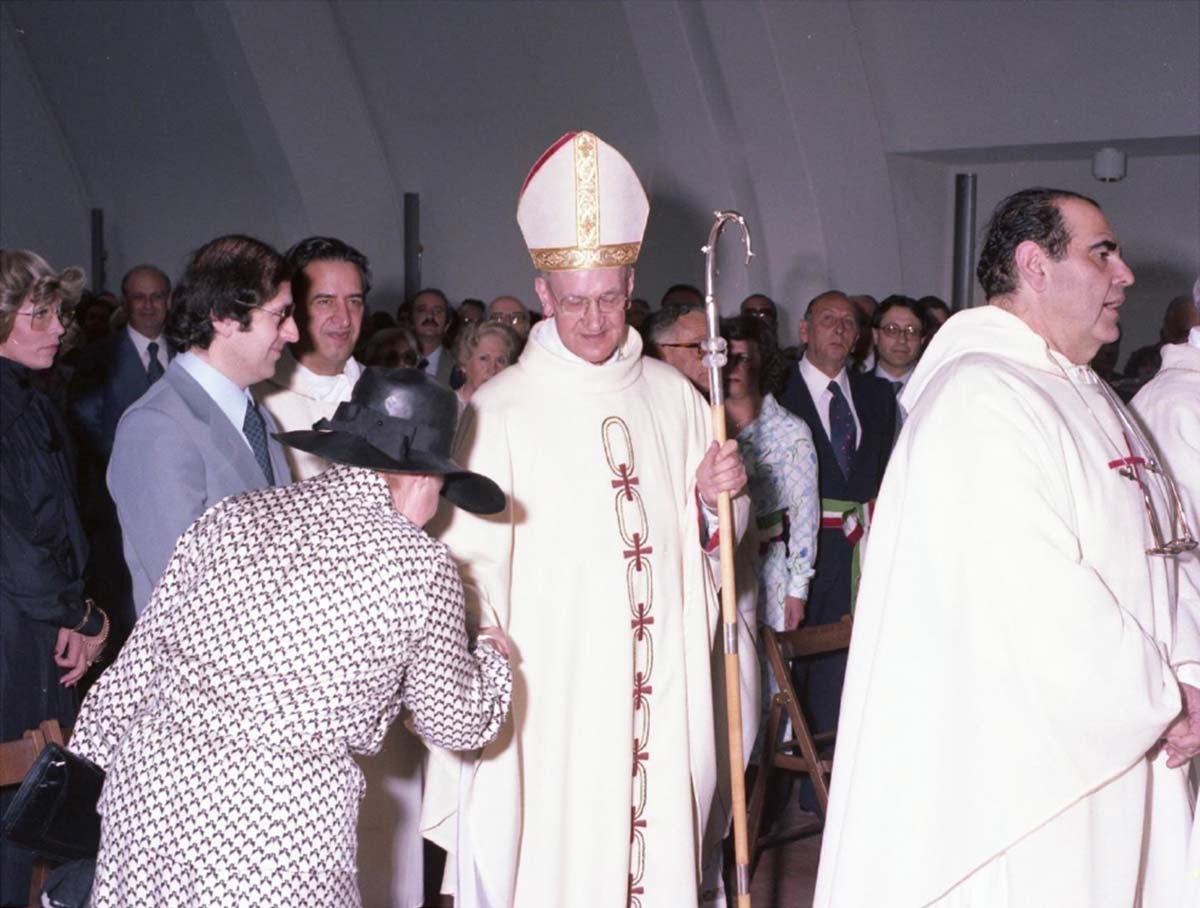
Inauguration of the church in 1978. Photo © Archives of A. Aalto Italia C.S.M.A. – Fondo Fotografo Angelo Masina
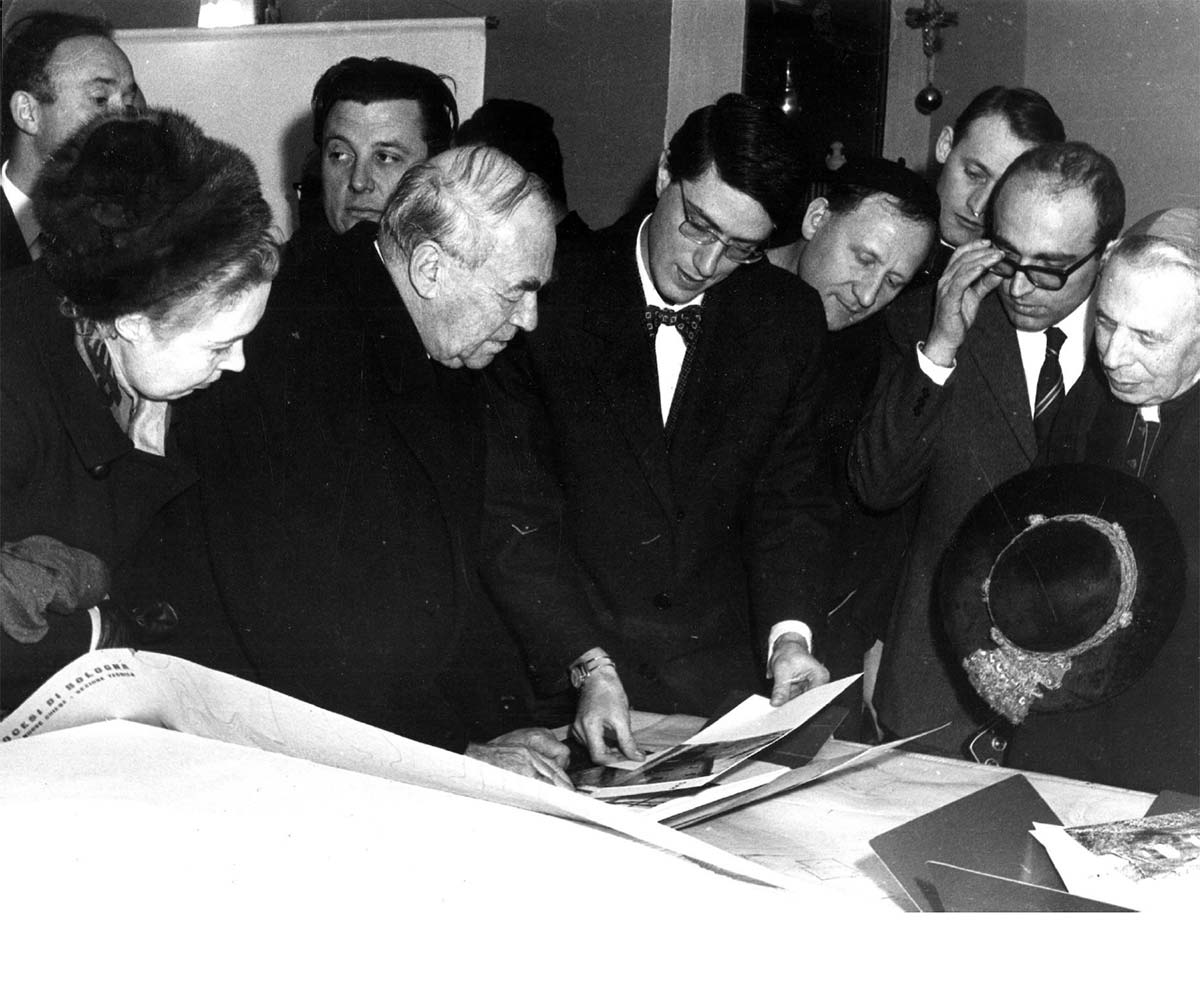
The initiative for the church came from Giacomo Lercaro, Cardinal of Bologna and advocate of conciliar liturgical reforms. Lercaro encountered Aalto’s work in 1965 during a dedicated exhibition, and the idea for the Riola project was born from that meeting. A decisive role in bringing the project to fruition was played by Bolognese architect Glauco Gresleri, who, together with Giorgio Trebbi, made Aalto’s visit to Riola possible and closely followed the architectural and construction developments over the years. Gresleri’s cultural and professional mediation was essential in ensuring the continuity of the project even after Aalto’s death in 1976; the church was inaugurated two years later.
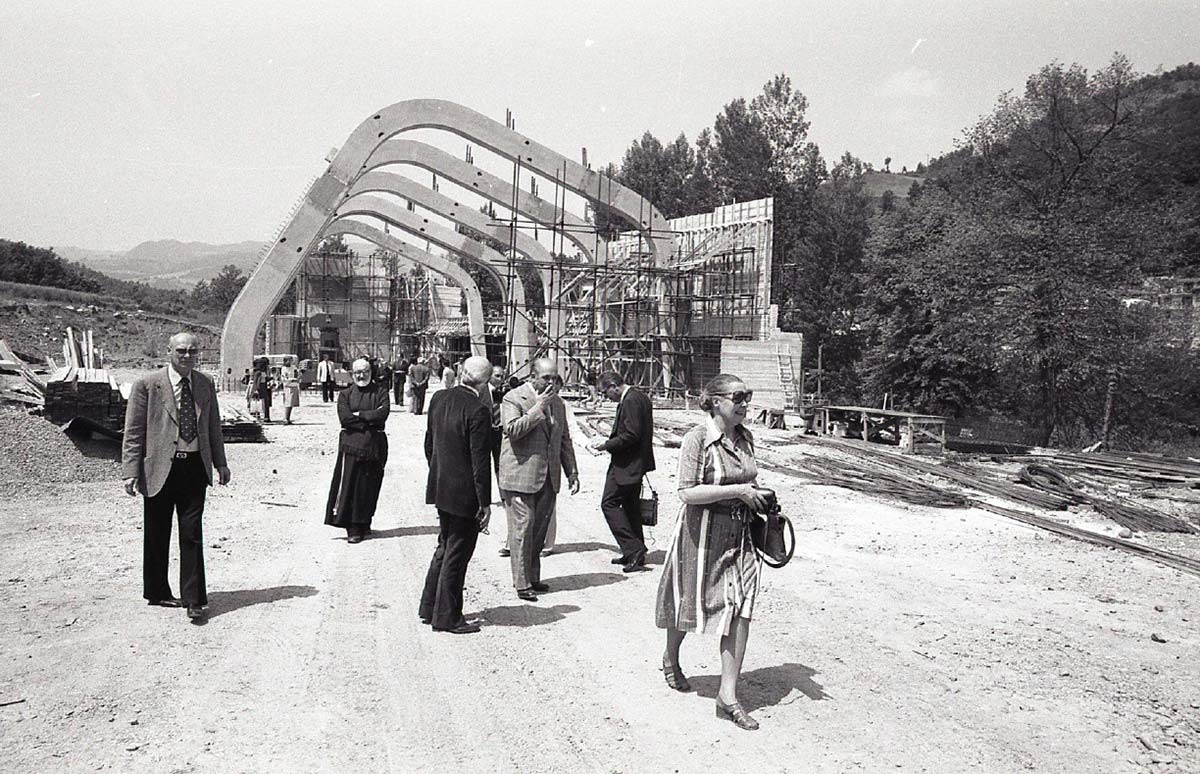
Visit to the church construction site. In the foreground, Aino Aalto. Photo © Archivi A. Aalto Italia C.S.M.A. – Fondo Fotografo Angelo Masina
Aalto’s relationship with Riola was not merely formal. When he visited the village, the entire community gathered to welcome him; all residents were present, and the local school brought its children. From the outset, the construction of the church was experienced as a project shared with the community.
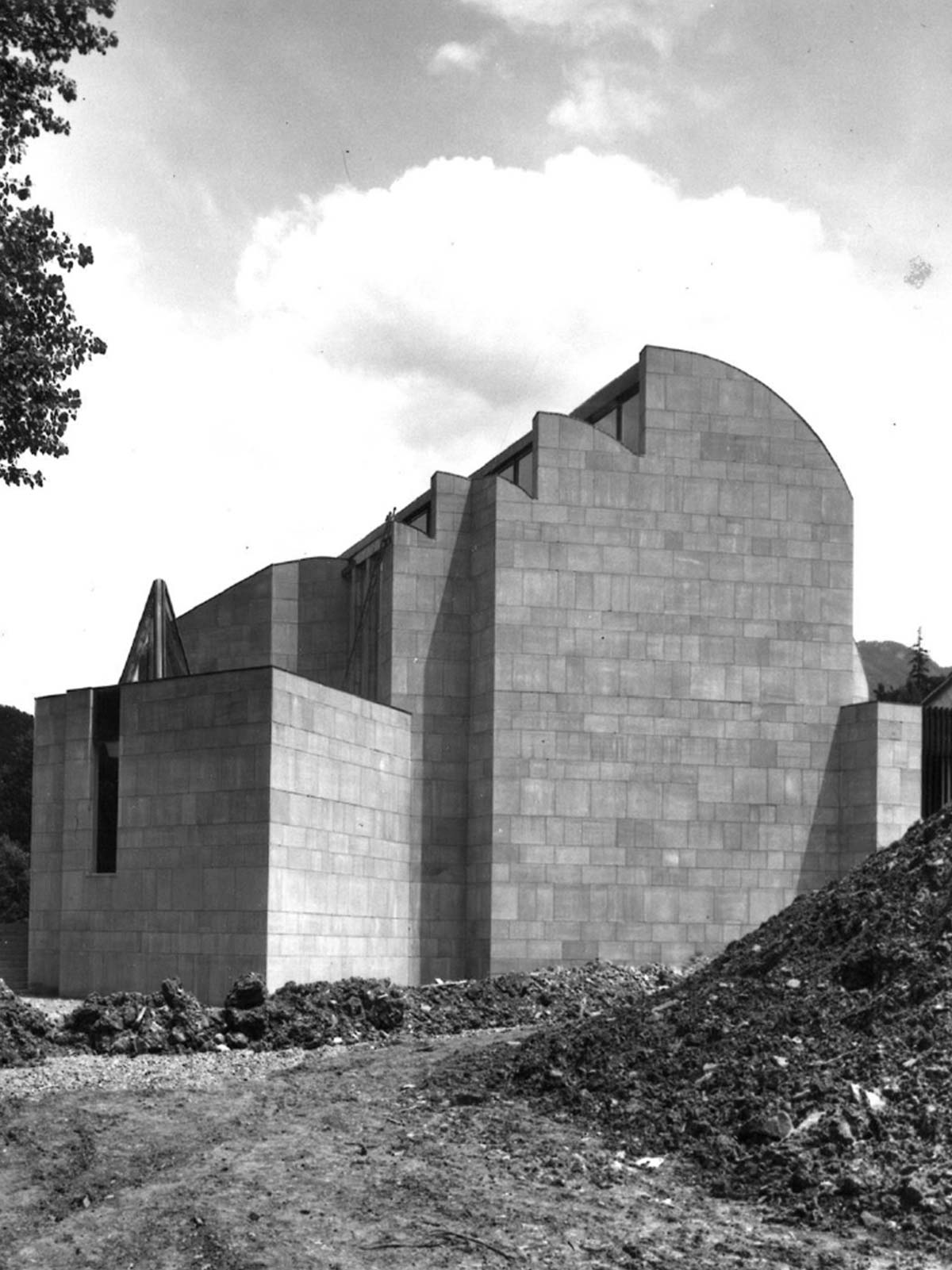
In the apse, the surface is punctuated by stonework. Photo @ Archivi A. Aalto Italia C.S.M.A. – Fondo Architetto Giorgio Trebbi
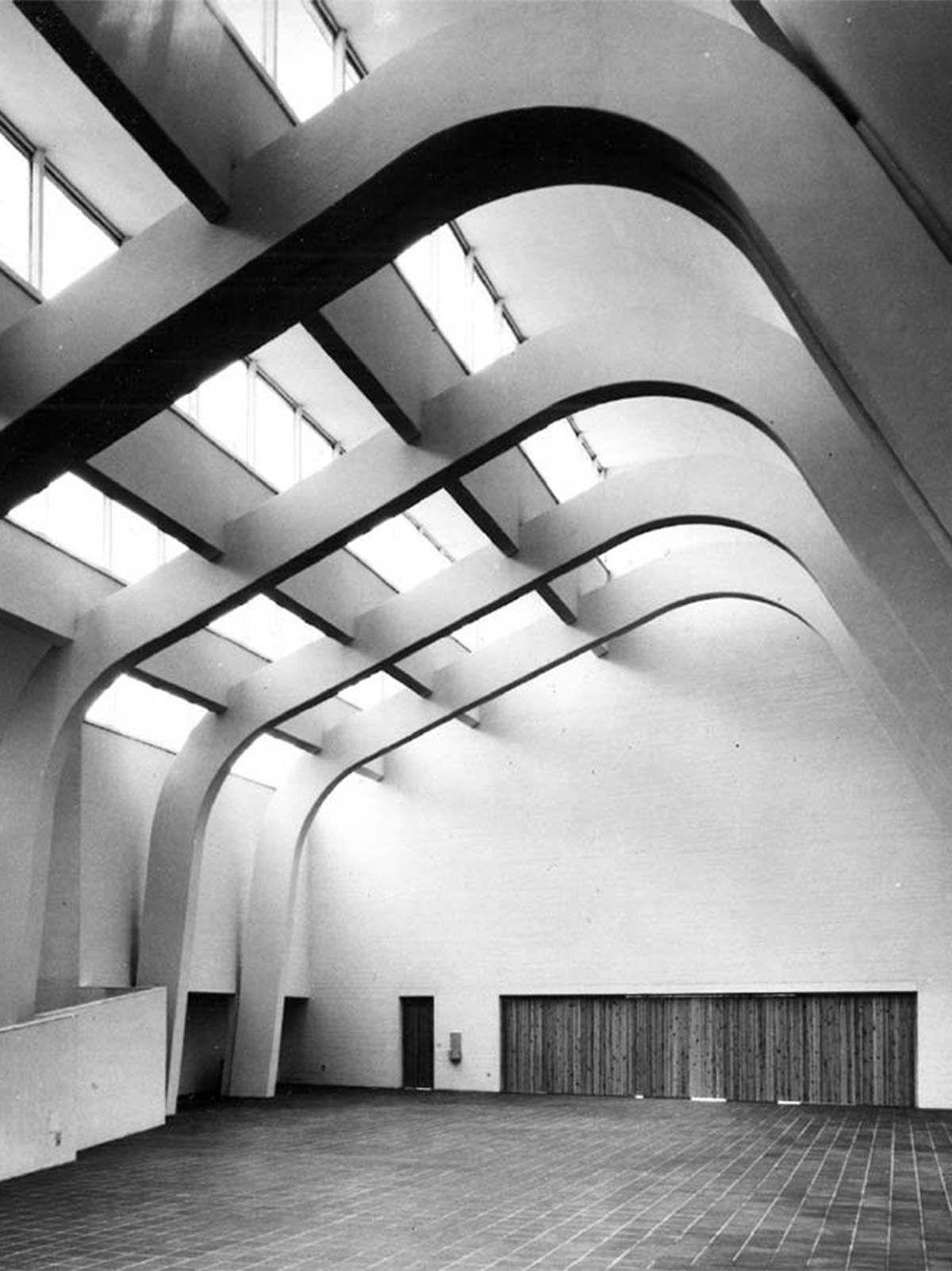
The interior of the church. At the back, the large door which, when opened, extends the interior space onto the churchyard. Photo © Archivi A. Aalto Italia C.S.M.A. – Fondo Architetto Giorgio Trebbi
The building is conceived as a space defined by natural light. The large north-facing concrete sails filter illumination evenly, creating an interior that is essential, measured, and restrained. Concrete, wood, and pure volumes engage in a direct dialogue with the surrounding landscape. Today, the Riola Church is recognized as one of the most significant works of Aalto’s late period, a tangible testament to his vision of architecture as a synthesis of design, site, and community.
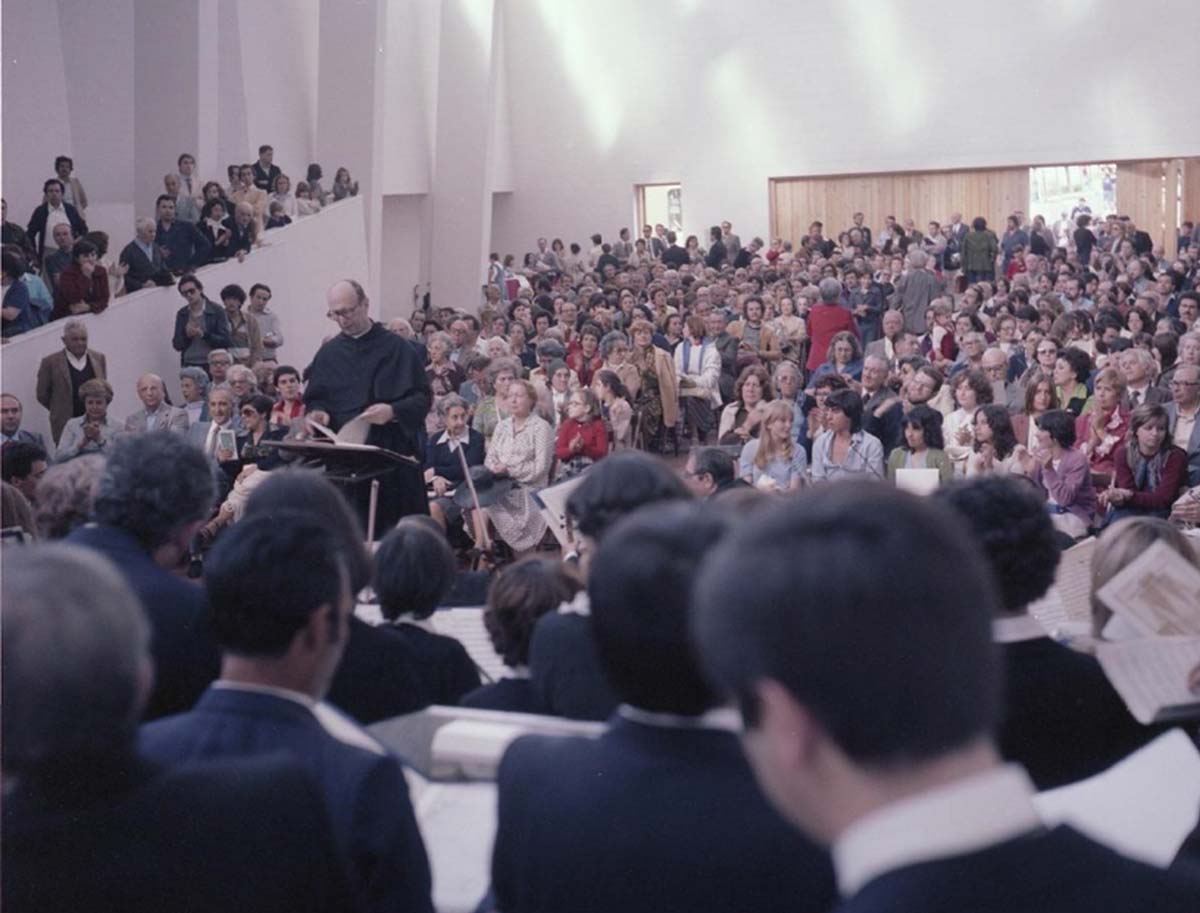
The opening ceremony in 1978. Photo © Archivi A. Aalto Italia C.S.M.A. – Fondo Fotografo Angelo Masina
The church distills Aalto’s thinking, reflecting the values that Artek continues to uphold: promoting a modern culture of living through the production of furniture, lighting, and objects that unite formal quality, function, and careful material consideration. Even the company’s name embodies this principle: Artek is the fusion of art and technology, an idea shared by European Modernism and the Bauhaus, where technical skill and production quality were recognized as cultural imperatives.
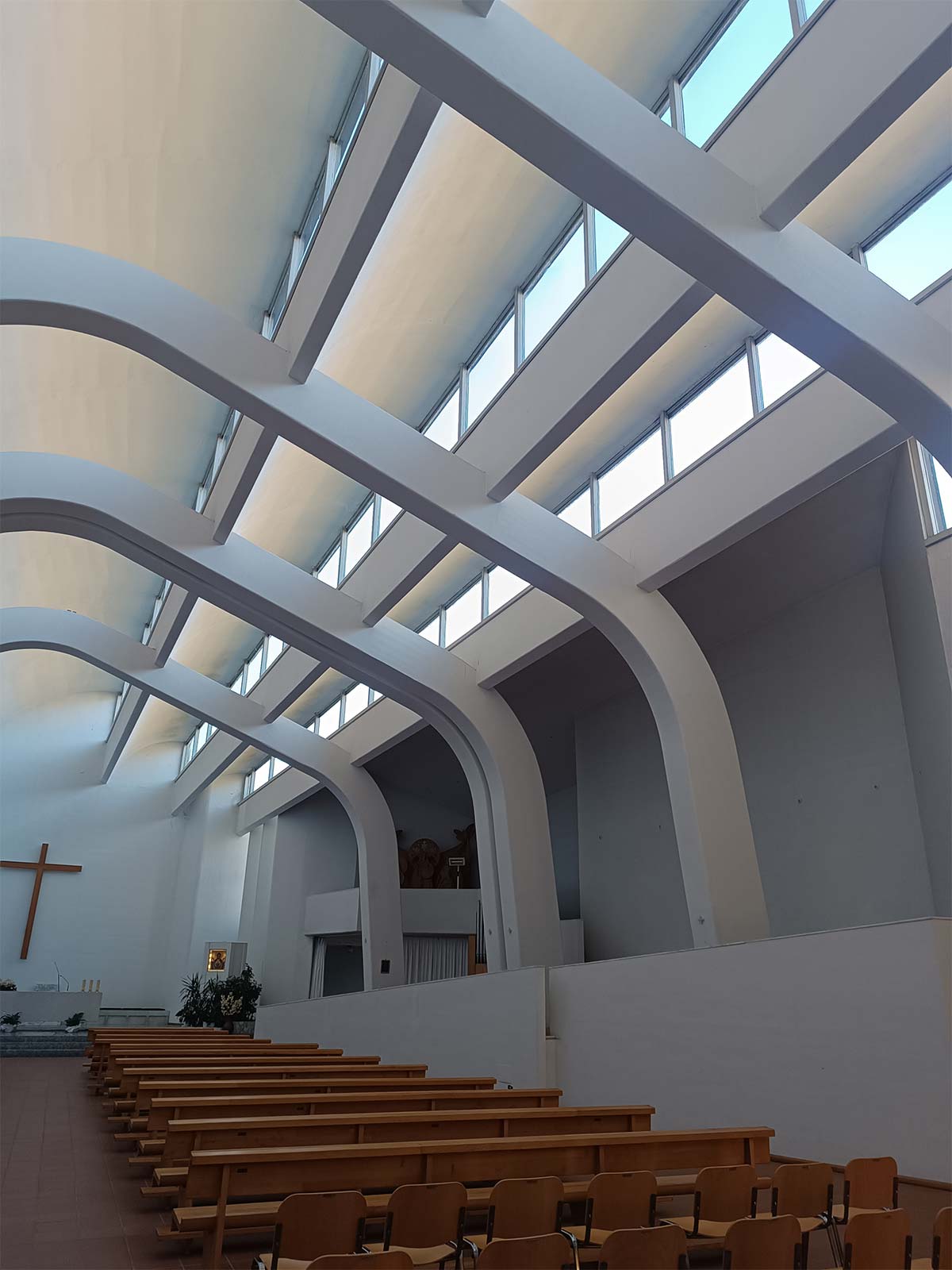
The openings in the vault are ribbon windows facing north, providing a very delicate zenithal light. Photo © Ruben Modigliani
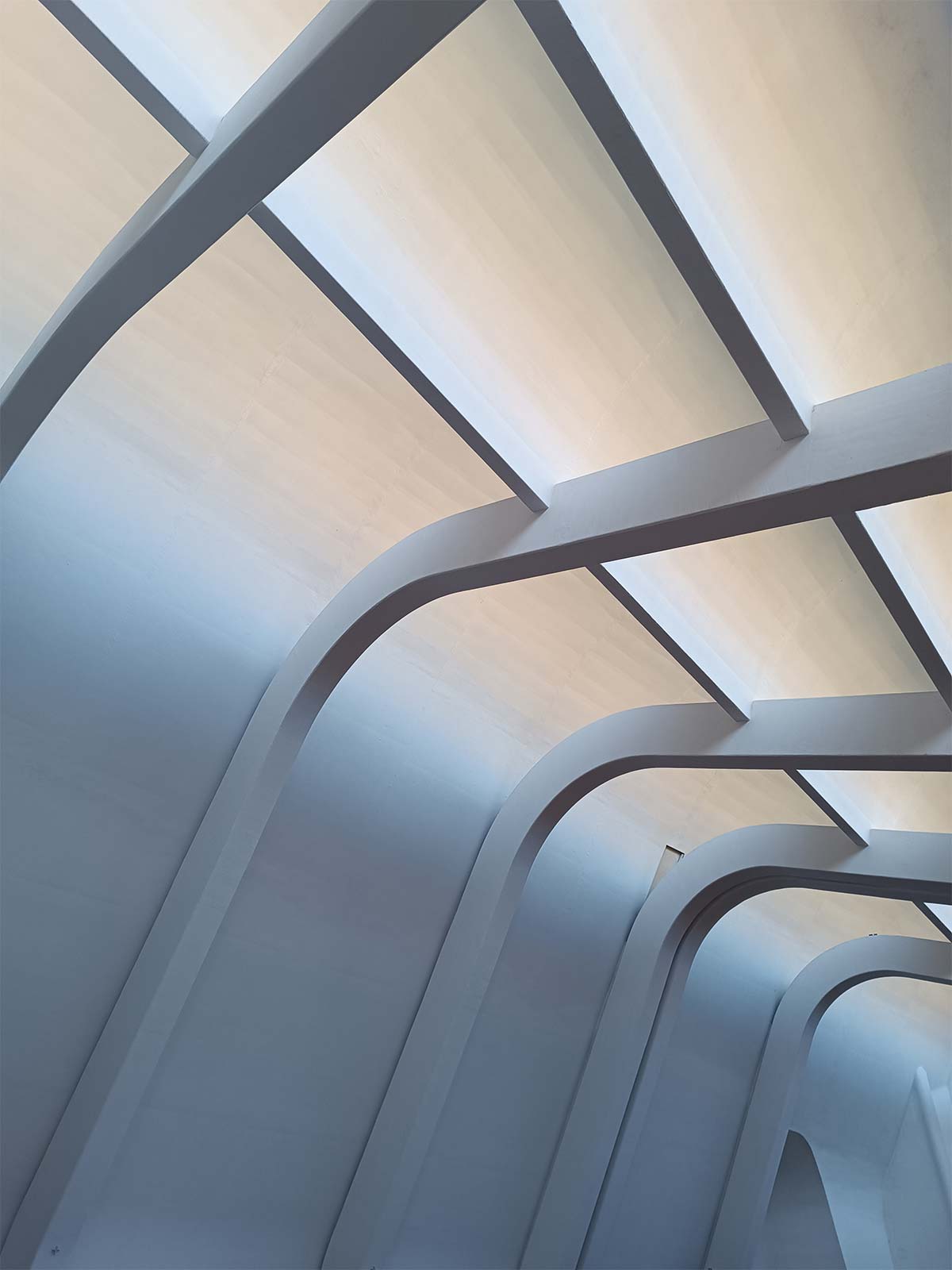
Detail of the vault. The light filtering through the windows naturally takes on the colours of the landscape. Photo © Ruben Modigliani
Artek was founded by a designer, a fact that remains central to understanding its historical significance. The company anticipated an entrepreneurial approach that in the following decades would unite design and production directly: Tecno with Osvaldo Borsani, Arteluce with Gino Sarfatti, Artemide with Ernesto Gismondi and Sergio Mazza, Moooi with Marcel Wanders (to name a few). In each case, the enterprise is not a mere industrial support but an integral part of the design process.
By returning to Riola for its ninetieth anniversary, Artek reaffirms its origins: a vision of design that unites production, culture, and responsibility, continuing to find its guiding reference in the work of Alvar Aalto.