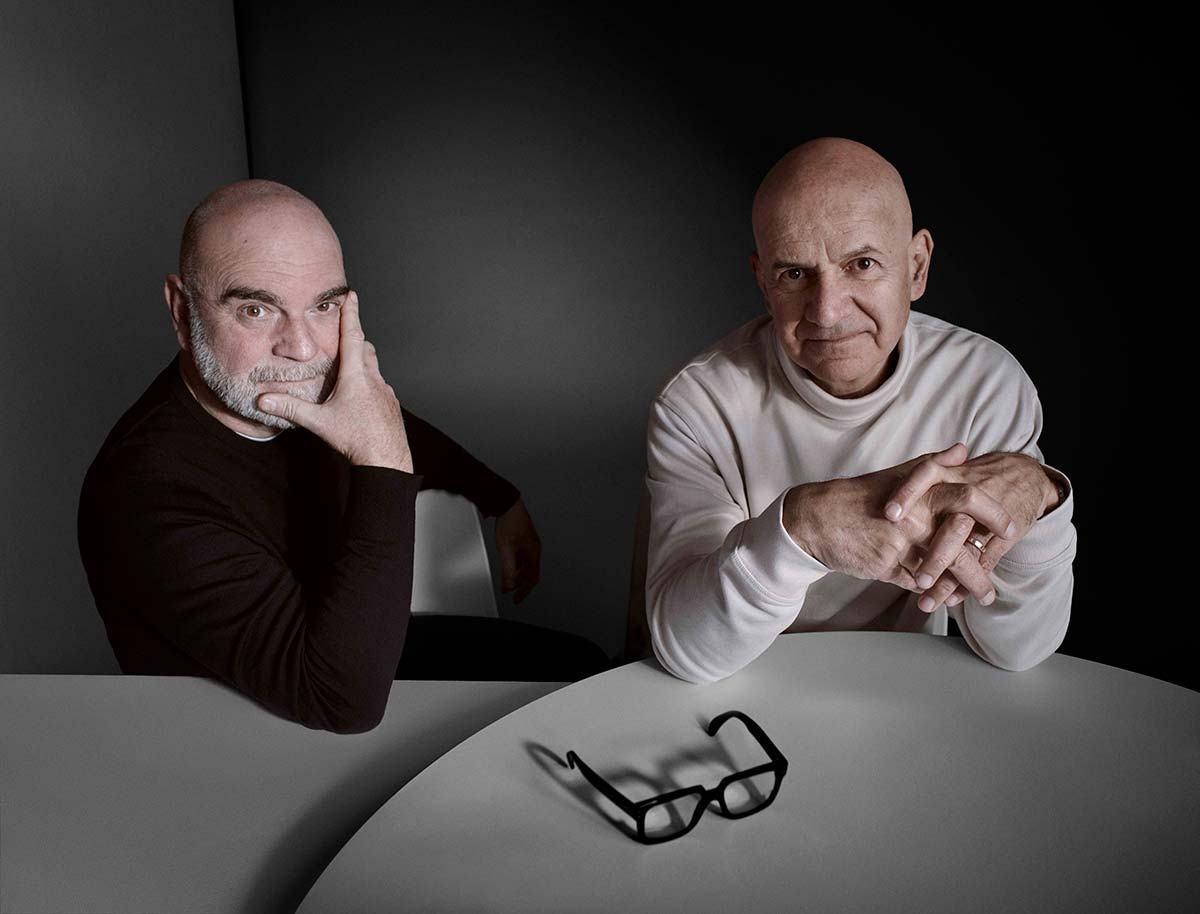
Like the 1994 film ‘Stargate’, which offers powerful metaphors about the relationship between science, open-mindedness, curiosity, and the transition from ignorance to awareness: the sum total is the questioning of certainties, as a method, as an attitude. Vudafieri Saverino’s ‘recherche’ contains all this, a common home where respect for science, the hunt for serendipity, escape from routine and the chemistry of relationships come together.
Two years have passed since our first interview, so let’s try to fill in these 24 months. In a passage from that interview, Tiziano Vudafieri said, ‘looking with different eyes is a process that can change your parameters of beauty’: is it necessary today to improve your diopters in order to continue looking with different eyes?
CS: The answer, which may seem a little obvious, is obviously yes. If, in our profession, we stop looking with the desire to do something we didn’t do yesterday, it means that perhaps it’s time to do something else. It is intrinsic to our work to experiment, question ourselves and try new paths. I can give you a small example: we are developing the feasibility of a historic building and the client has brought in a real estate expert who sells flats. I went to talk to him. I usually clash with these people because they tend to tell me what the public wants and expects, while my job is to create something the public does not expect.
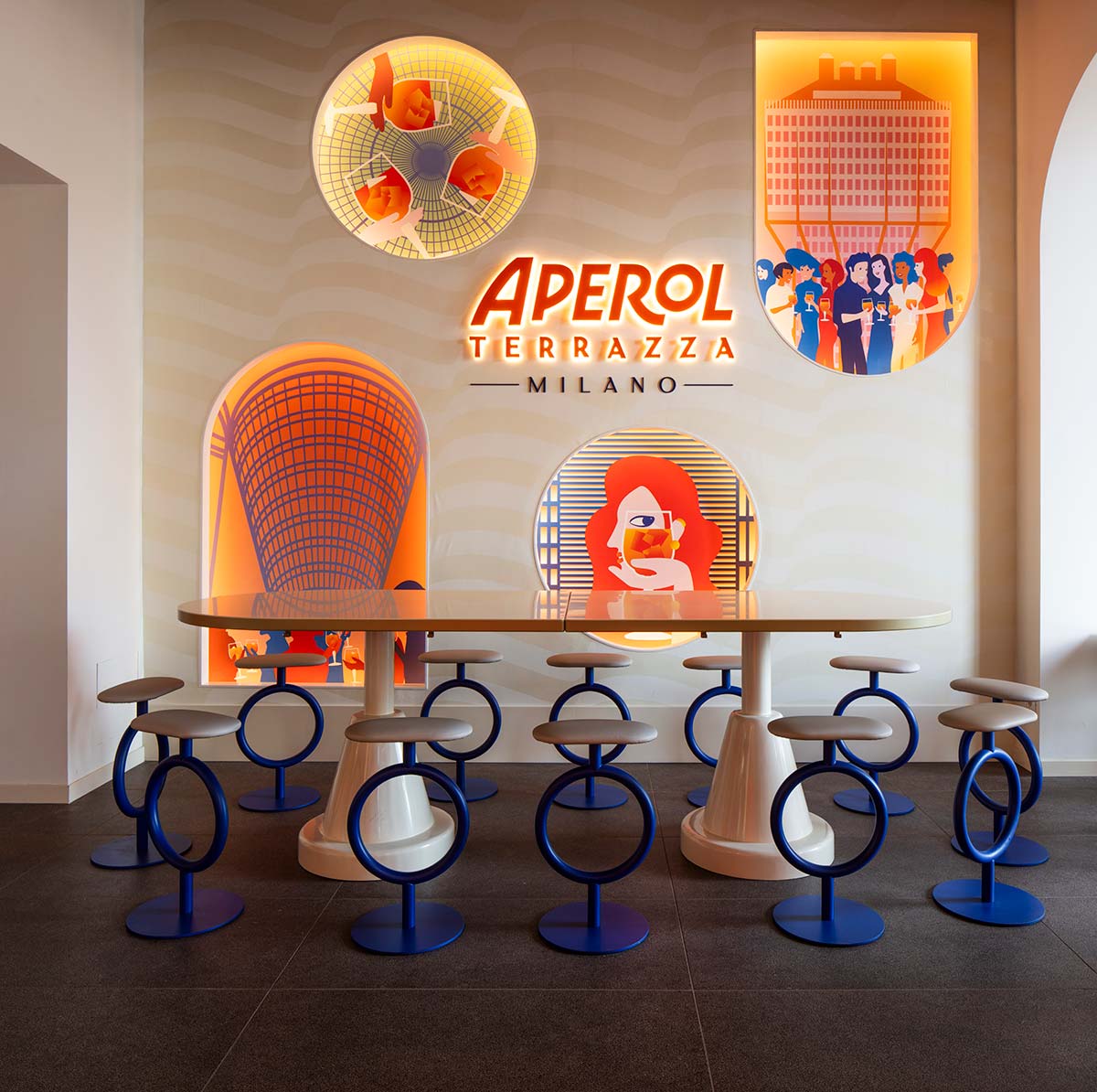
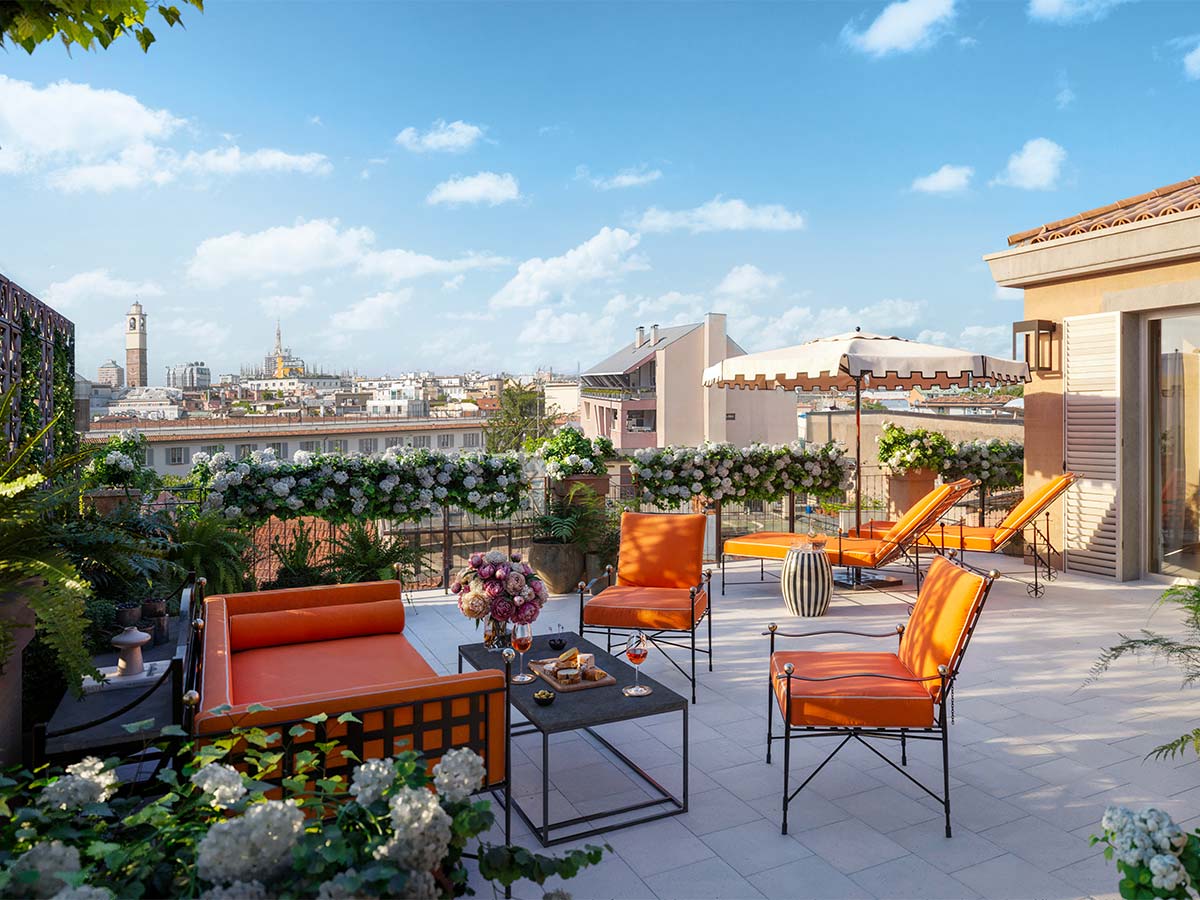
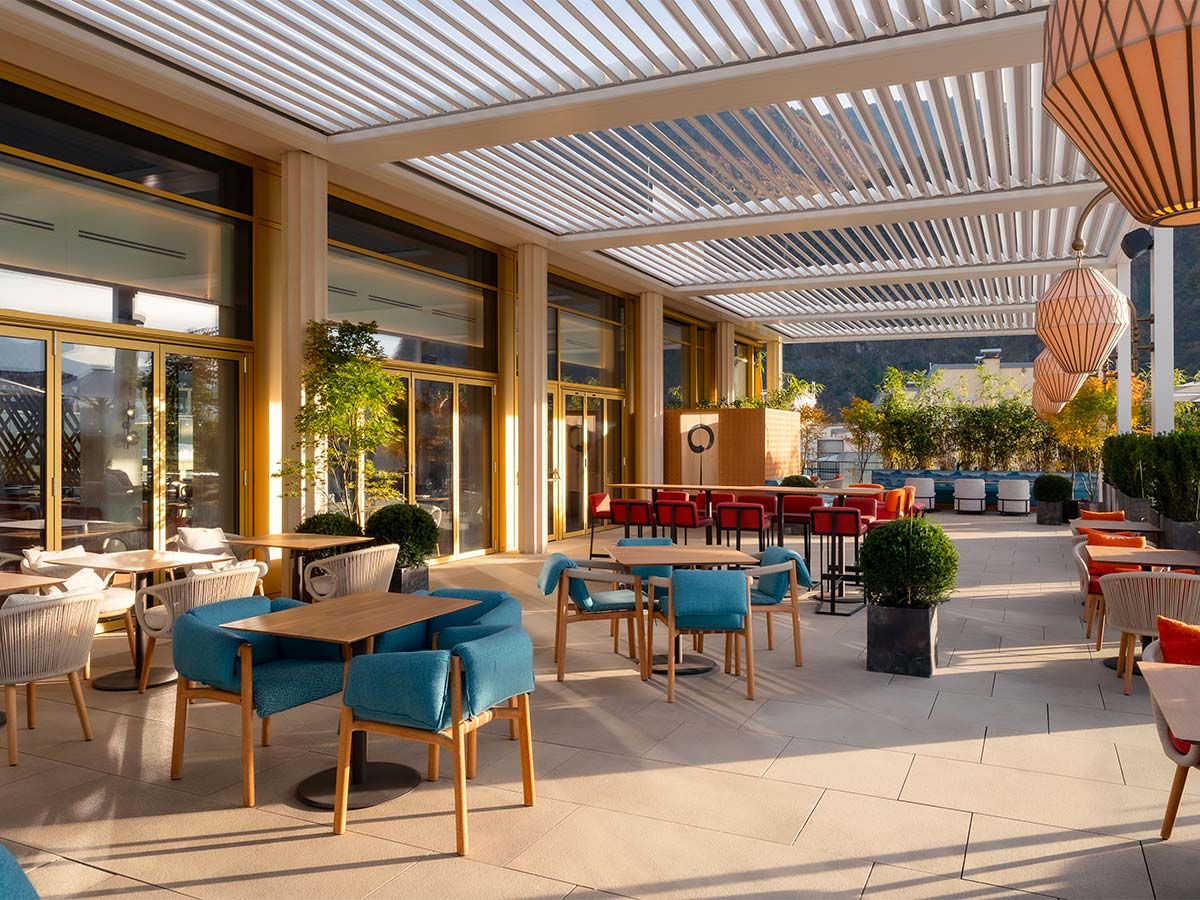
Terrazza Aperol Milano – Photo © Santi Caleca
How did you manage to bridge the gap?
CS: We haven’t bridged it yet. It’s really a question of methodology: either you create a product that doesn’t surprise but reassures, something you think you want because it meets a known need, or you try to make a product you don’t yet know you need. That’s the difference between not designing and trying. We try, we try to take different paths, to avoid the easiest one. We are undoubtedly undisciplined.
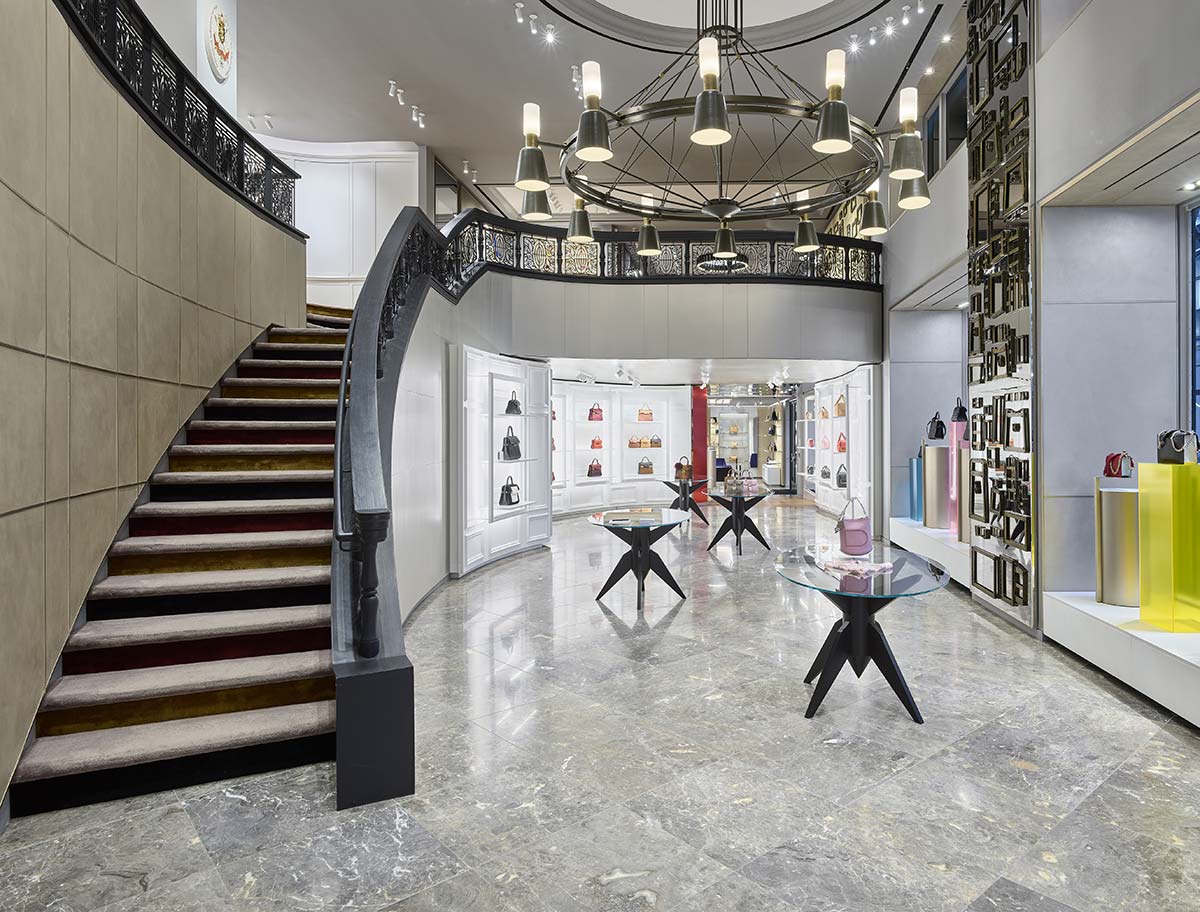
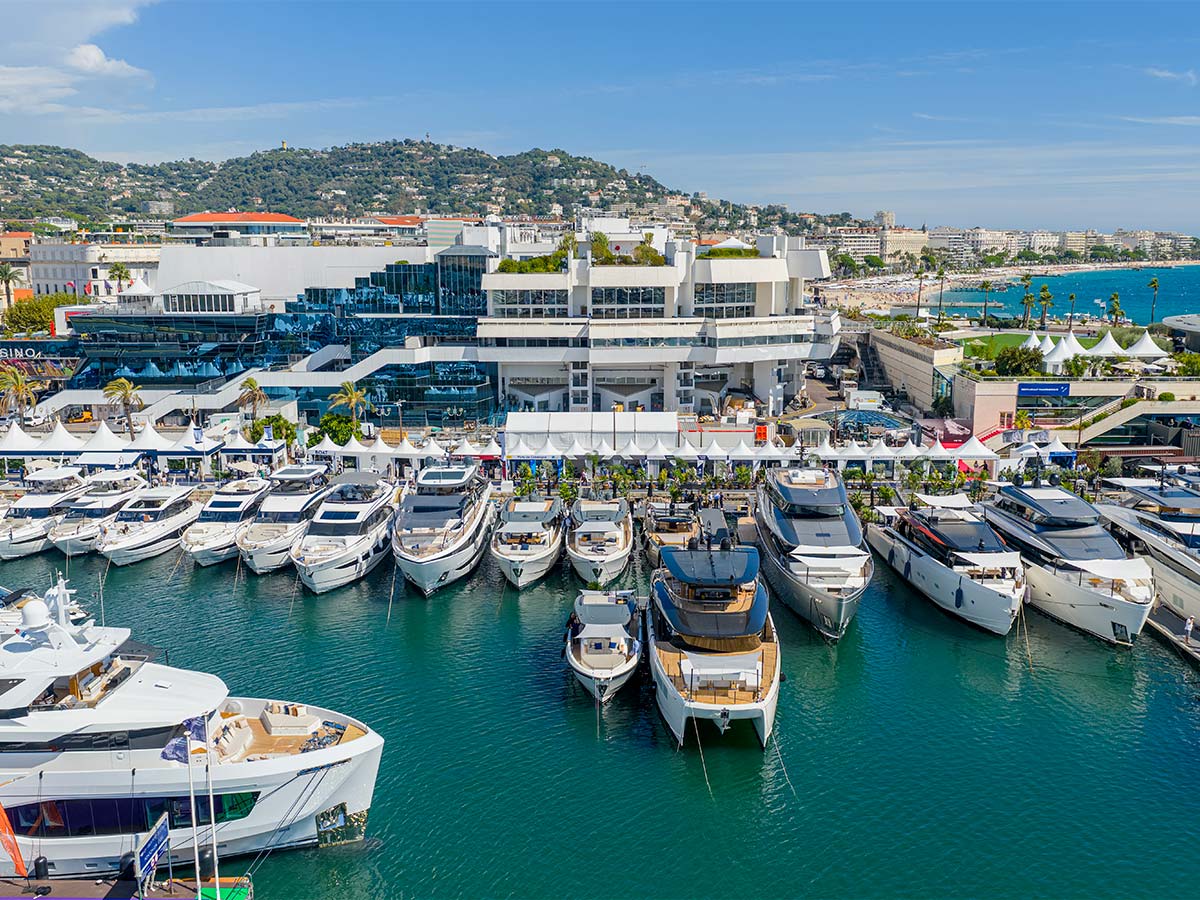
Delvaux New York City – Photo © Frank Oudeman
What fuels your profession?
TV: Above all, from the experience of each project. Every project is a journey, a dialogue. We are obsessed with Genius Loci. And Genius Loci is not just the physical place where you build a building, a shop or your aunt’s house: Genius Loci can be your aunt, her mind, the client, the brand, what you want to express. And that’s why we change every time, because we’re interested in exchange. I always say that we’re not particularly good with weak clients who don’t know what they want. We give our best when we’re put to the test, when there’s a strong dialogue. Then every now and then we say that the client does half the project and — and then the client replies that we should do half the fee.
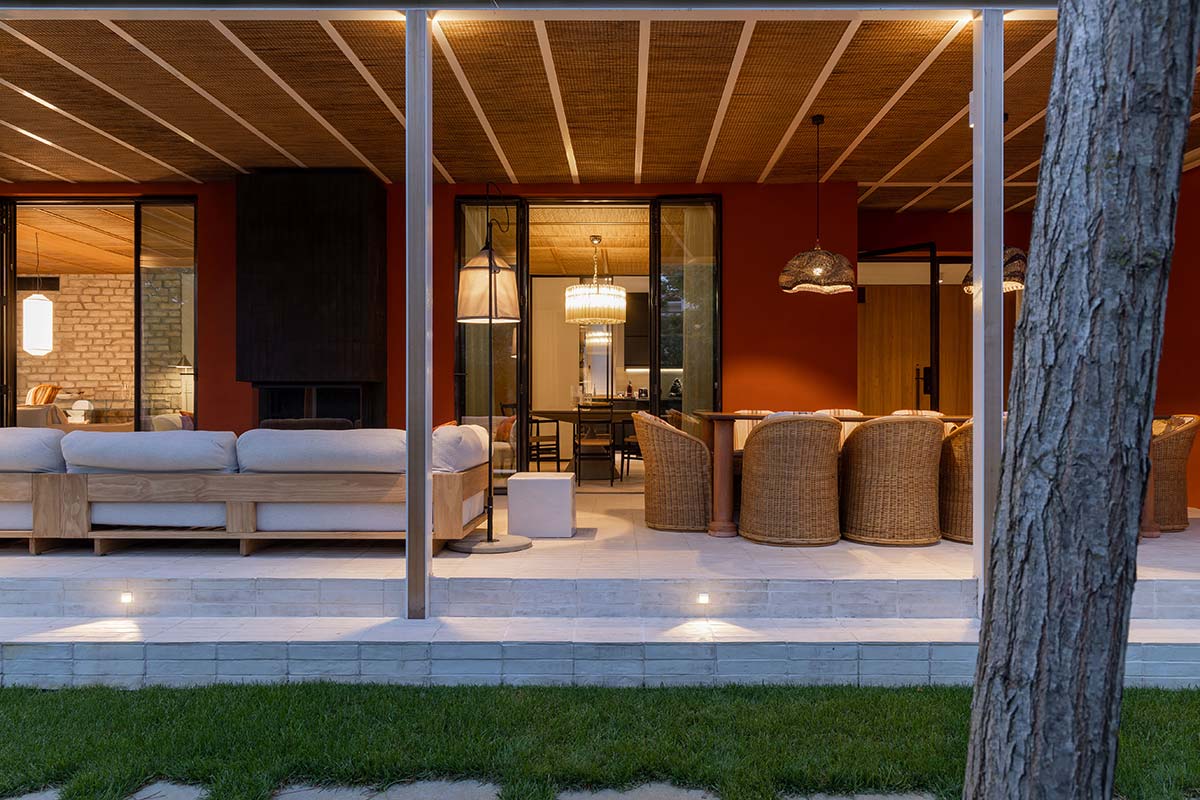
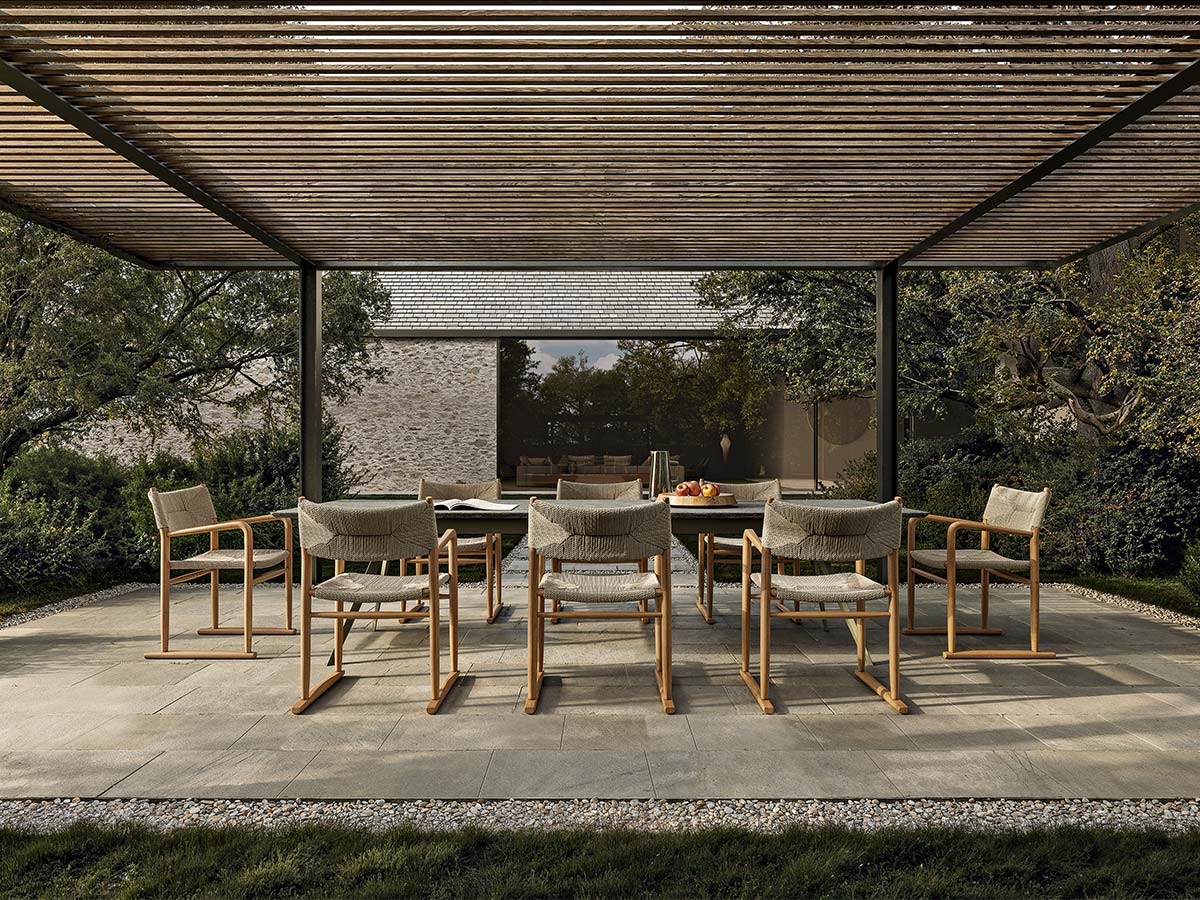
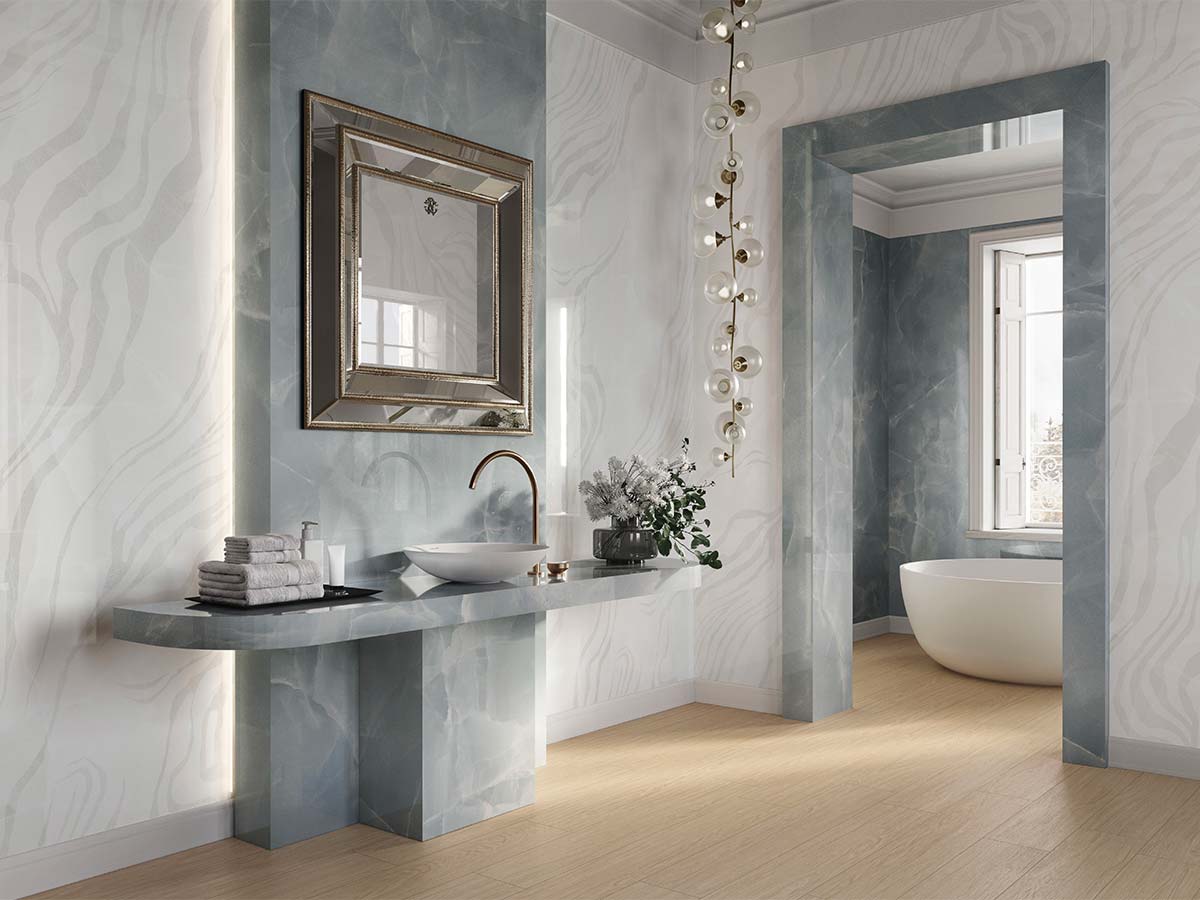
Casa Versilia – Photo © Paolo Valentini
Two years ago, we already talked about artificial intelligence. You were studying Midjourney. How far have you got?
One of the things that drives us to look for different ways of being and to reflect on how to remain special every time is certainly artificial intelligence. Today, with three commands — even us dinosaurs — you can achieve totally surprising results. Artificial intelligence puts you to the test, because it’s incredible how much fantastic stuff it produces in a few seconds: but AI needs to be educated. It measures you, and you have to learn to measure it. You know it, it has to know you. I was in Vietnam and a cultured and sophisticated gentleman drew me a diagram: on the x-axis he put strength, power, speed and data storage capacity, and on the y-axis sensitivity, savoir-faire and wisdom. On one side was Cassius Clay and on the other, A Beautiful Mind. This is AI: a tool with infinite potential, but not very human. It is you who must humanize it in your own image and likeness. Add what is missing from the diagram: the magical conjunction between the x-axis and the y-axis.
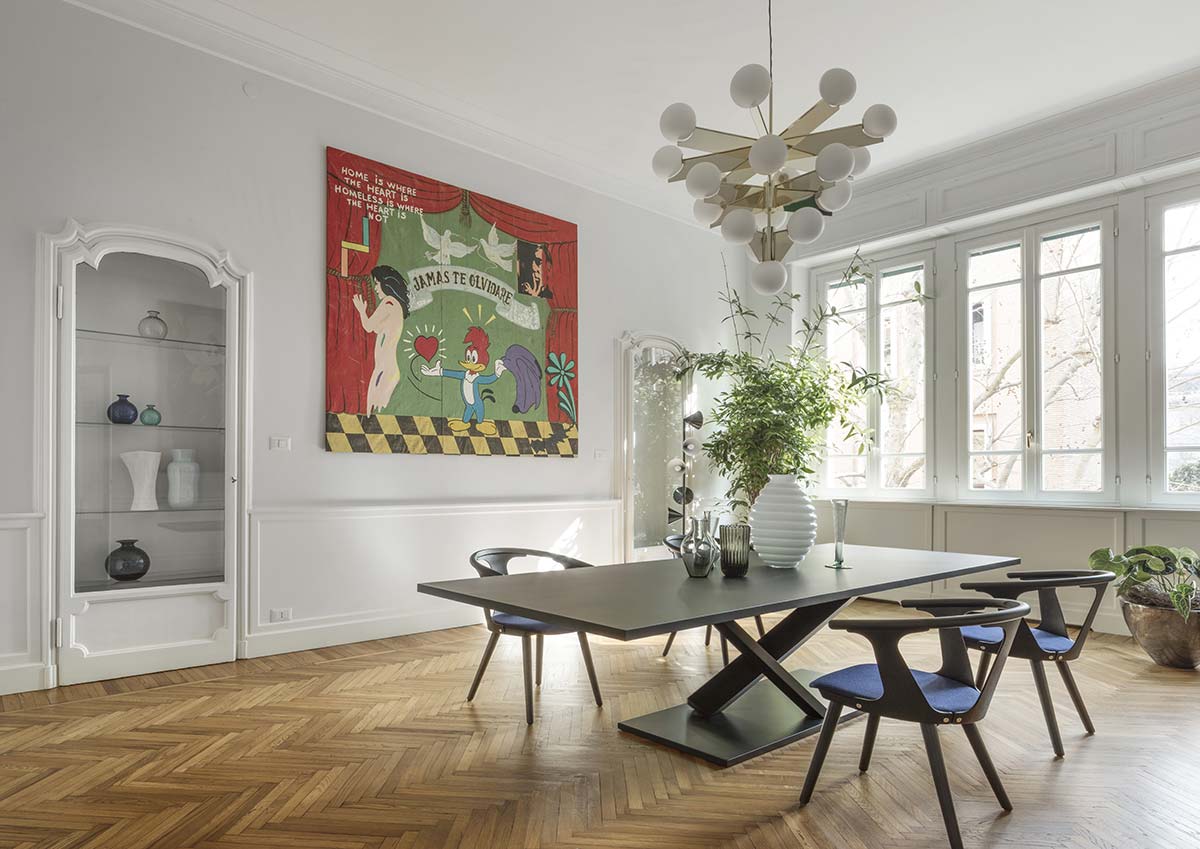
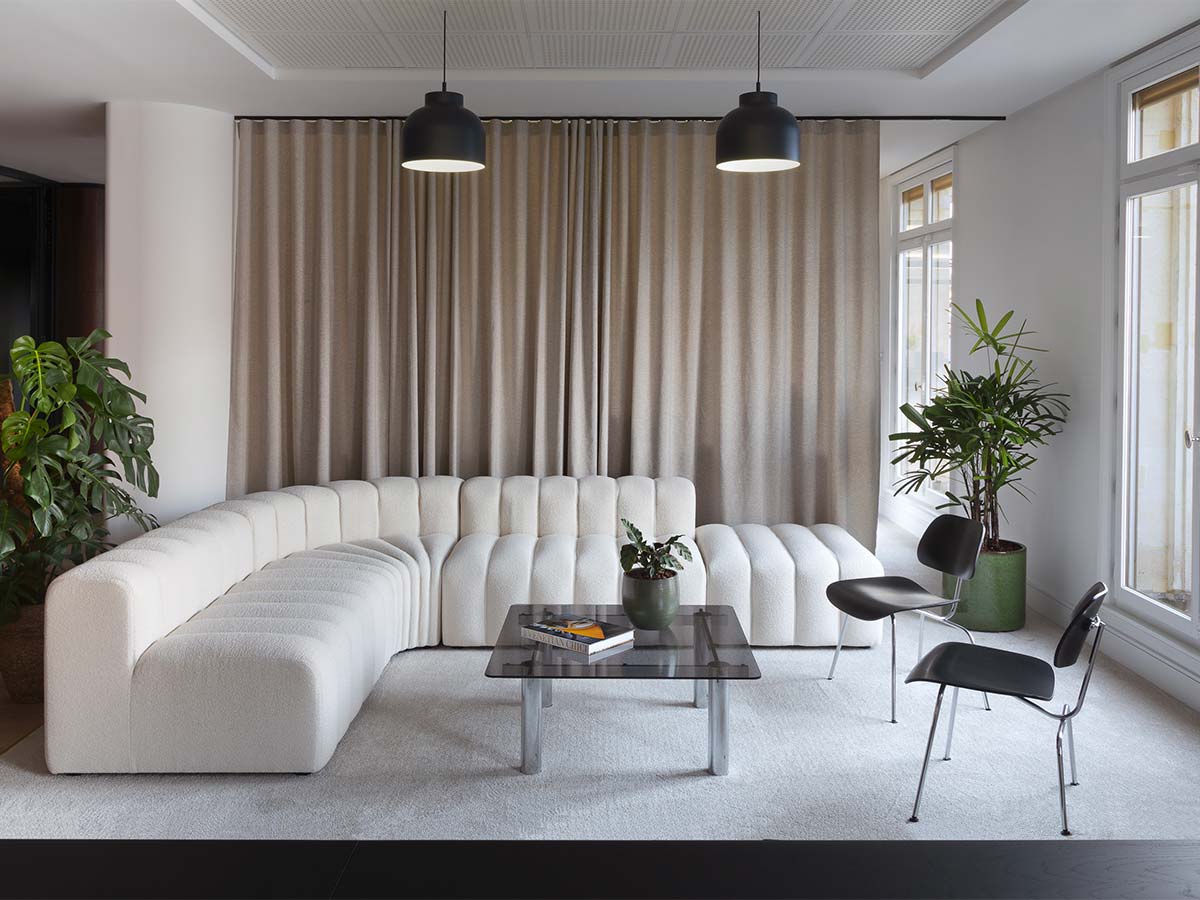
Casa Milano – Photo © Santi Caleca
Home in Milan, home in Shanghai: how have client briefs and requests changed (if at all)?
TV: They have changed above all in Shanghai, where we have seen a leap in quality in requests. Clients have changed, and the quality of meetings is different: today we find them more uncertain, more than confused about the direction to take. Final decisions are often postponed, with perhaps only hospitality continuing to show continuity. China is growing at around 4%, which for us would be a dream, but for them it is a disaster, because it is a system that needs to grow at least 6% or 7% to survive. When we arrived in China, they asked us for “Dubai-style” things, but today the taste has become almost minimalist.
CS: In the West, Covid has made us realize that minimalist homes, as we have designed them and as they have evolved from modernist culture, are a little too cramped for us, which is why some suburbs of Milan are being revitalized, because people want to move a little further out, not only for budget reasons, but precisely because there is more space around them. Ten years ago, no one was talking about this.
Vietnam, on the other hand, is another world, isn’t it?
TV: Absolutely. It is a fascinating country undergoing rapid growth and showing great curiosity about the world. It protects itself from China — its largest trading partner — but at the same time fears its influence. They are Buddhist communists, but very open and curious.
The difference between them and their neighbors is precisely this mental flexibility, this desire to engage with the world.
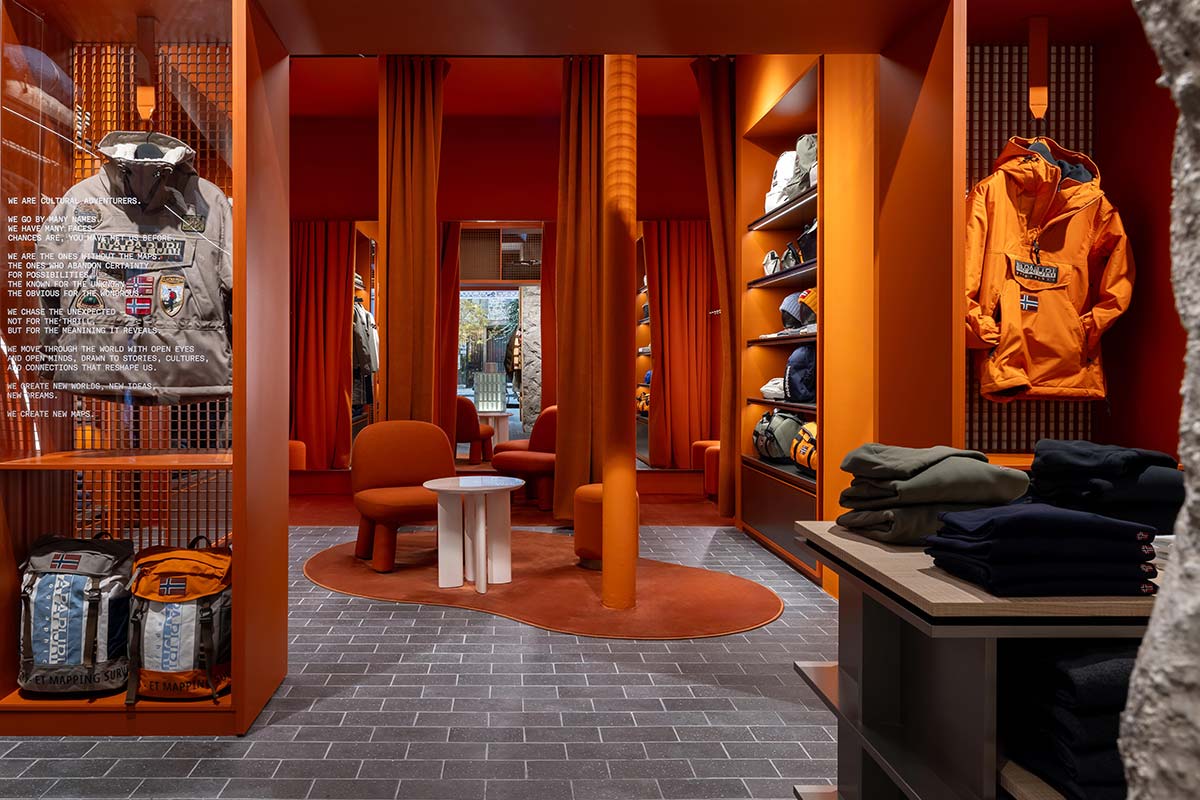
Napapijri store Parigi – Photo © Paolo Valentini
Let’s talk about retail: how did you win the competition for a global concept for Napapijri?
TV: because before being storytellers, we are story listeners, in the sense that we listen a lot before we start designing and try to get into the genius loci. Napapijri was born in Val D’Aosta from a visionary mountain enthusiast: the design challenge was to transform a mountain adventure into an urban adventure, and it worked. This was the direction taken, and it was well received. We were supposed to start with a flagship store in Milan, but at the last minute the location was no longer available, so we moved to Paris to a very suitable space, even if it was only 90 square meters.