In the Old Continent, 2,525 hotels are currently in the design and construction phases, representing a 3.8% decrease compared to a year ago. Of these, 874 are expected to open by the end of 2026. Germany firmly maintains its lead in attracting new investments, with projects rising to 663 (a 5.2% increase), further widening the gap from its immediate followers – such as the United Kingdom, Spain, and Italy – all of which are experiencing a downturn. With 81 projects, Greece enters the top ten most dynamic European countries in the sector.
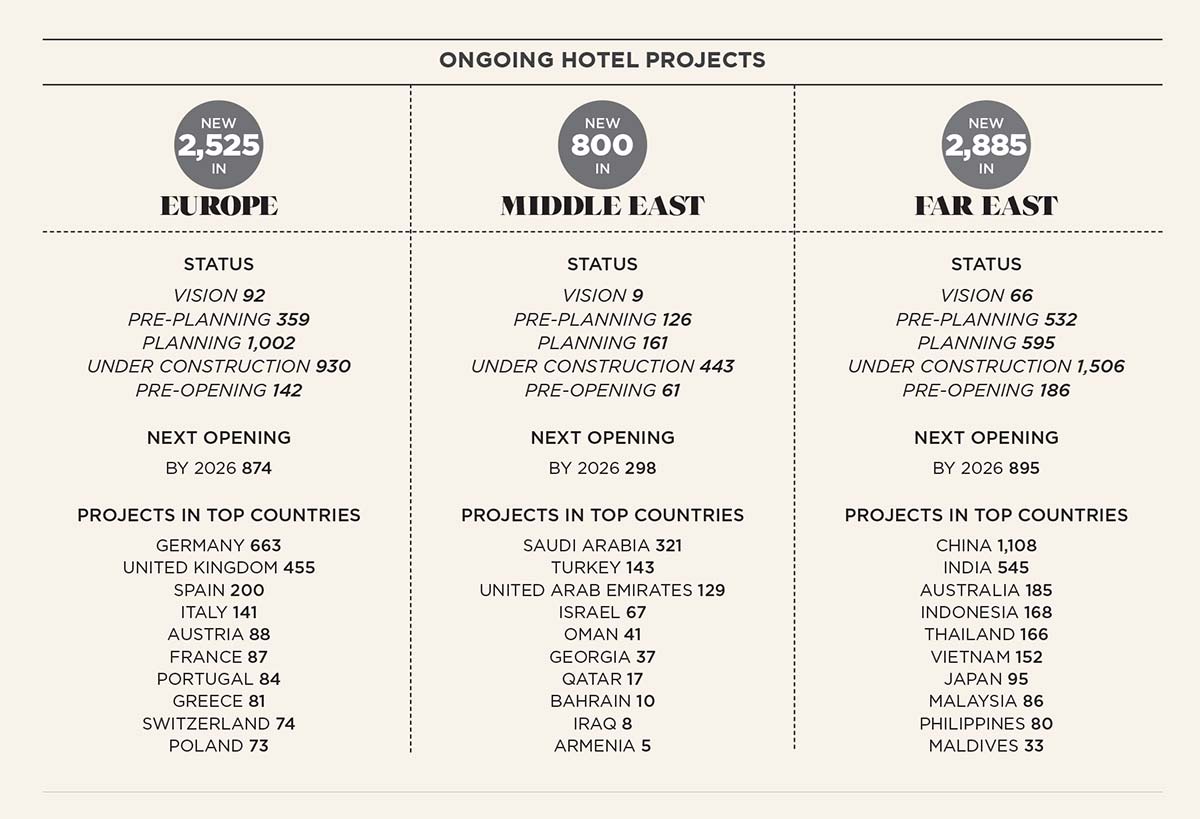
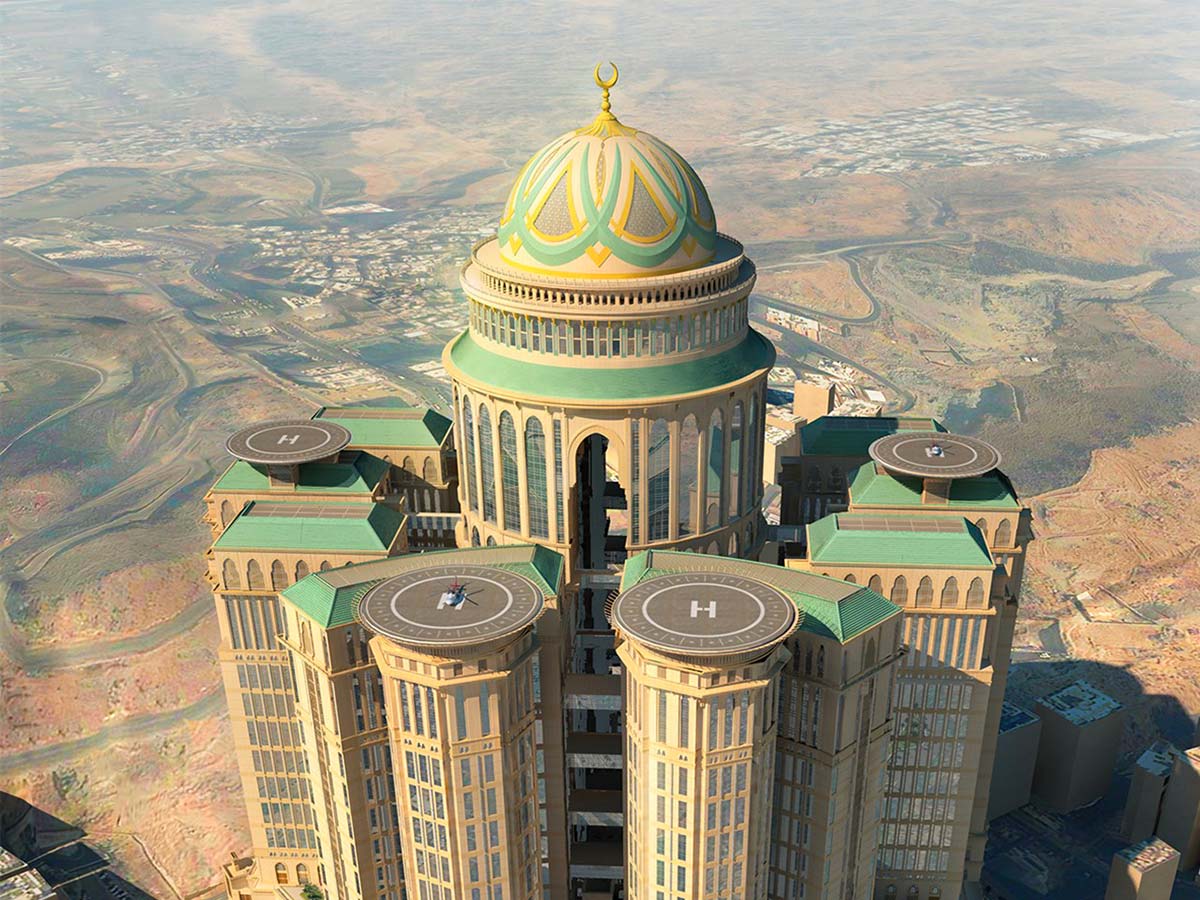
The number of top hotels planned for the Middle East has dropped to 800, a 4% decrease from last year. This indicates a scaled-back scenario after the recovery seen in 2024, though certainly not in Saudi Arabia, which further strengthens its leadership with 321 projects, an impressive 7.4% increase. Turkey’s boom from a year ago has cooled, but it still maintains a significant 143 projects. Saudi Arabia is also home to the construction site of the largest structure in the entire Middle East: the Abraj Kudai Towers in Mecca, which will boast 9,760 rooms.
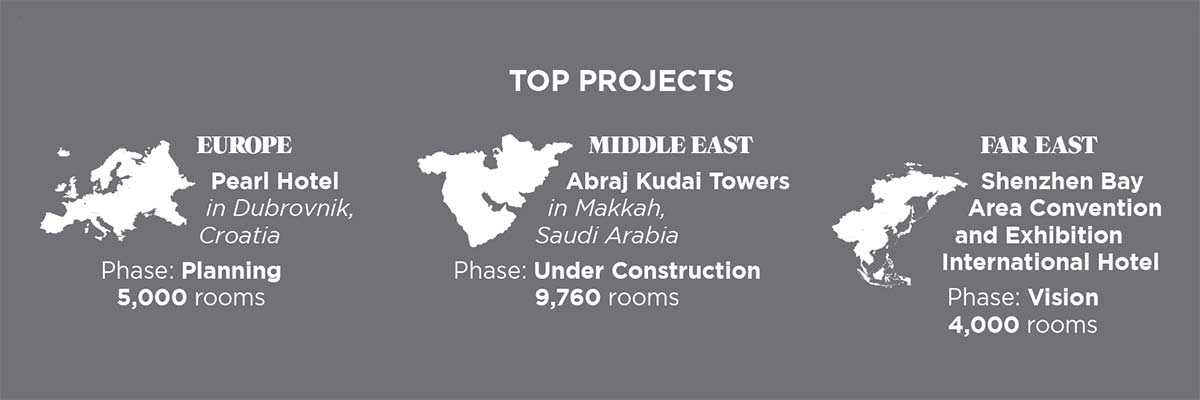
Once again, the largest investments in the sector are concentrated in the Far East, which continues to grow, albeit modestly, not exceeding 0.5%. The most interesting element within this positive regional trend is China’s reversal, with projects falling to 1,108, a sharp 17.4% decline. This figure doesn’t erode Beijing’s dominance in Asia but, combined with India’s sensational leap forward (545 projects, a +40%!), significantly narrows the gap between the two. Nevertheless, China still hosts the region’s most ambitious project, the Shenzhen Bay Area Convention and Exhibition International Hotel, which will feature 4,000 rooms.