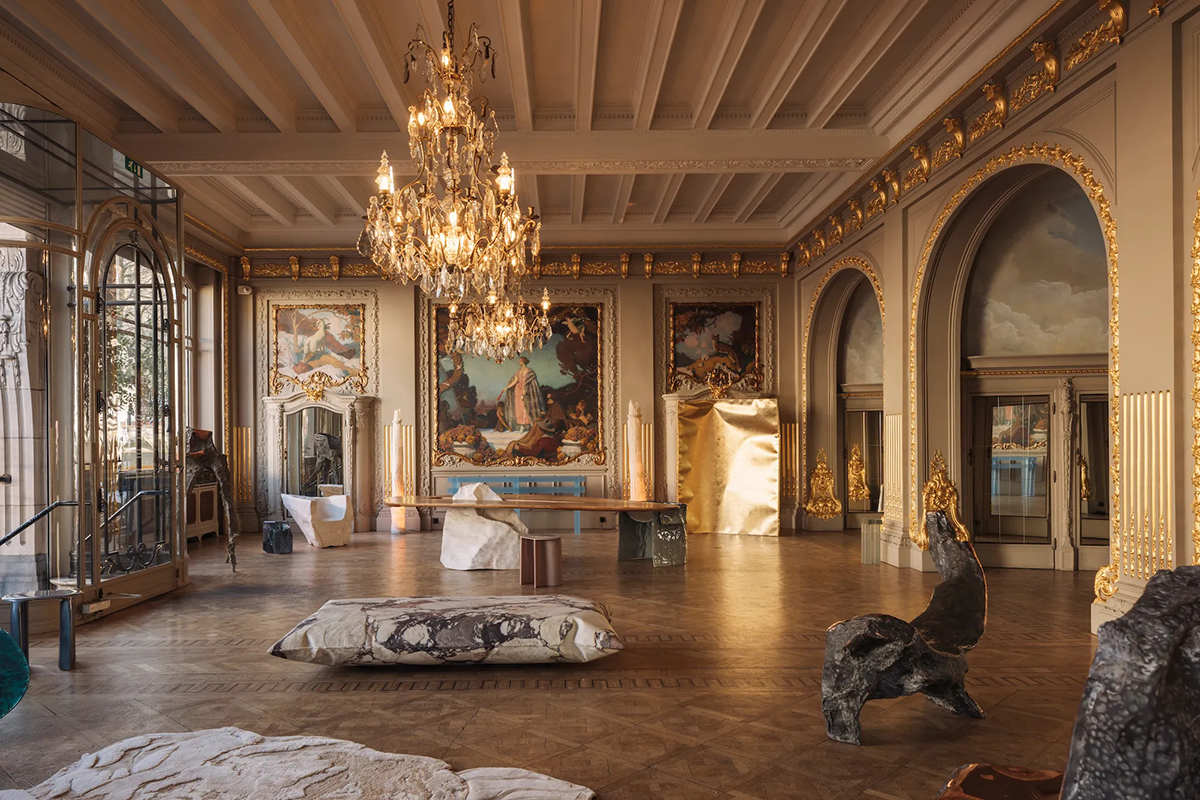
Brussels is much more than the bureaucratic backdrop of the European Union. It’s a city of 180 nationalities, profoundly multi-ethnic and international, where mobility and connectivity – with London, Paris, Amsterdam less than two hours away – define its character. Just as in the days of Horta and Van de Velde, when Brussels was the epicenter of Art Nouveau and a laboratory for applied arts, there’s a great vitality here. Only today, it doesn’t manifest in the facades of bourgeois palaces but in former barracks, garages, park kiosks, and warehouses along the canal. And the cultural scene, from collectible design to club culture, is among the most vibrant in Europe. The ten stops that follow are designed for those who view a city through its design: even where design isn’t explicitly mentioned – a pre-dinner drink, a festival, a web radio – the common thread remains.
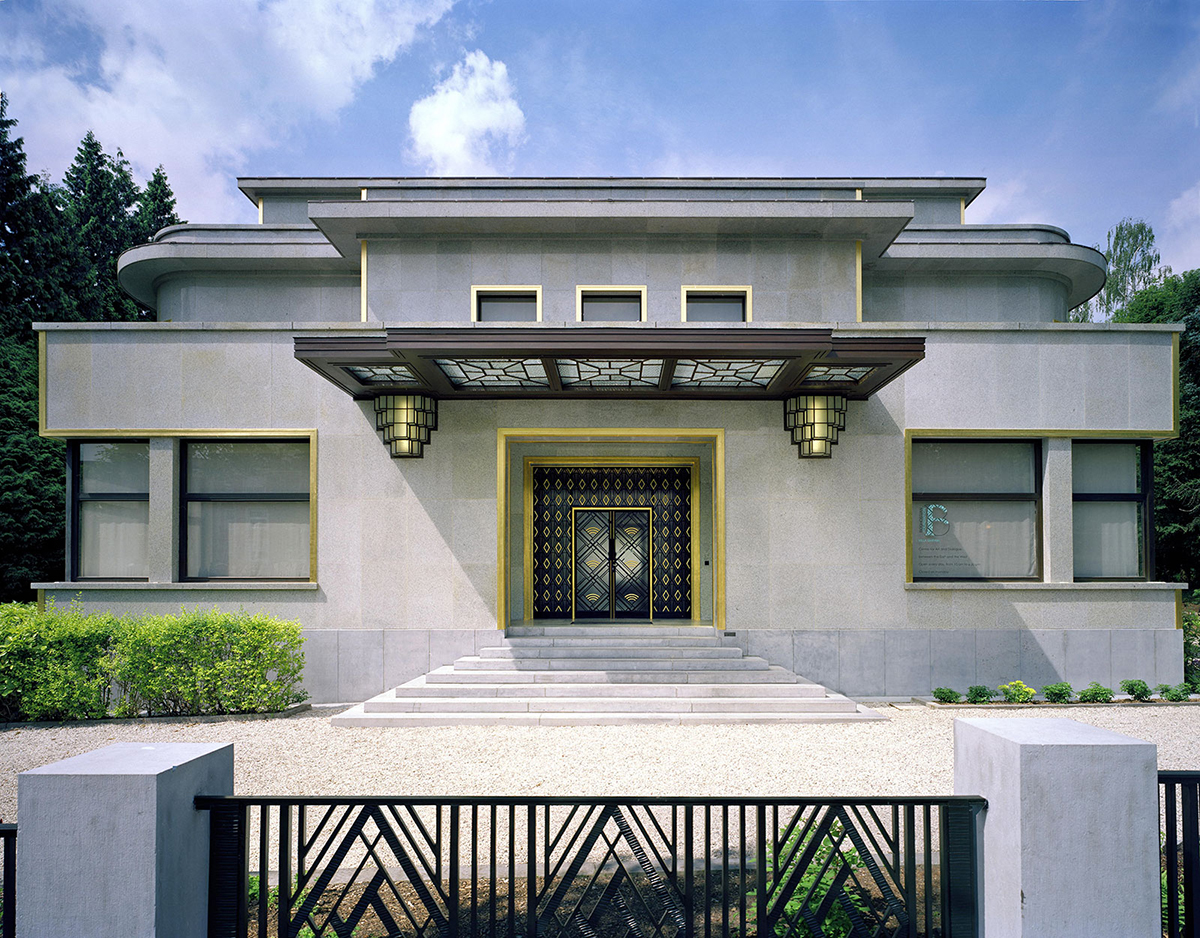
Villa Empain, Bruxelles – Photo © Georges De Kinder, courtesy Boghossian Foundation
Art Deco and a dialogue between cultures
The morning begins away from the tourist center, with a visit to Villa Empain. Built between 1930 and 1934 by architect Michel Polak, it is a rigorous and serene Art Deco building. Yet, its compositional simplicity serves to highlight the richness of its interior materials: various marbles, precious woods, bronze everywhere. Since 2010, the Boghossian Foundation has restored the building and opened it to the public as an art center and a platform for dialogue between Eastern and Western cultures, featuring a program that blends exhibitions, artist residencies, concerts, and performances.
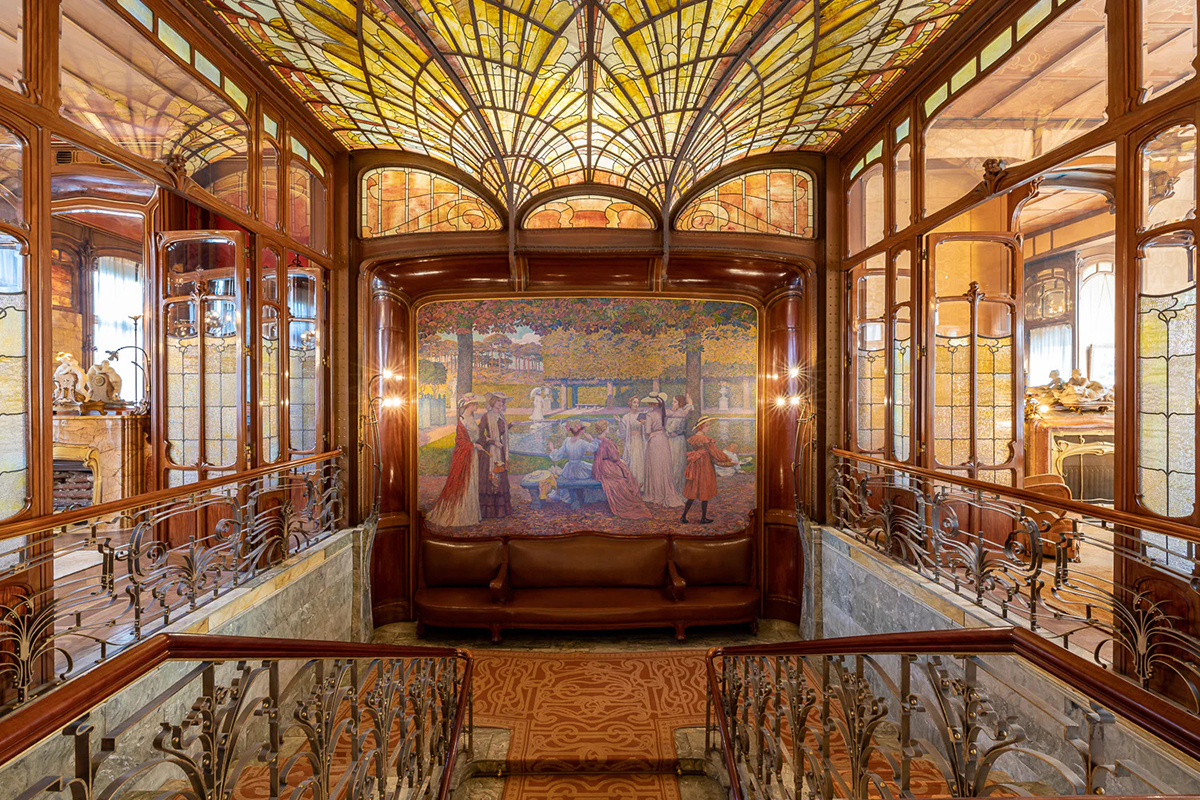
Hôtel Solvay, Bruxelles
An Art Nouveau masterpiece
Head back towards the city center for one of the most intense architectural experiences Brussels has to offer: the Hôtel Solvay, designed by Victor Horta between 1895 and 1900. A UNESCO World Heritage site since 2000, along with three other Horta buildings, it has only been open to the public since January 2021. It is considered Horta’s masterpiece, the building where Art Nouveau reaches its most complete and radical expression. The client, Armand Solvay, gave him total carte blanche, with no budget limits: Horta responded with 23 types of marble, 17 wood essences, wrought iron that resembles vegetation, stained glass filtering light into every corner, and a monumental staircase adorned with a mural by pointillist painter Théo van Rysselberghe. In short: a true total work of art.
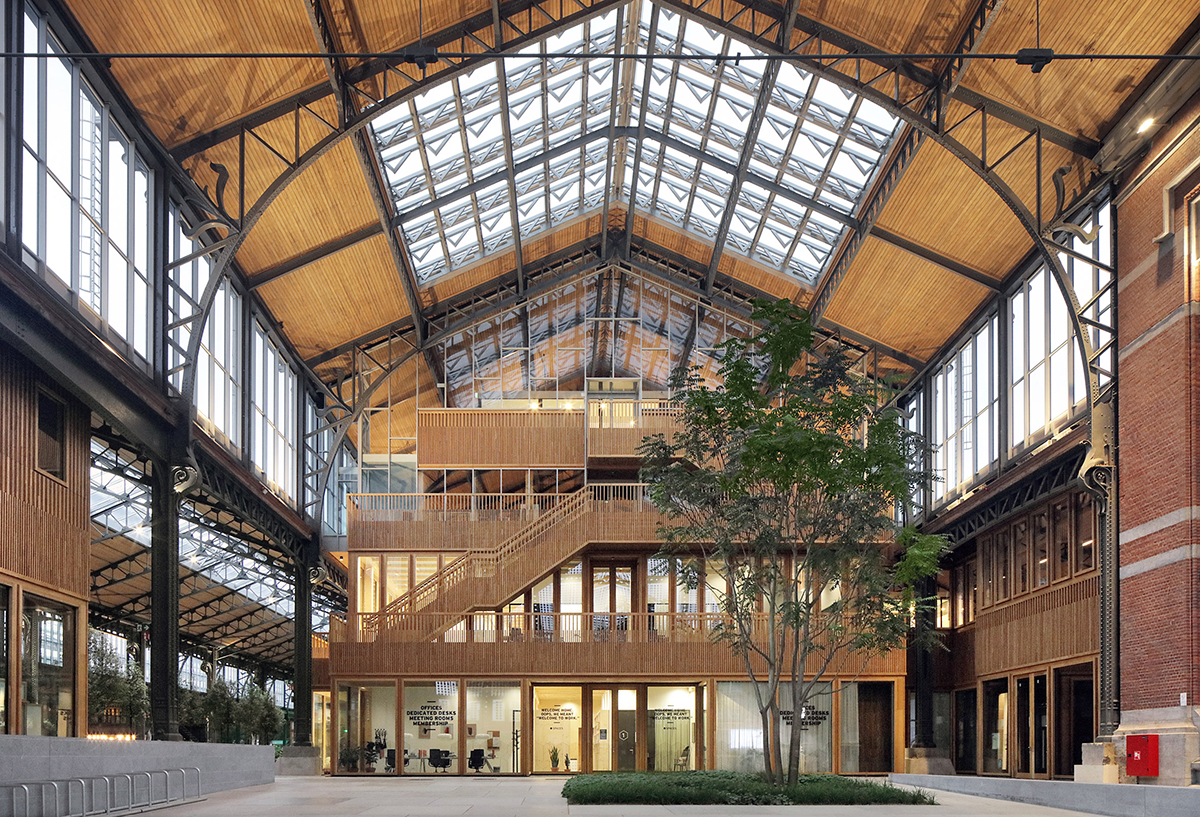
Gare Maritime, Bruxelles – Photo © Filip Dujardin
A city where it never rains
For lunch, we head towards the canal, to the Tour & Taxis complex: in the early 20th century, it was Europe’s largest covered freight station, then an abandoned complex for decades, and recently redeveloped by the Dutch firm Neutelings Riedijk Architects into what they call “a city where it never rains.” Twelve new wooden pavilions have been inserted under the original vaults, recreating an urban structure of boulevards, streets, gardens, and squares. The side aisles house offices and shops, while the central space remains open for events and a permanent food market.
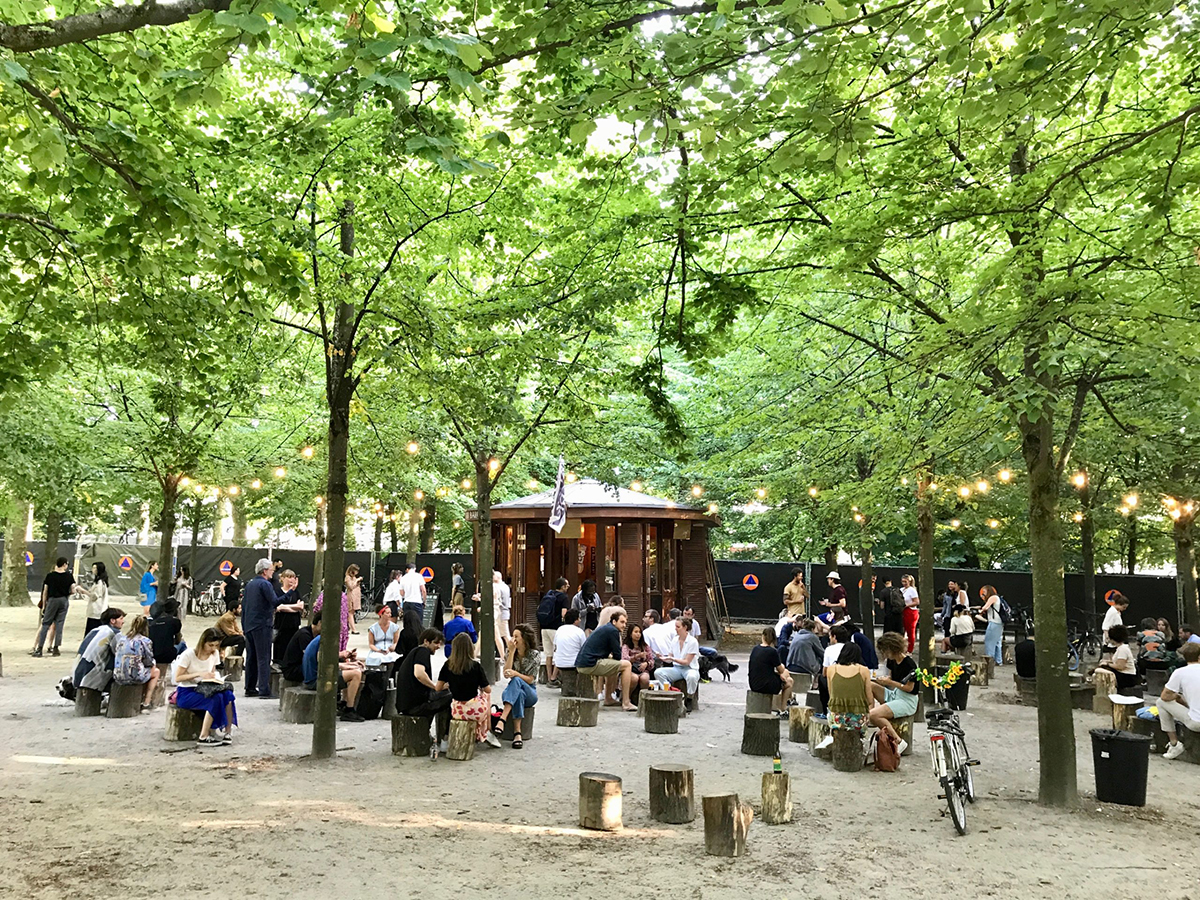
Kiosk Radio, Bruxelles
The sound of Brussels, from Parc Royal
Take a stroll through the very central Parc Royal, home since 2017 to a community web radio that has become a reference point for the European music scene. Kiosk Radio is a simple wooden kiosk with an audio system: a radio studio born as a meeting place for the Belgian underground scene and now a platform with global reach. Kiosk Radio is an initiative that perfectly illustrates what’s happening in Brussels: an ambitious and deeply rooted cultural project that operates without massive infrastructure and with a deliberately minimal aesthetic.
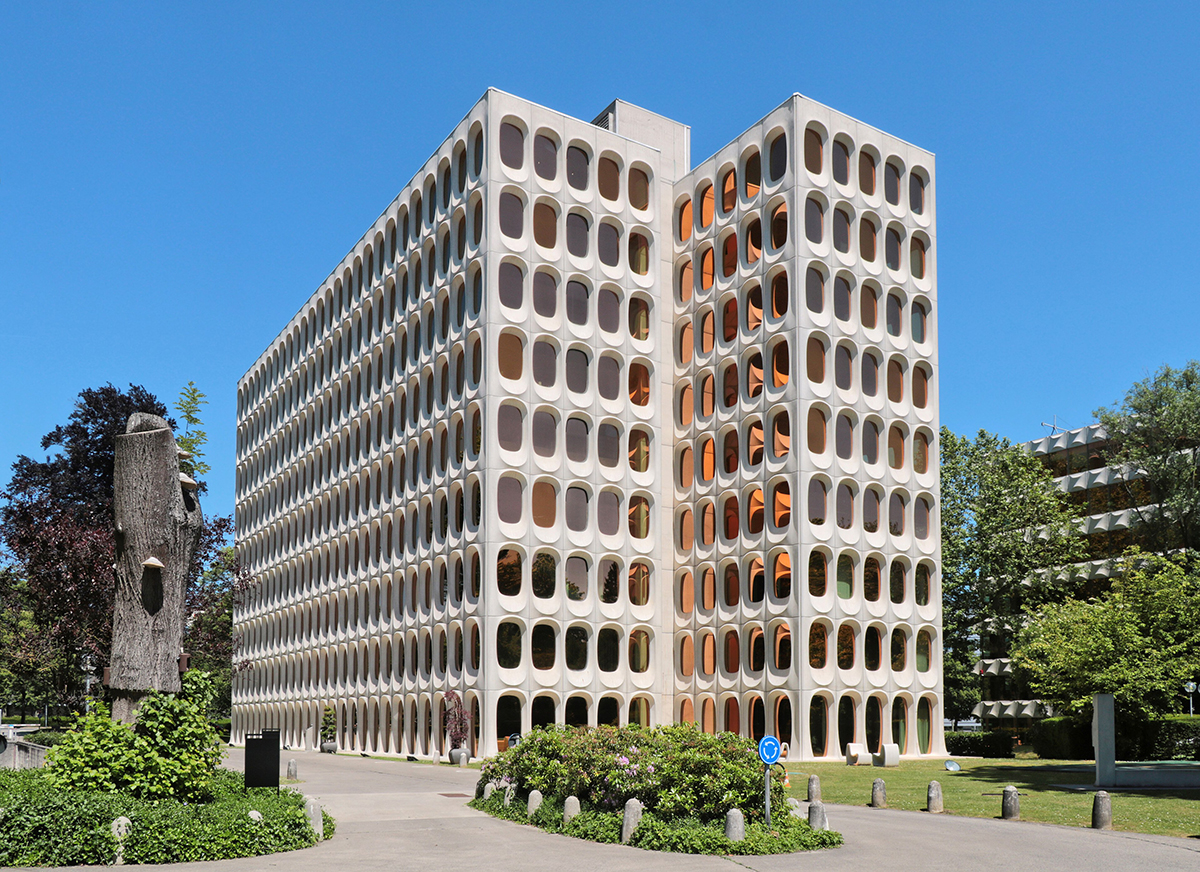
CBR, Bruxelles – Photo © EmDee/Wikimedia
Brutalist masterpiece
In the afternoon, we move south to one of the most unique 20th-century Belgian buildings. The former headquarters of the CBR cement company, designed in the late 1960s by Polish-Belgian architect Constantin Brodzki, who had spent fifteen years in the United States studying the plastic possibilities of reinforced concrete. The result is 756 oval windows in prefabricated curved concrete panels, giving the building a more organic appearance than canonical brutalism – a sort of concrete ocean liner immersed in greenery. The building currently houses a coworking space, with interiors redesigned by studio Going East, which managed to engage with the original structure without betraying it. The ground-floor restaurant is open to the public, and with a visitor pass, you can work there for a day: a good excuse to explore the building from the inside.
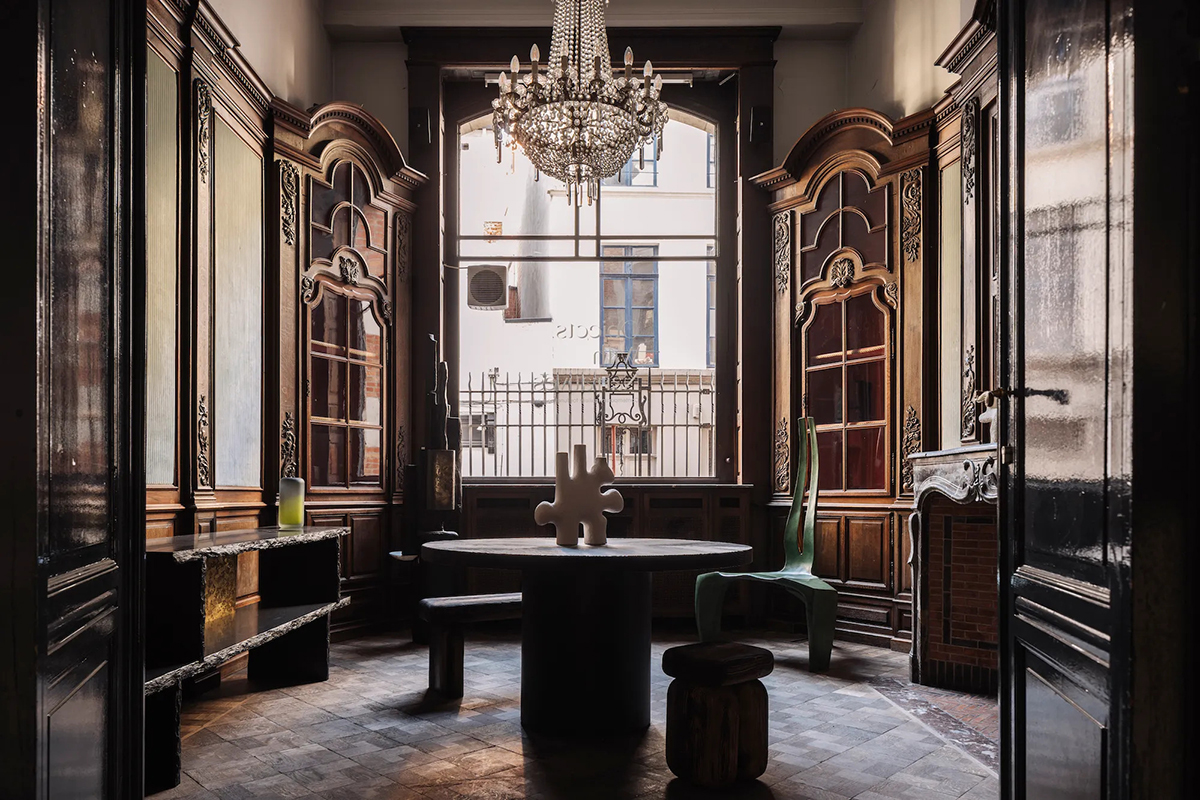
Objects with narratives, Bruxelles – Photo © courtesy di OWN
The collectible design scene
A stop at one of the city’s most interesting design galleries. Objects with narratives opened its first permanent space in a former 1920s fur atelier in central Brussels. The gallery represents designers such as Destroyers/Builders, Studio Lennarts & De Bruijn, Bram Vanderbeke, and other names from the Belgian and international scene. Brussels is emerging as one of Europe’s capitals for collectible design, thanks in part to the Collectible fair (now in its ninth edition in 2026) and a rapidly growing ecosystem of galleries, studios, and collectives. Objects With Narratives is one of the key nodes in this network. Here, you can experience firsthand that boundary zone between authorial design, material research, and the art market that is redefining the contours of the discipline.
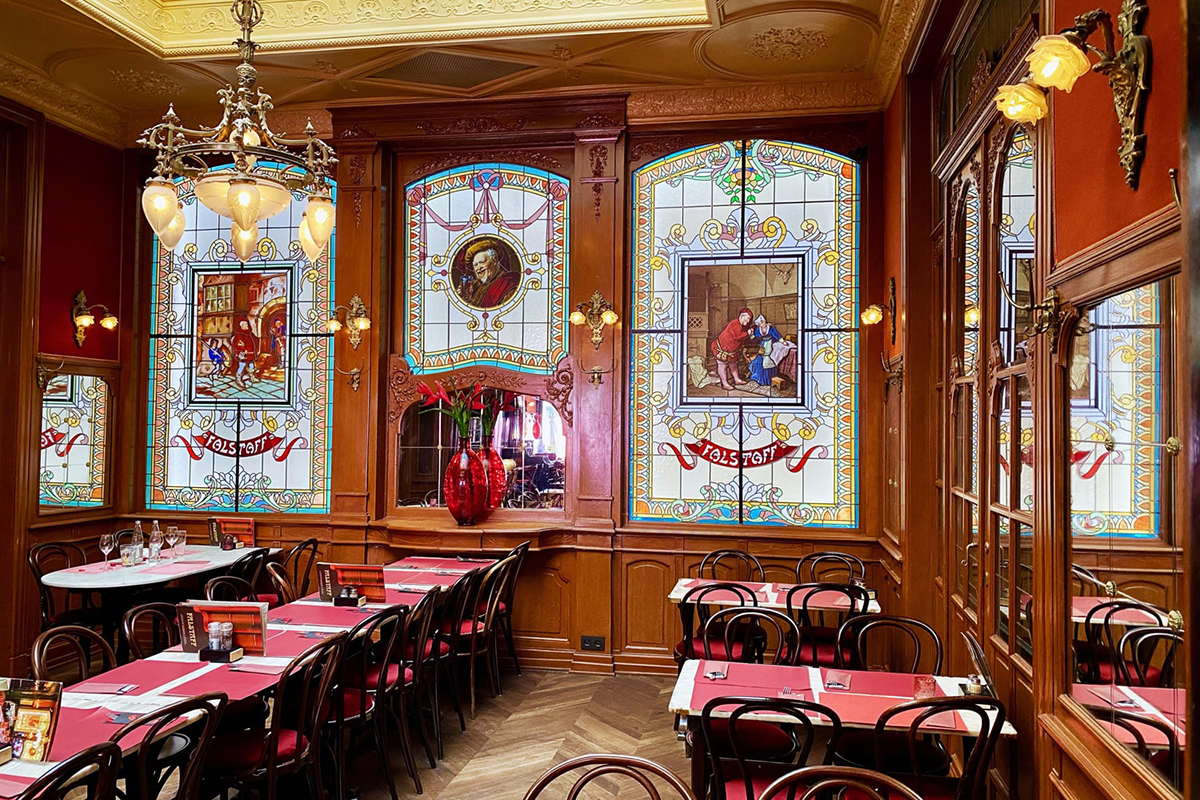
Falstaff, Bruxelles – Photo © www.admirable-artnouveau.be
An Art Nouveau landmark brasserie
For dinner, stay in the heart of the city, a stone’s throw from the Grand-Place. Le Falstaff is a brasserie-restaurant continuously open since 1903, declared a historical monument in 2000. The interior is a catalog of Art Nouveau applied to dining: carved wooden panels, framed mirrors, polychrome stained glass, and a ceiling alone worth the price of dinner. The cuisine is traditional Belgian: carbonnade flamande, mussels, stoemp, accompanied by a selection of local beers.
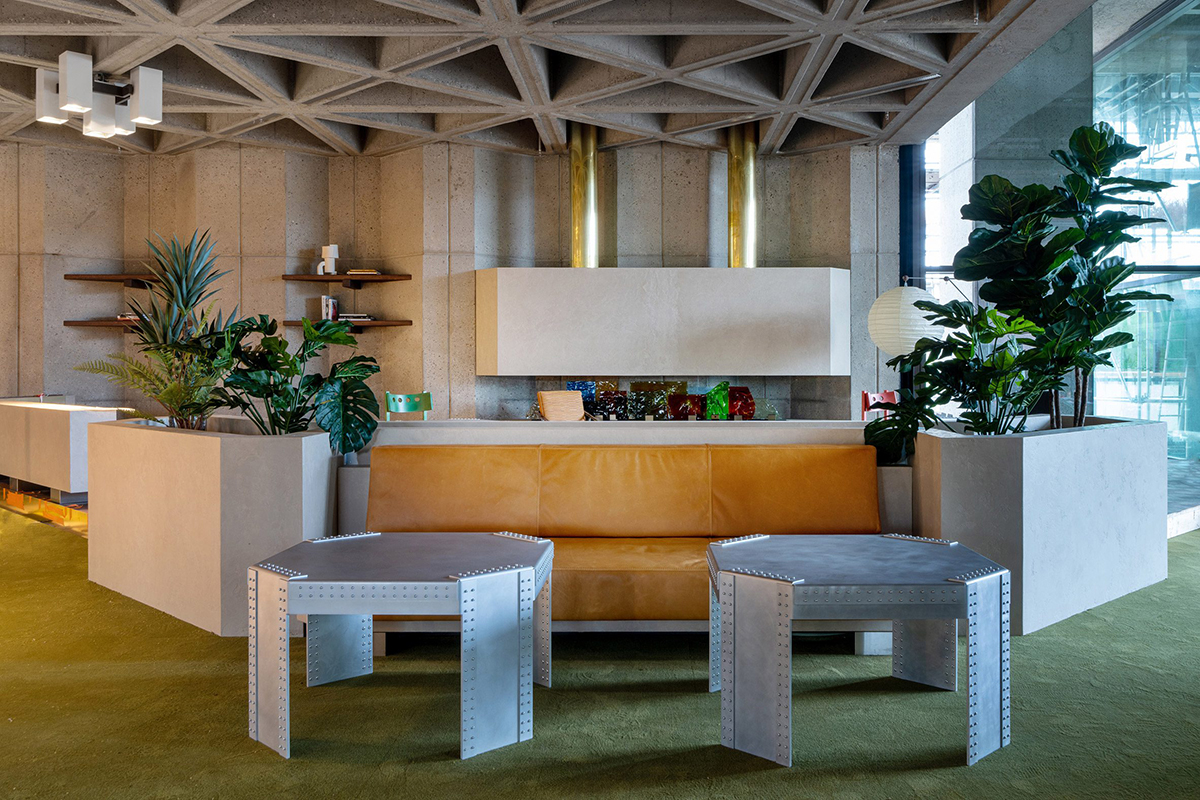
Mix Hotel, Bruxelles – Photo © courtesy di Lionel Jadot
52 artisans for one hotel
For accommodation, we move to the southeastern outskirts, because even lodging can be an immersive experience in design and architecture. The former headquarters of the Royale Belge insurance company is a 1970 functionalist building by René Stapels and Pierre Dufau: a cruciform tower with Corten steel facades and bronze-tinted glass. The building was classified as regional heritage in 2019, and after years of abandonment, it was redeveloped by a team of architects led by Caruso St John Architects. The interiors of the hotel – the Mix Hotel, with 180 rooms – are designed by Lionel Jadot, who involved over fifty Belgian artisans and designers, including artists from the Zaventem Ateliers, the contemporary artisan guild he himself founded. No piece is from a catalog: every element, from curtains to door handles, was specifically designed and produced.
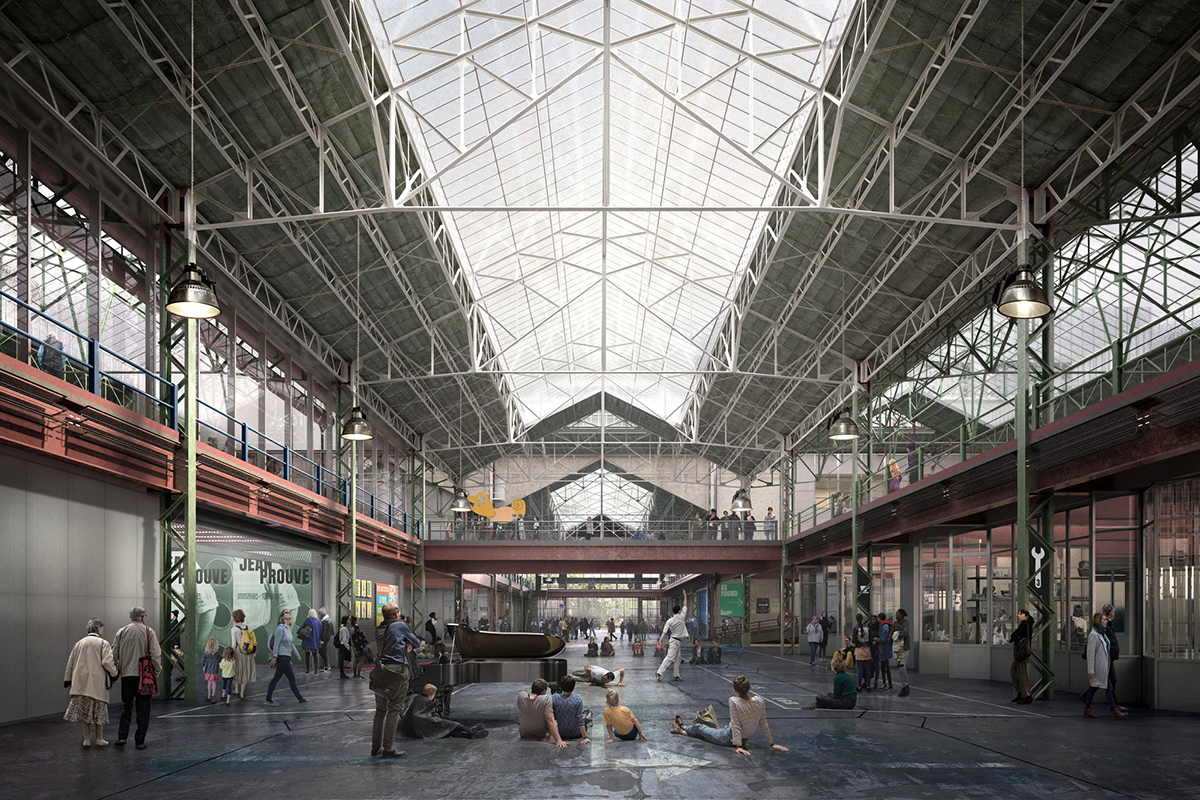
KANAL-Centre Pompidou, Bruxelles – Photo © Atelier Kanal
From Citroën Garage to Centre Pompidou
A final note for those planning a trip in the coming months. On November 28, 2026, KANAL-Centre Pompidou will open: 40,000 square meters in the former Citroën garage along the canal, one of the city’s most iconic industrial buildings. The project is designed by noAarchitecten, EM2N, and Sergison Bates architects, and will become a major hub dedicated to modern and contemporary art in Brussels, as well as hosting CIVA, a center for architecture and design. More than half of the space will be freely accessible, intended not only for exhibition visitors but for anyone seeking a place to read, meet, or simply be. KANAL is poised to become one of Europe’s most ambitious cultural institutions.