Architecture and interior design: Giuliano Andrea dell’Uva Architetti
Furnishings: custom-made, combined with vintage pieces from various galleries
Lighting: custom-made, combined with vintage pieces and contemporary collectible designs (for example, a pendant lamp by Draga & Aurel)
Photo credits: Nathalie Krag, Pedro Mourandiniz, Federica Santeusanio
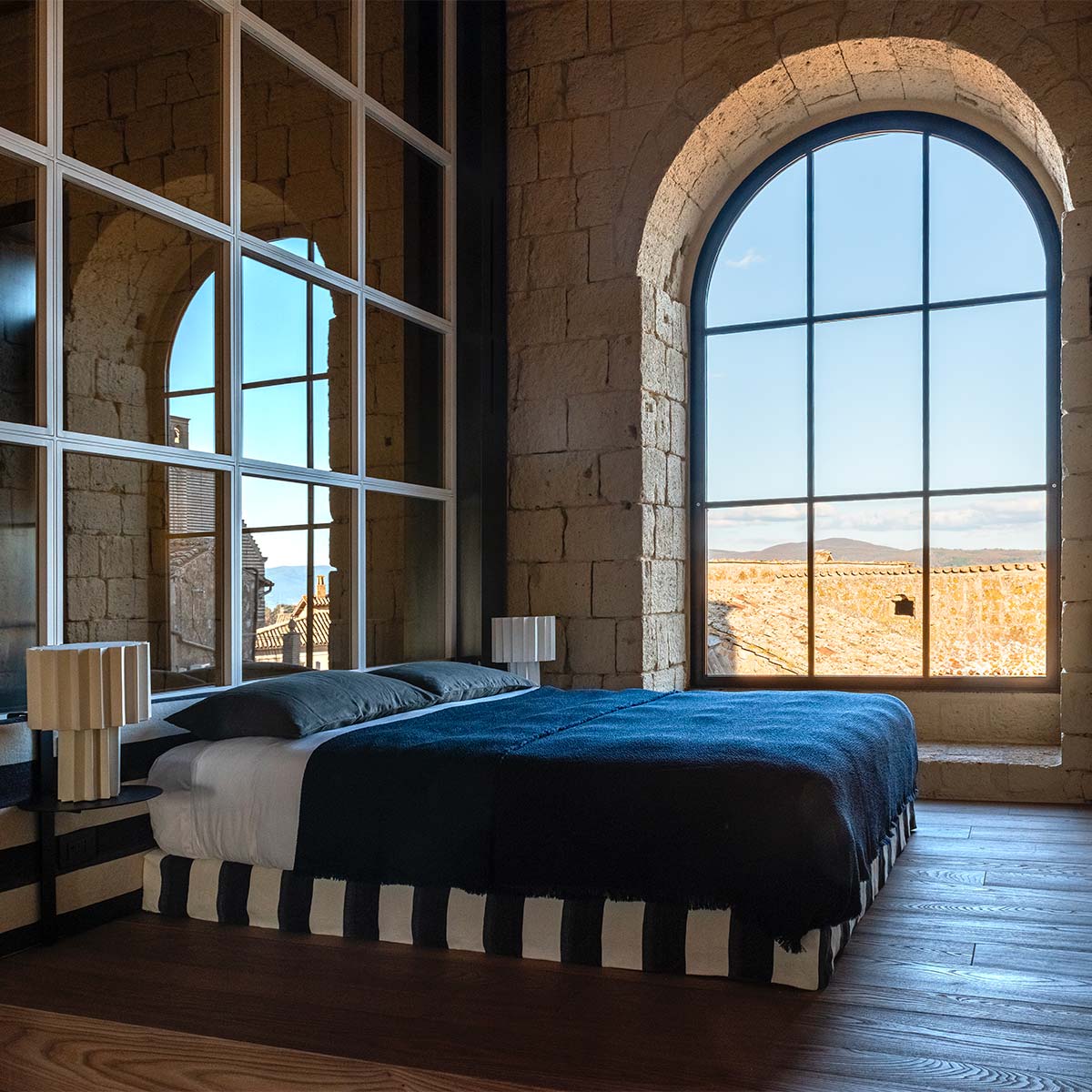
Just a few steps from Orvieto’s magnificent Duomo, Palazzo Petrvs – a hotel born from the restoration of a 15th-century building, with a project signed by Giuliano Andrea Dell’Uva – stands as the manifesto of an aesthetic vision that weaves together history and modernity, memory and imagination. When the architect first visited, the Renaissance palazzo appeared to have little architectural value.
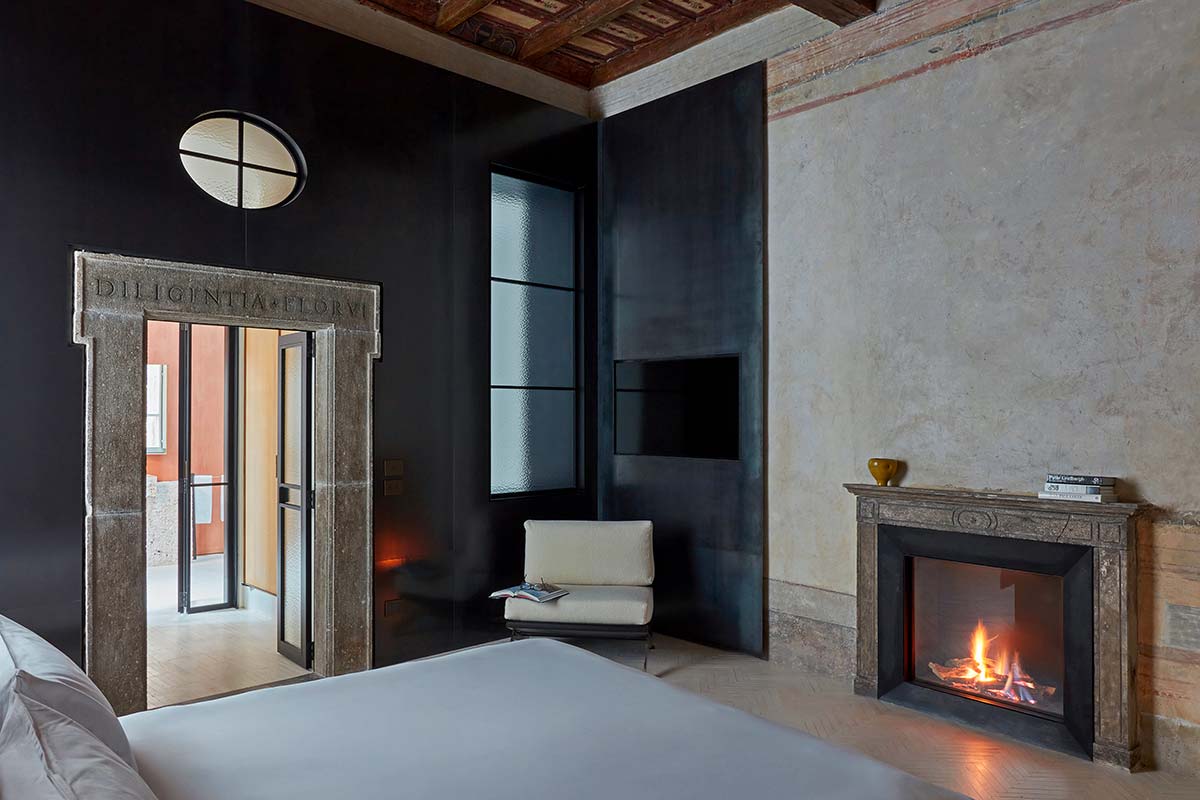
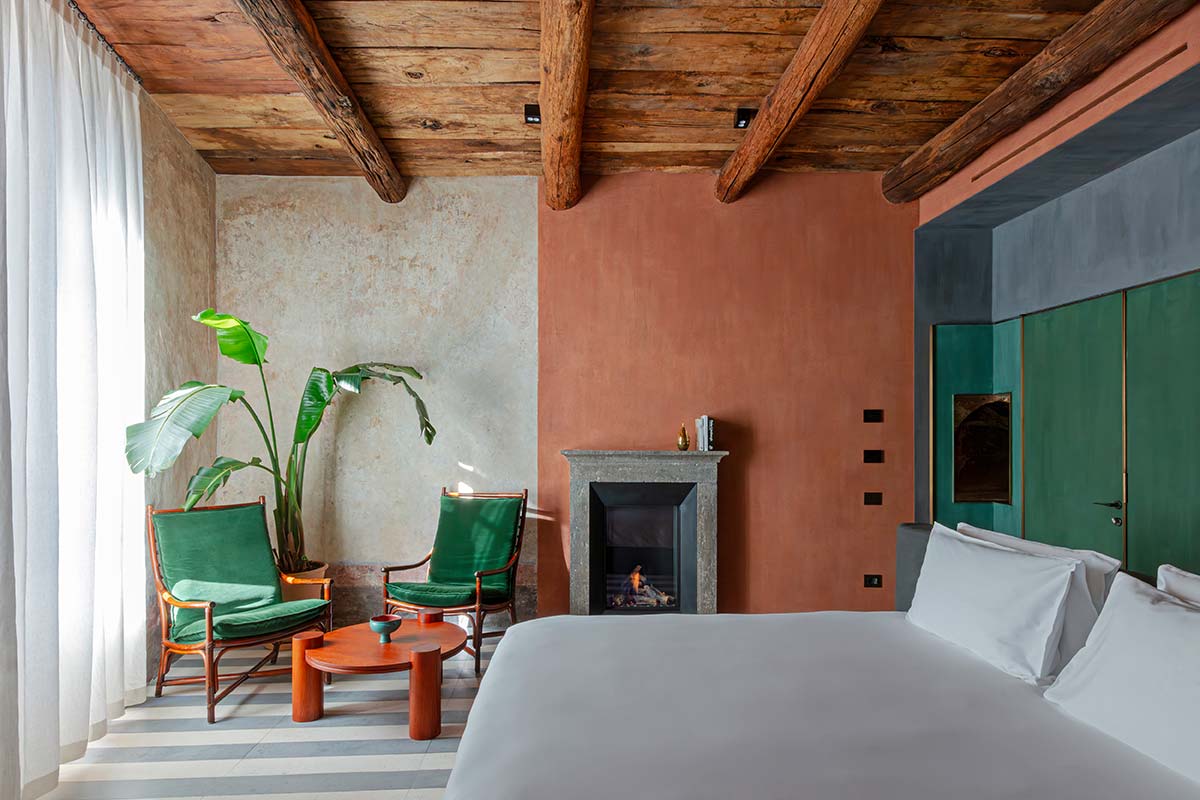
“The first thing I wanted to understand,” recalls Dell’Uva, “was whether there were still any historical traces left.” That curiosity led to a meticulous process of excavation and restoration, revealing wooden ceilings, 16th-century inscriptions, and Renaissance motifs long concealed by centuries of careless alterations. The outcome was so significant that, once the work was completed, the Superintendence for Heritage decided to list the building as a protected monument.
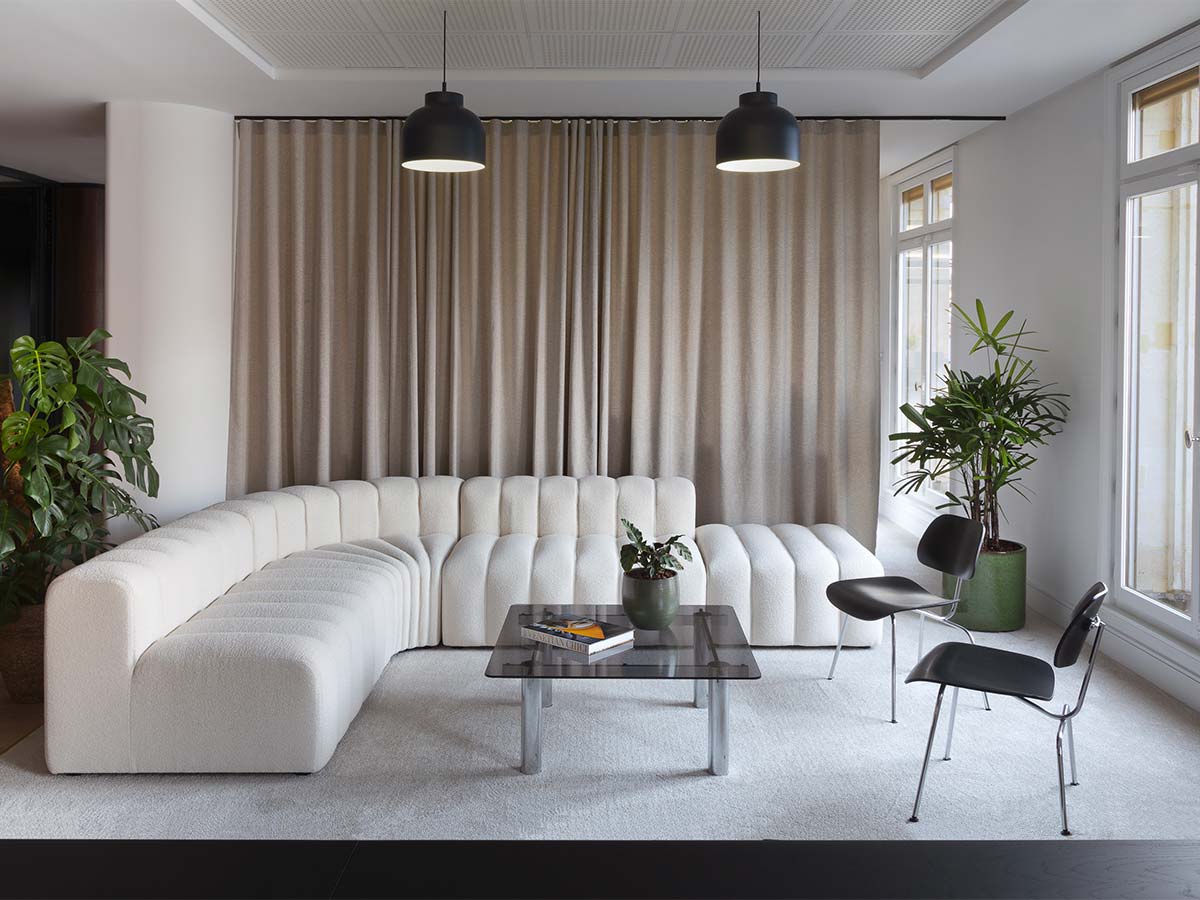
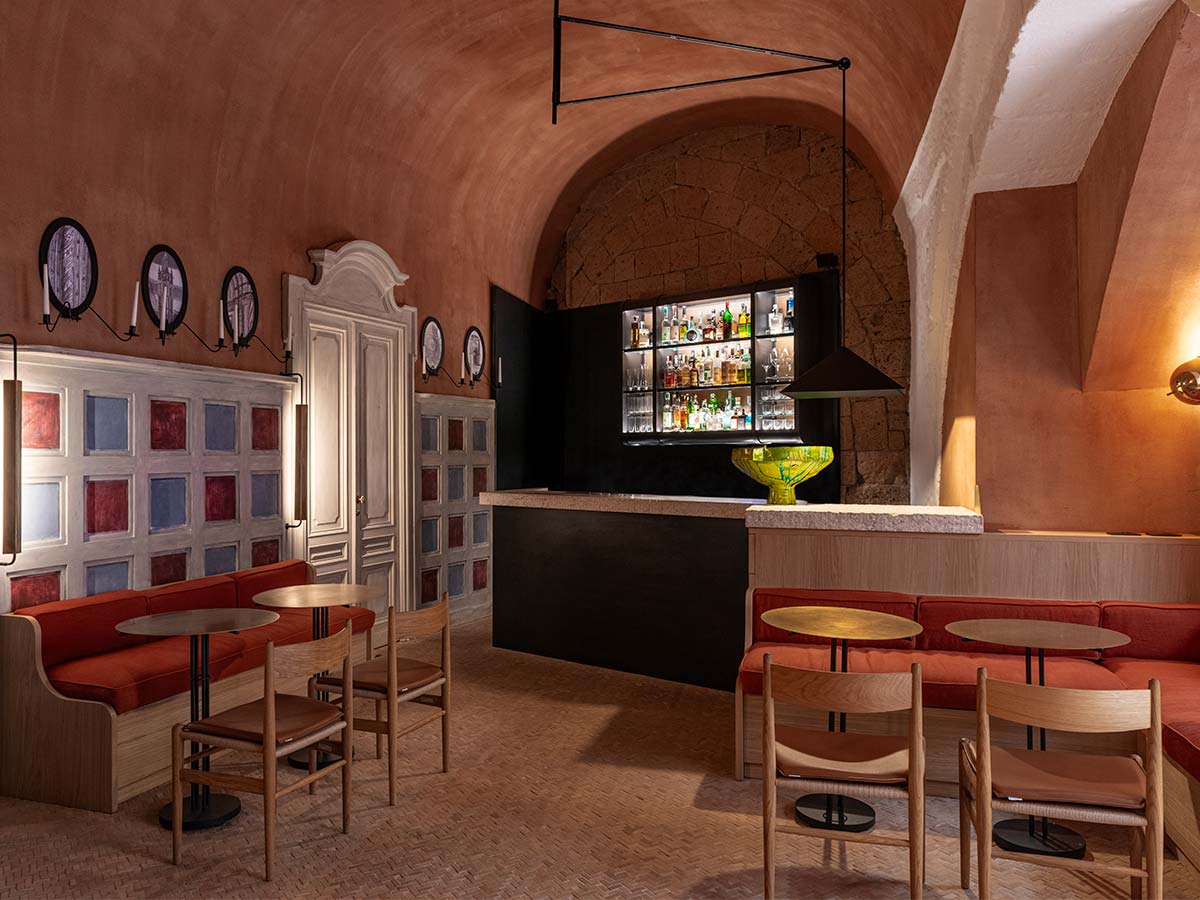
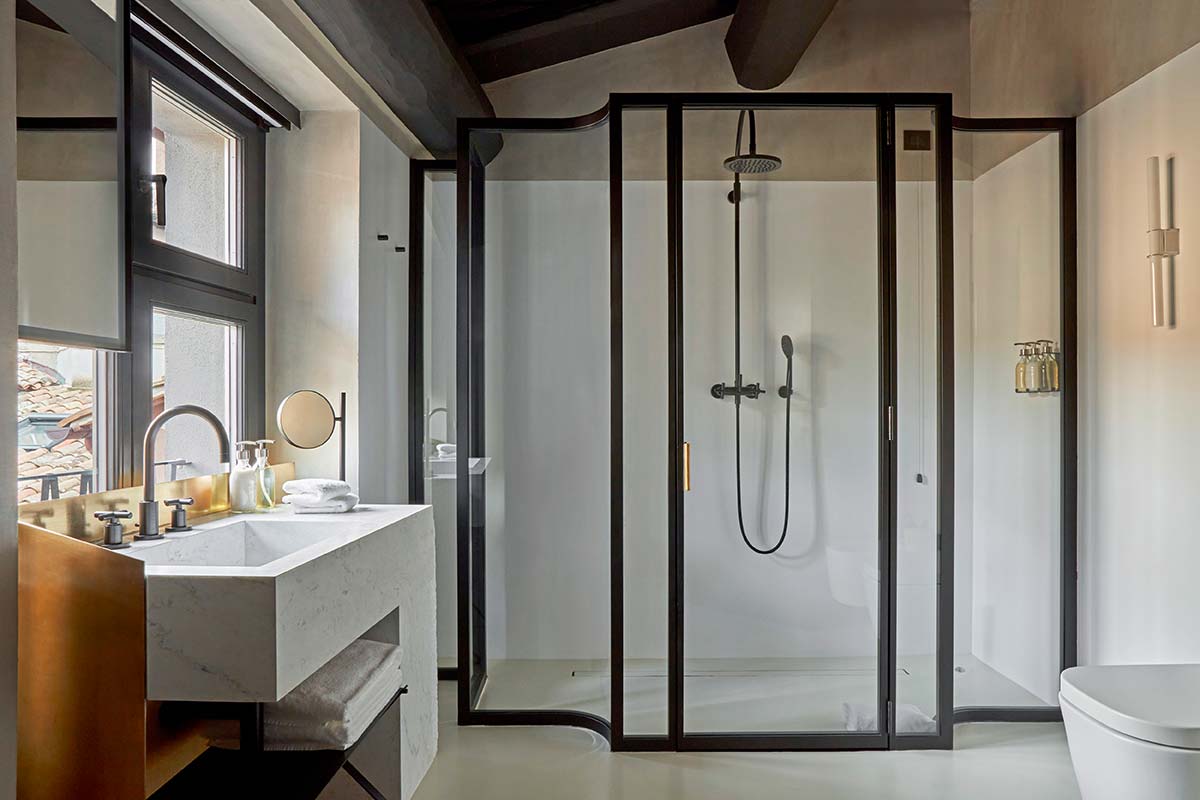
The project is far more than a restoration: it is a reinterpretation of identity. Walls painted in textured, “Renaissance-inspired” hues are juxtaposed with sleek partitions of glass and metal. In the interiors, Dell’Uva orchestrates a dialogue of eras and languages, combining 19th-century furniture with Danish lamps from the 1960s, contemporary works by Michele Guido with Italian design pieces by Tobia Scarpa or Draga & Aurel. “Using pieces from different periods softens the contrast between history and modernity,” he explains, “and creates the atmosphere of a real home, where things accumulate naturally over time.”
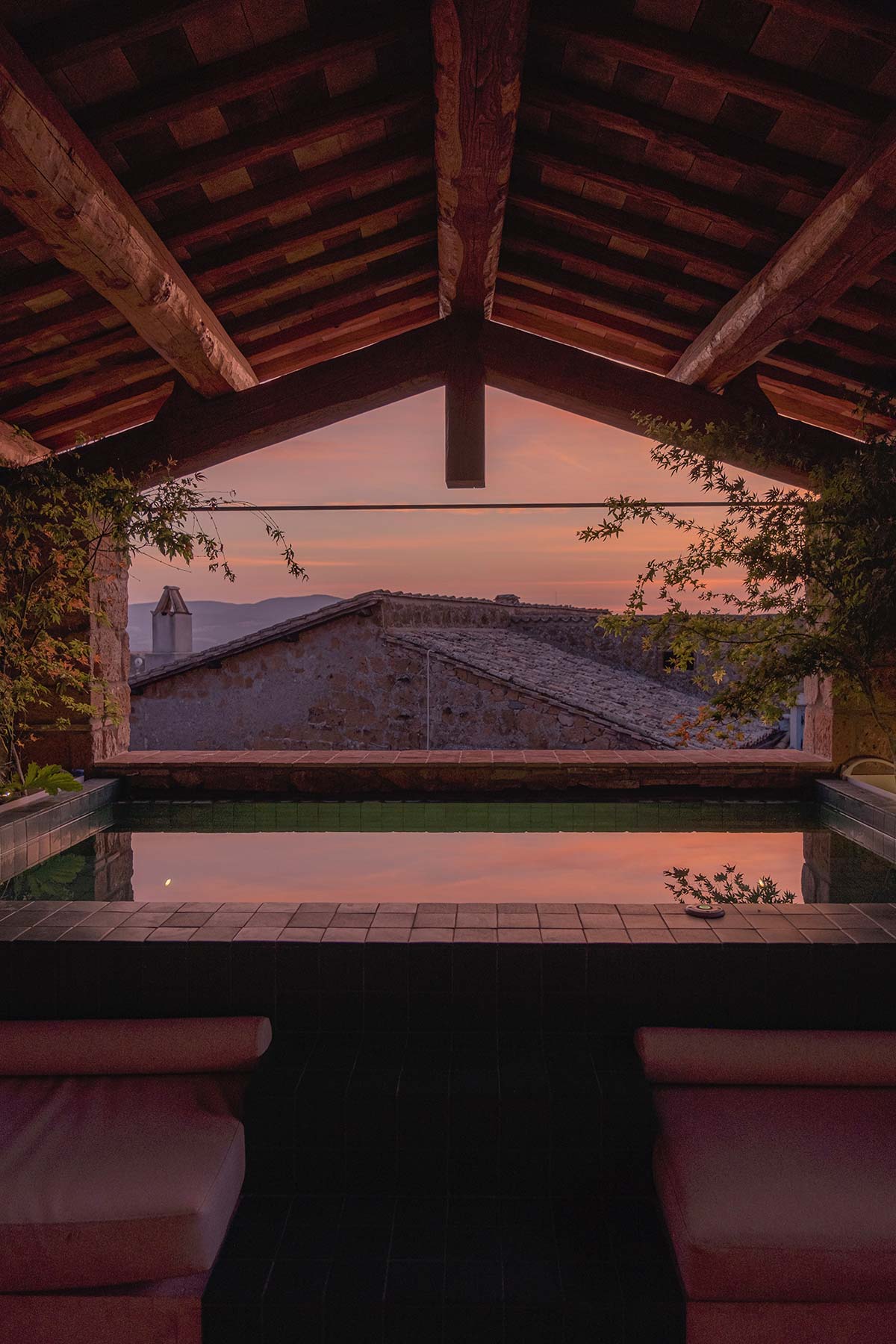
The transformation extends to the communal areas and the inner courtyard, redesigned as a material theatre where terracotta and bucchero coexist – the distinctive black ceramic of Etruscan origin that was first produced in this region, a symbol of a living, evolving memory. “Working with bucchero, a material so deeply rooted in the territory, has been one of the most satisfying parts of the project,” says the architect.
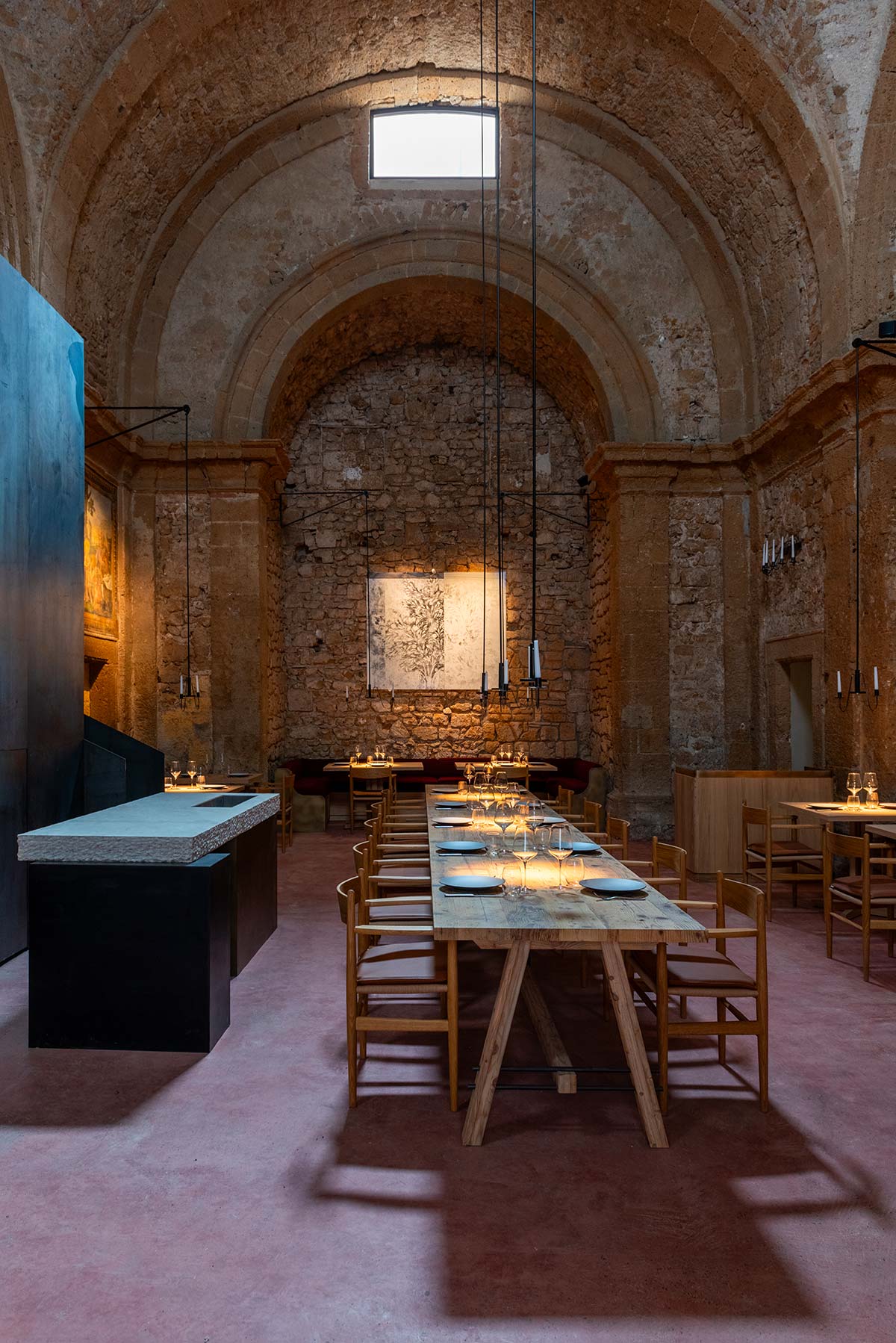
Dell’Uva also oversaw the restoration of the adjoining church, now home to the Coro restaurant, where the simplicity of the intervention enhances the sacred character of the space: cocciopesto floors, custom-designed tables, and suspended light fixtures that descend from the lofty ceilings like graphic signs, illuminating the scene with quiet reverence. With its nine suites, cocktail bar, and restaurant, Palazzo Petrvs offers Orvieto a fragment of its own history, transformed into an experience. A place where pietra serena stone converses with raw iron, where the Renaissance meets Nordic design – the new chapter in a story that has been unfolding for centuries.