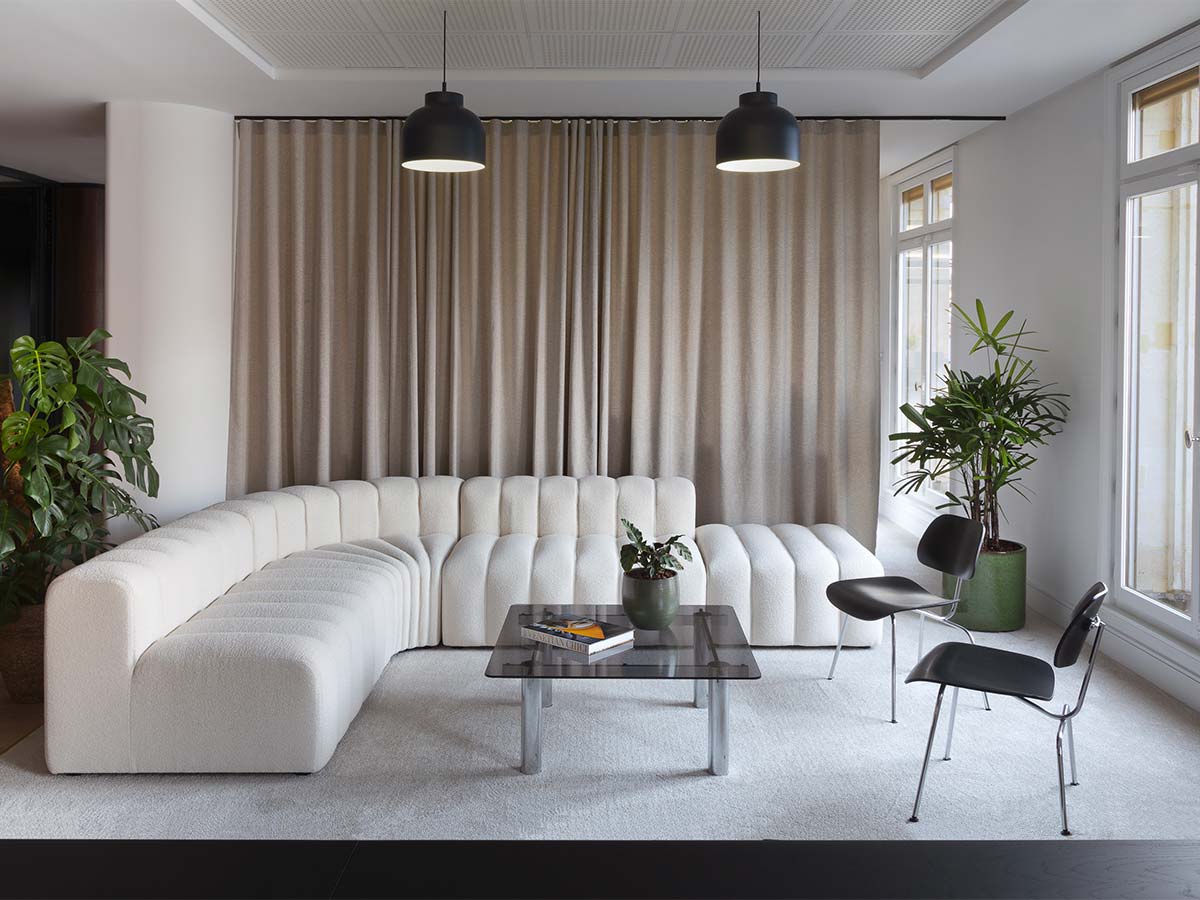
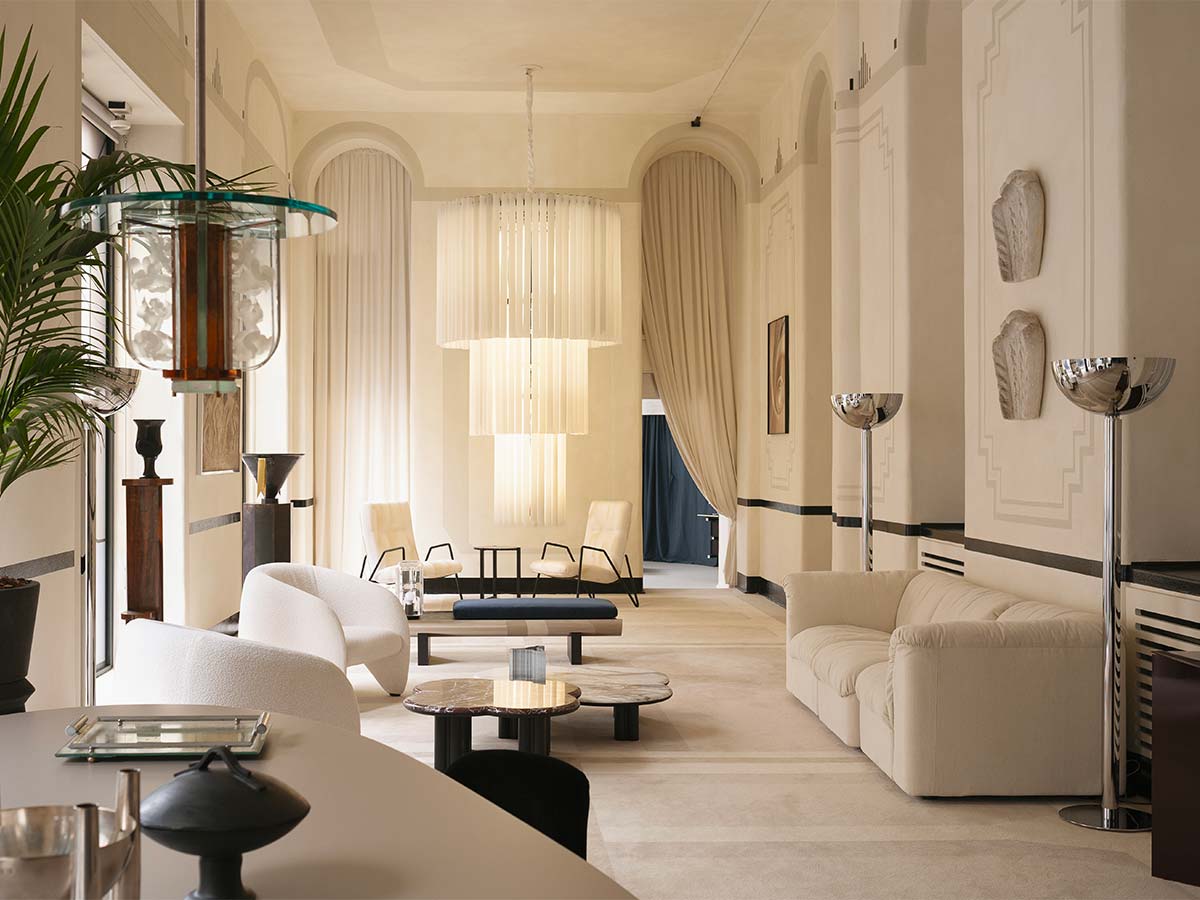
The “Soft Nostalgia” installation, which drew attention during the last Milan Design Week at the historic SAG’80 showroom, has just concluded. The project immediately established itself as a statement of intent: a sophisticated endeavor that transformed a multi-brand store into a captivating narrative experience, demonstrating how a retailer can convey its design language with a distinct authorial touch and profound innovation. Neapolitan architect Giuliano Andrea dell’Uva, known for his ability to blend historical memory with modern solutions, orchestrated a dialogue between the aesthetics of the 1930s and 1970s. Across a 200-square-meter space, he created a sequence of rooms – a bar, a salon, and a bedroom – conceived as chapters of a single narrative. Through a rigorous selection of furnishings, finishes, and geometries from leading partners like Cassina, Minotti, Porro, Arflex and Dedar, the installation guided visitors through a journey marked by material and chromatic shifts, creating a sophisticated and timeless atmosphere.
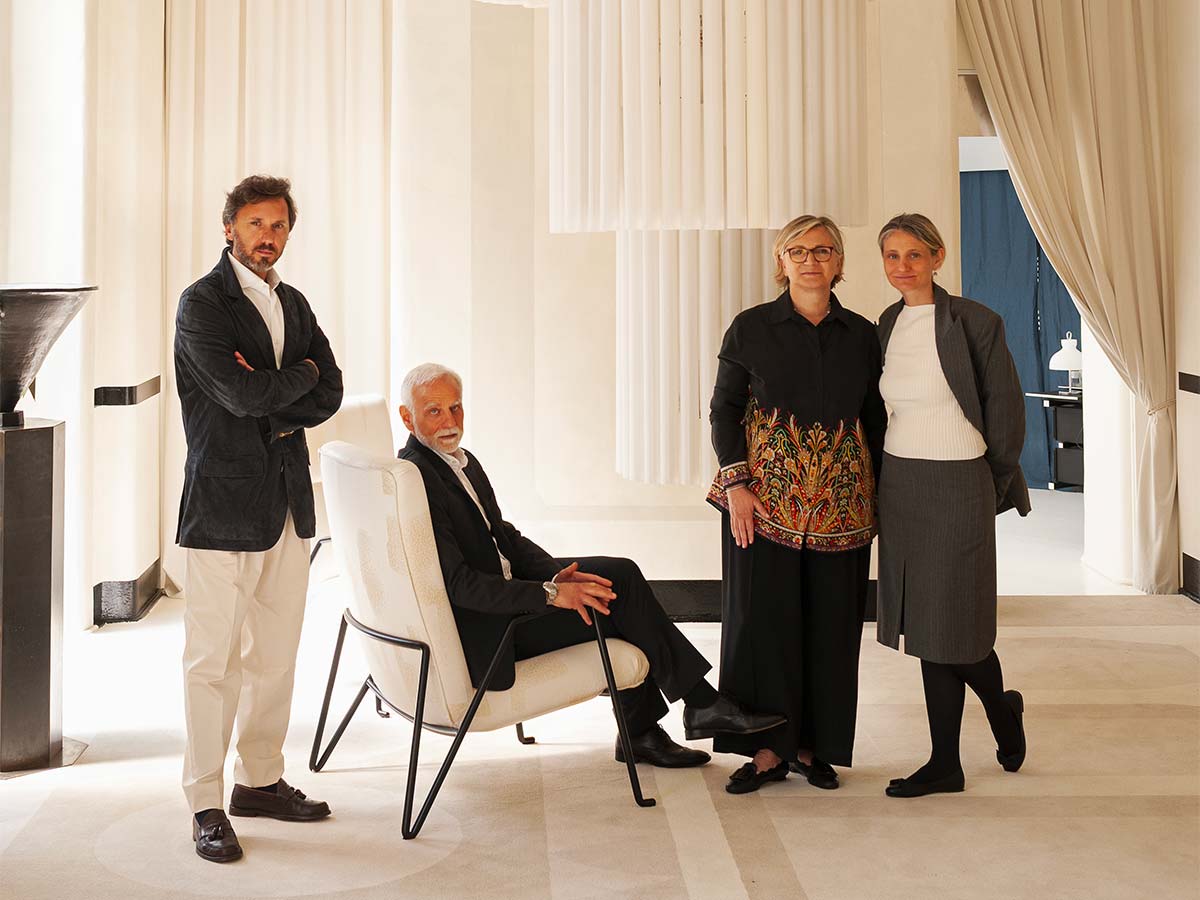
But beyond its significant cultural value, the strategic objective was ambitious. As Rachele Pellegatta of SAG’80 explains, it wasn’t about choosing between their historical clientele and a new audience. “The idea was to celebrate our historical identity by projecting it into the future. We didn’t want to choose between our established clientele and new generations of design enthusiasts; the goal was to captivate both.” Collaborating with an eclectic architect like Dell’Uva allowed SAG’80 to demonstrate how its expertise can also be expressed in the language of a new vanguard, attracting a new audience drawn to bold, cultured, and highly scenographic interior design.
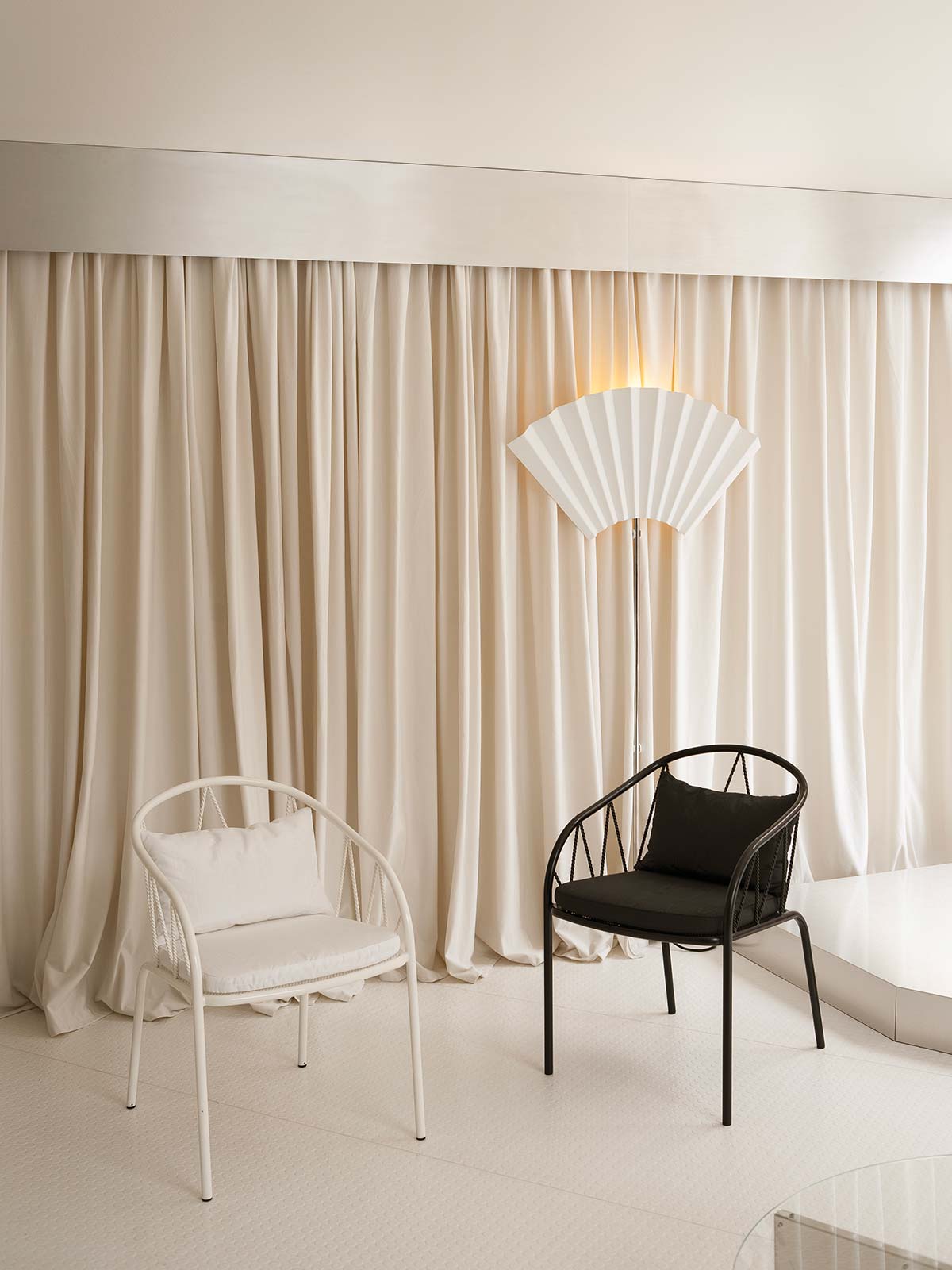
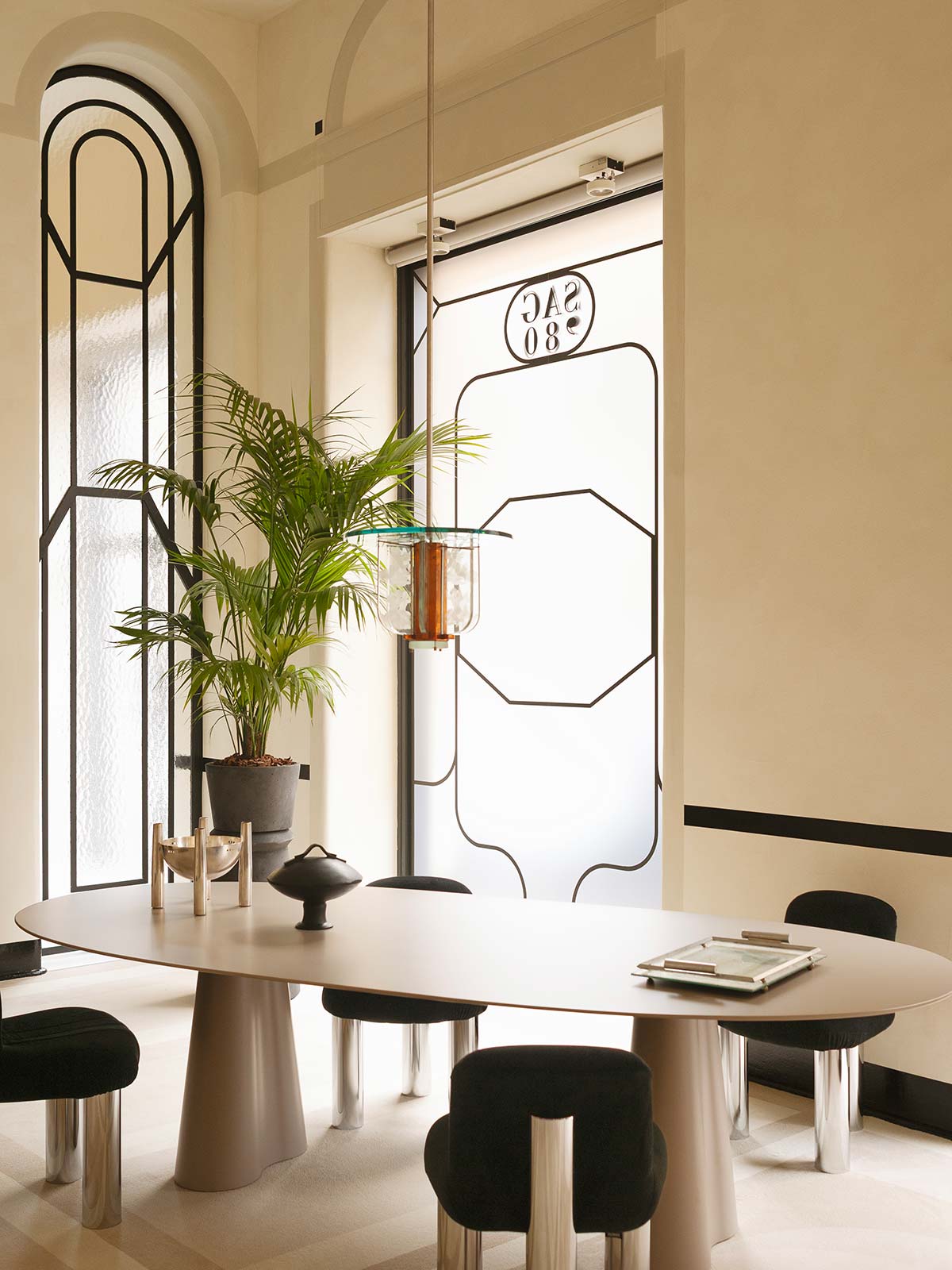
The risk in such operations is that the designer’s strong stylistic signature might overshadow the host space’s identity. In this case, however, the dialogue was remarkably fluid. “Being a multi-brand showroom is our greatest strength,” states Pellegatta, “because it allows us to orchestrate furnishings, finishes, and materials from both leading partners and small artisans to bring any vision to life.” The installation, therefore, was not perceived as a foreign element, but as the highest expression of SAG’80’s daily work: translating an inspiration into a real, tangible, and livable interior architecture. Indeed, their historical clients reacted with great enthusiasm, recognizing “behind Giuliano’s authorial touch the unmistakable yet invisible signature of SAG’80: that balance and understated elegance that have always defined us.”
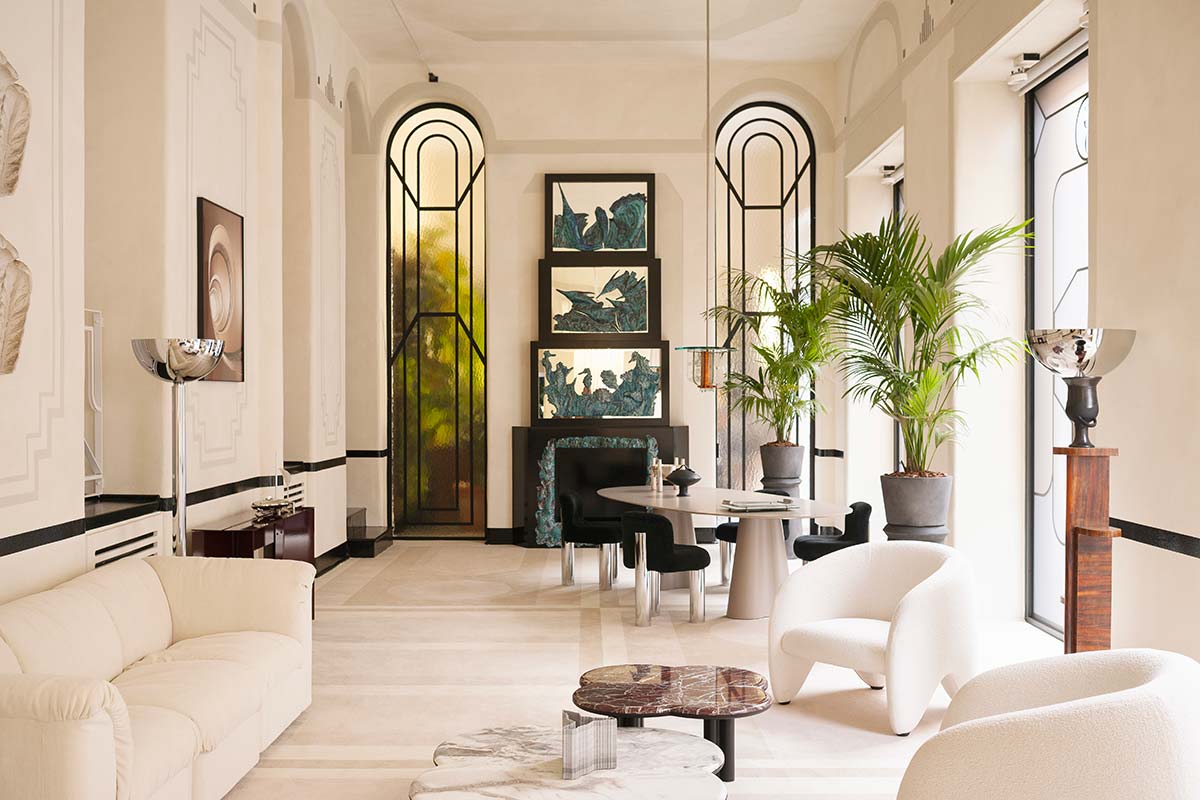
The effectiveness of this narrative approach was confirmed by the feedback received. Rather than focusing on individual pieces, attention was drawn to the overall atmosphere. “The most wonderful feedback,” recounts Rachele Pellegatta, “was seeing visitors forget the context of Design Week and allow themselves to be drawn into the narrative of the rooms. People weren’t just seeing a sofa or a table; they desired that specific way of living”. This transformed inspiration into tangible commercial interest, proving a fundamental truth of the current market. “Today’s client isn’t looking for a single object; they are looking for a vision, an aesthetic harmony,” Pellegatta concludes. By presenting complete environments ready to be lived in, SAG’80 sold not just products, but an idea, solidifying its role as the ideal design partner for clients and professionals alike. “Soft Nostalgia” thus revealed itself as a masterclass in how high-end retail can evolve from supplier to curator, from store to cultural destination.
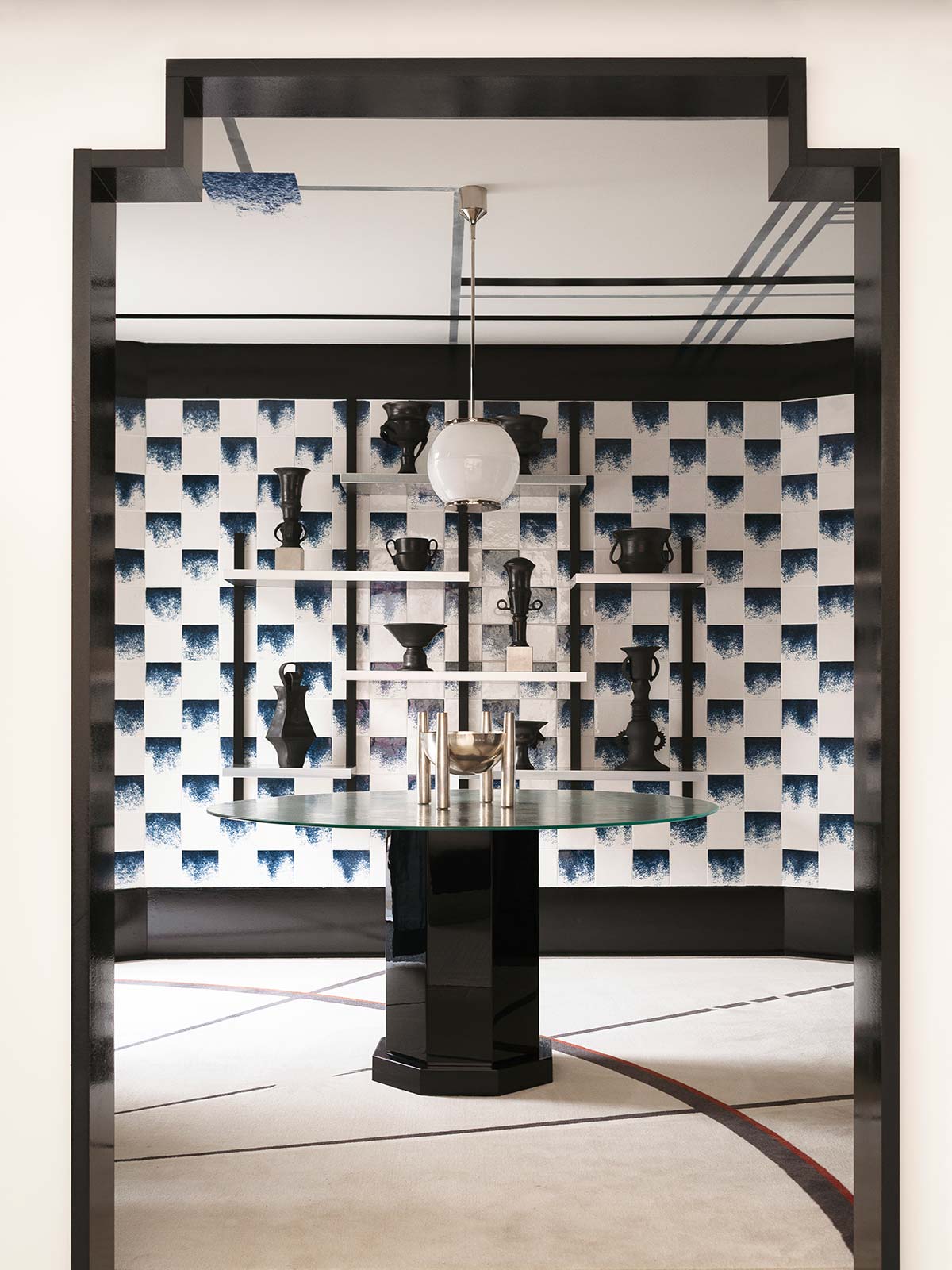
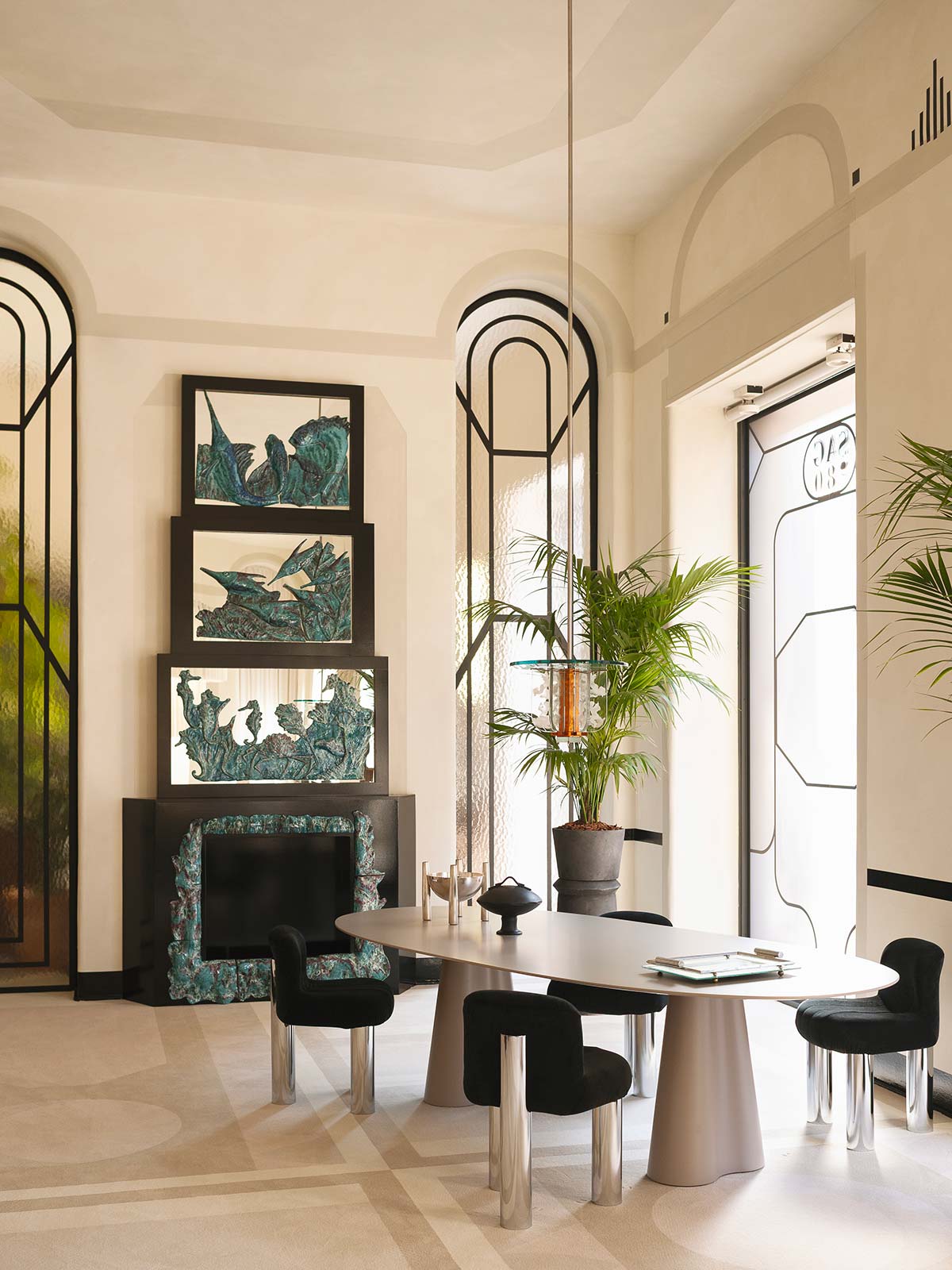
Photo credits: Andrea Ferrari Studio